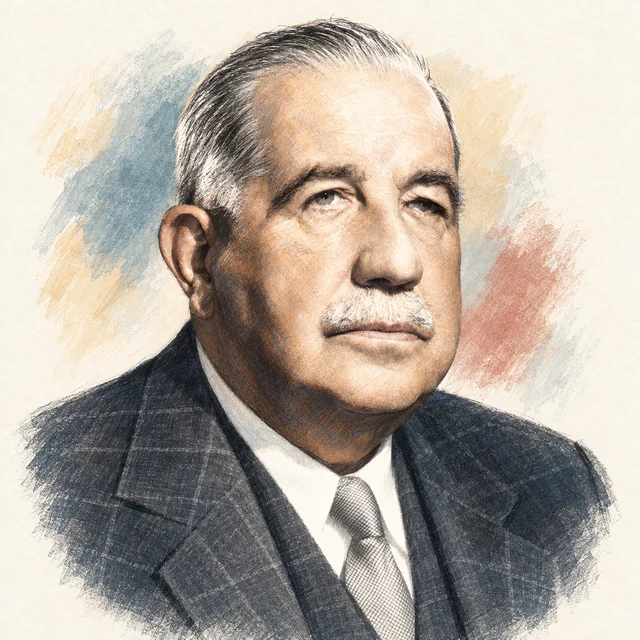
A life in context
The person behind the prize
Jouhaux entered a match factory as a teenager and became involved in trade-union organisation. He became general secretary of France’s CGT in 1909, rather than founding that earlier organisation. Before the First World War he pursued contacts between workers across national borders; such efforts did not prevent the war of 1914. In 1919 he participated in the negotiations that created the International Labour Organization and joined its Governing Body as a workers’ representative. He campaigned for disarmament and supported French reforms in 1936, including collective agreements, paid leave and the forty-hour working week. Nazi imprisonment interrupted his work during the Second World War. He became president of France’s Economic Council in 1947. Leaving the CGT in the split of 1947, he helped establish Force Ouvrière at its founding congress in April 1948. The 1951 Peace Prize recognised a lifetime connecting social justice and international cooperation with opposition to war, within a history of serious political divisions and setbacks.
The contribution
Jouhaux linked workers’ rights, social justice, disarmament and cooperation across national borders to the pursuit of peace. He received the full Peace Prize.
The idea in plain language
Peace requires more than the absence of immediate fighting. Jouhaux argued that injustice and insecurity in working life undermine stable relations, and that workers could cooperate across national boundaries. His pre-1914 contacts with other countries’ unions sought to resist nationalism, though the outbreak of war showed the limits of that effort.
Read the full award story ↗

