A life in context
The person behind the prize
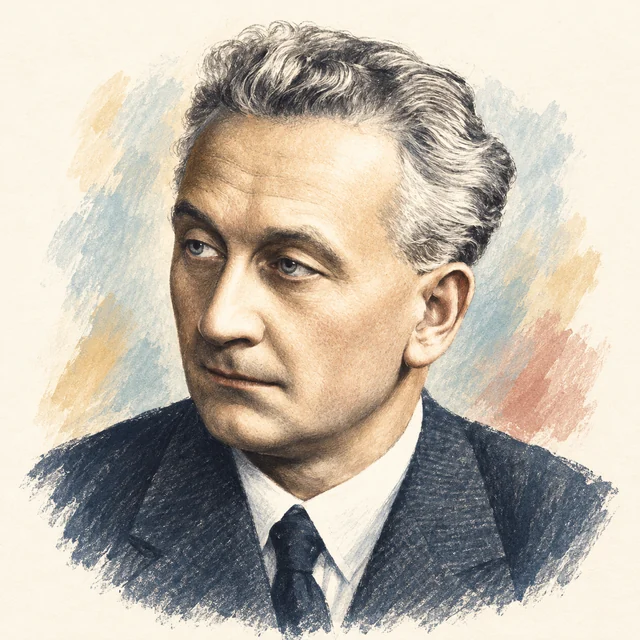
Szent-Györgyi’s medical studies in Budapest were interrupted by the First World War. He subsequently worked in several European laboratories, studying cellular respiration and reducing substances. At Cambridge, with time also at the Mayo Foundation, he isolated the substance initially called hexuronic acid. Appointed to Szeged in 1930, he began work there in 1931 after laboratory delays. Research with Joseph Svirbely established in 1932 that hexuronic acid had vitamin C activity; King and Waugh were also investigating the substance, and priority was disputed. Paprika provided a rich source for further work. His Szeged research also explored the catalytic effects of four-carbon acids in biological oxidation. The whole 1937 Medicine Prize recognised this broader programme, not vitamin C alone. Work on muscle proteins followed, and he moved to the United States in 1947. These later investigations should not be folded into the 1937 citation.
The contribution
Szent-Györgyi received the whole Medicine Prize for biological oxidation, particularly vitamin C and the catalytic role associated with fumaric acid. The work connected chemical identification with physiological function and depended on collaborators.
The idea in plain language
Cells release usable energy through organised chemical reactions, not by burning fuel in an ordinary flame. Szent-Györgyi studied oxidation and reduction and the substances involved in those reactions. He isolated a reducing substance called hexuronic acid; in 1932 work with Svirbely established that it had the anti-scurvy activity associated with vitamin C, now called ascorbic acid.
Read the full award story ↗