01 · The discovery
The idea, in everyday language
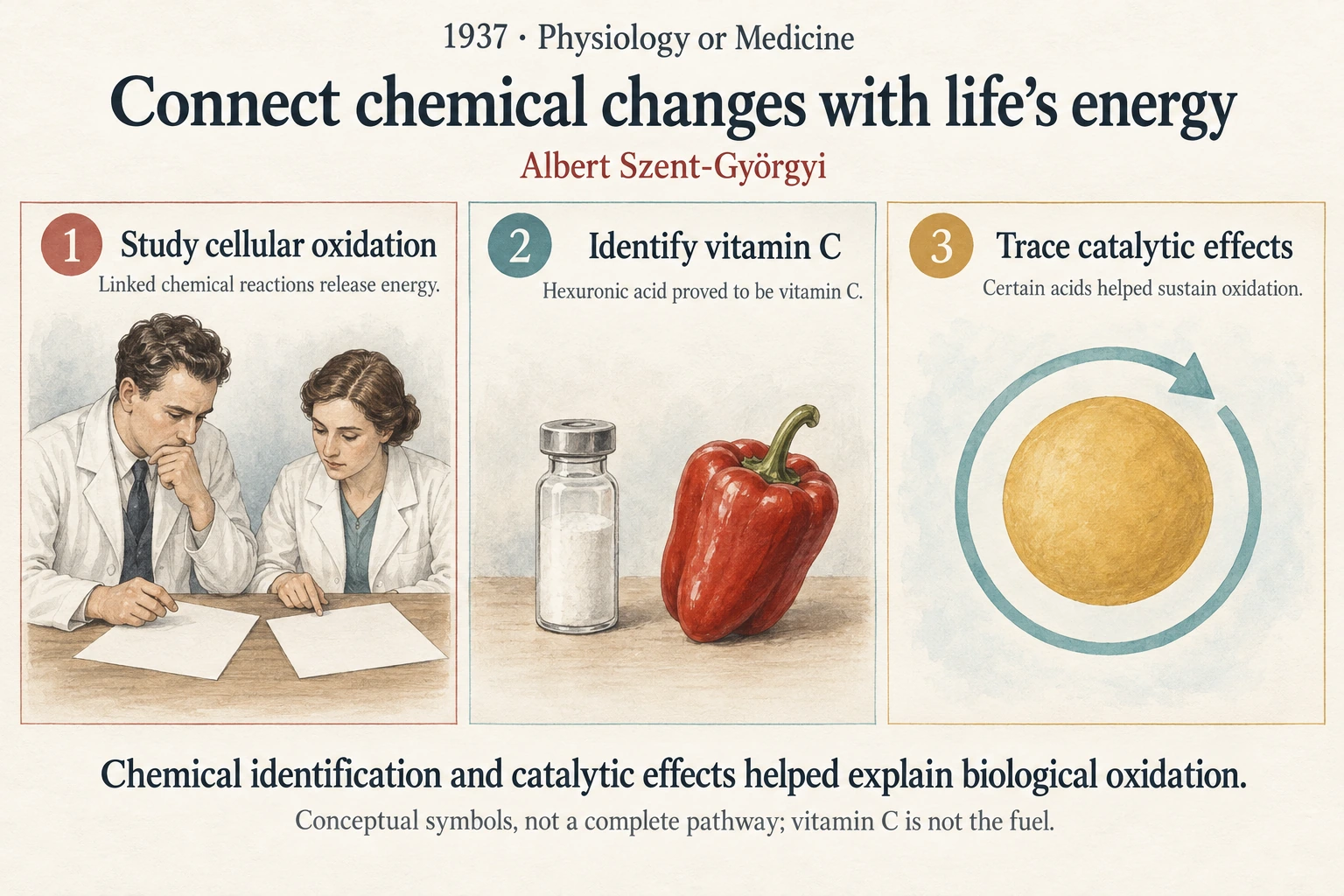
Cells release usable energy through organised chemical reactions, not by burning fuel in an ordinary flame. Szent-Györgyi studied oxidation and reduction and the substances involved in those reactions. He isolated a reducing substance called hexuronic acid; in 1932 work with Svirbely established that it had the anti-scurvy activity associated with vitamin C, now called ascorbic acid.
His research was broader than that identification. At Szeged he and colleagues studied how small amounts of four-carbon acids, including fumaric acid, promoted oxidation. Their regeneration within the reacting system helped explain effects that could not be understood simply by treating the added acid as a supply of fuel. This work contributed to understanding linked reactions in metabolism, without constituting the complete modern account of cellular respiration.
Why it matters
The work connected chemical identification with biological function and helped clarify the organisation of oxidation. Vitamin C’s identification made its activity more precisely investigable, while the acid studies widened understanding of metabolic reactions. The Nobel citation includes both; it should not be reduced to discovering a vitamin in a pepper, nor taken to mean that vitamin C itself supplies all cellular energy.