c.curionodeThe Nobel Archive

1936 · Physiology or Medicine

A nerve can hand over a chemical message

How does activity in a nerve alter a heart, a muscle or another nerve cell? Loewi supplied direct evidence for a released messenger; Dale and collaborators helped identify and extend chemical transmission.

AcetylcholineChemical transmissionHenry DaleOtto Loewi
1936Physiology or Medicine

Visual guide

The prize, pictured

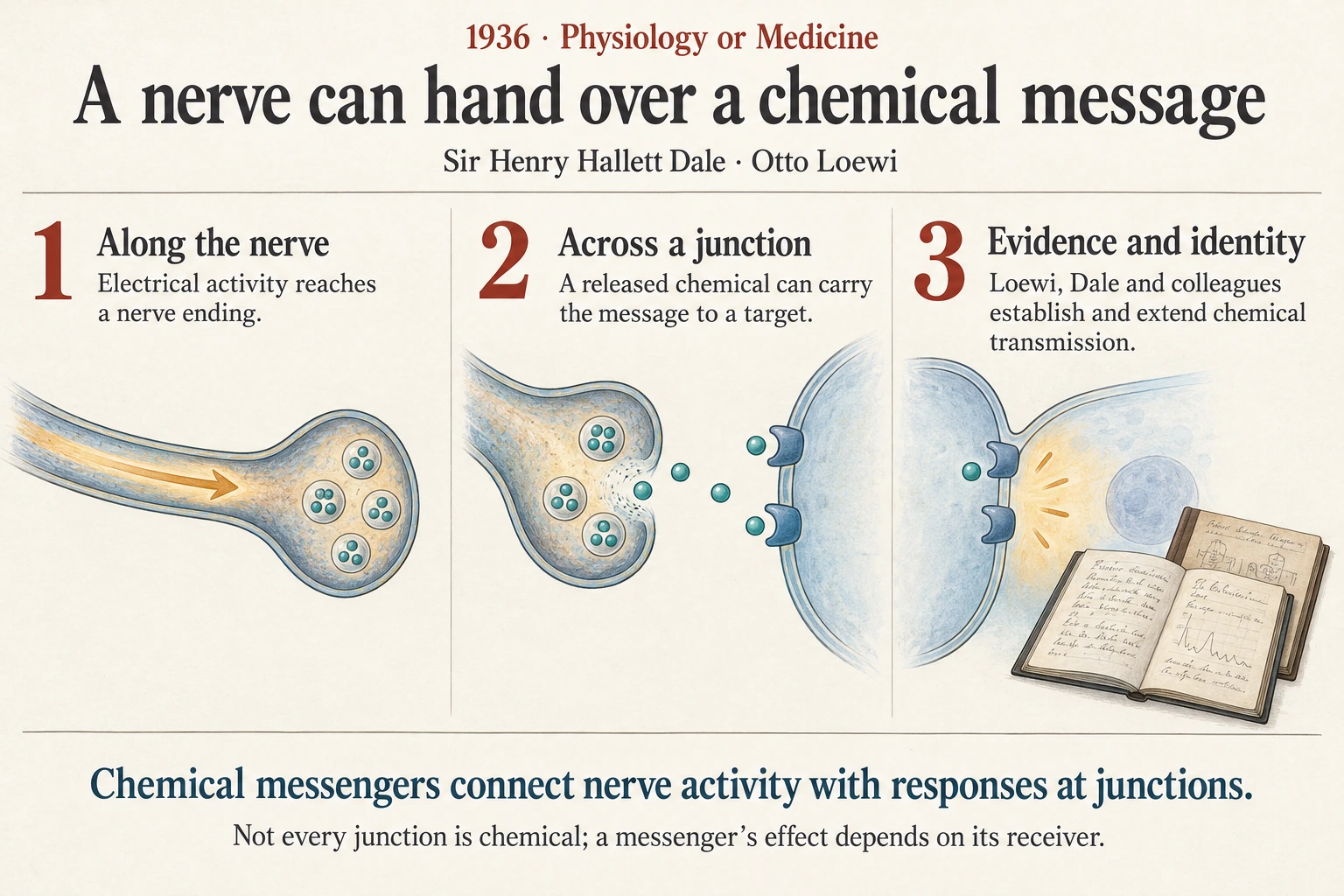
Infographic explaining A nerve can hand over a chemical message
Original AI-generated infographic. A conceptual overview; the explanations and sources below provide context.
Read the poster text

Chemical messengers connect nerve activity with responses at junctions.

  1. Along the nerve

    Electrical activity reaches a nerve ending.

  2. Across a junction

    A released chemical can carry the message to a target.

  3. Evidence and identity

    Loewi, Dale and colleagues establish and extend chemical transmission.

Not every junction is chemical; a messenger’s effect depends on its receiver.

01 · The discovery

The idea, in everyday language

Electrical activity travels along nerves, but that does not explain how every junction passes a message to its next target. Dale’s experiments with acetylcholine showed effects resembling stimulation of some autonomic nerves. This suggested a chemical connection, but resemblance alone did not establish that the substance was normally released at nerve endings.

In 1921 Loewi demonstrated that fluid associated with a stimulated heart could carry an effect to another heart. A transferable chemical, rather than only a direct electrical connection, could account for the change. Further research established the slowing substance as acetylcholine. Loewi and Navratil helped characterise it, while Dale’s group, including Dudley, Feldberg and Gaddum, investigated its occurrence and action at additional junctions. Work on ganglia and motor endings extended the idea beyond the original heart observation. Their equal shares recognised complementary contributions to chemical nerve transmission.

Why it matters

The discoveries helped explain how chemicals can alter communication between nerves and organs, strengthening the foundations of pharmacology and neurophysiology. A released messenger could be investigated as a substance, with its production, breakdown and effects tested separately. This is historical explanation, not treatment or dosing advice.
02 · The people

Who brought the idea to life?

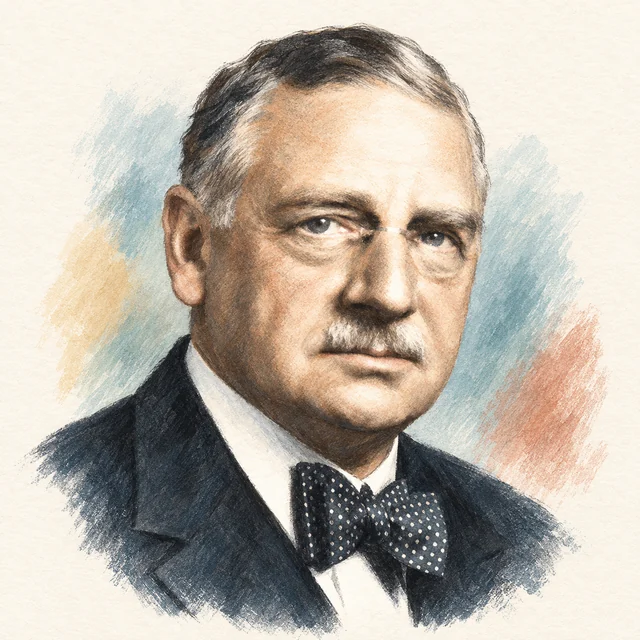
Illustrated portrait of Sir Henry Hallett Dale

Sir Henry Hallett Dale

Prize share · 1/2

Dale received half the Medicine Prize for discoveries concerning chemical transmission of nerve impulses. His acetylcholine research and the work of his collaborators helped identify and extend the chemical mechanism to different nerve junctions.

Read the biography ↗
Illustrated portrait of Otto Loewi

Otto Loewi

Prize share · 1/2

Loewi received half the Medicine Prize for discoveries concerning chemical transmission of nerve impulses. His transferable-effect experiment established evidence for a released chemical messenger, whose identity required subsequent investigation.

Read the biography ↗

03 · Years in the making

The path here

  1. 1909

    Loewi becomes professor at Graz.

  2. 1914

    Dale publishes his investigation of acetylcholine’s actions.

  3. 1921

    Loewi demonstrates a transferable effect after nerve stimulation.

  4. 1928

    Dale becomes director of the National Institute for Medical Research.

  5. 1936

    Dale and Loewi share the prize for chemical transmission of nerve impulses.

04 · Read further

From the original sources

Original explanations by Curionode, based on the official records below. Biographical details and affiliations refer to the award year.

  1. Official award summary nobelprize.org
  2. Award ceremony speech nobelprize.org
  3. Official biography: Sir Henry Hallett Dale nobelprize.org
  4. Official biography: Otto Loewi nobelprize.org

More in Physiology or Medicine

Browse this subject ↗