A life in context
The person behind the prize
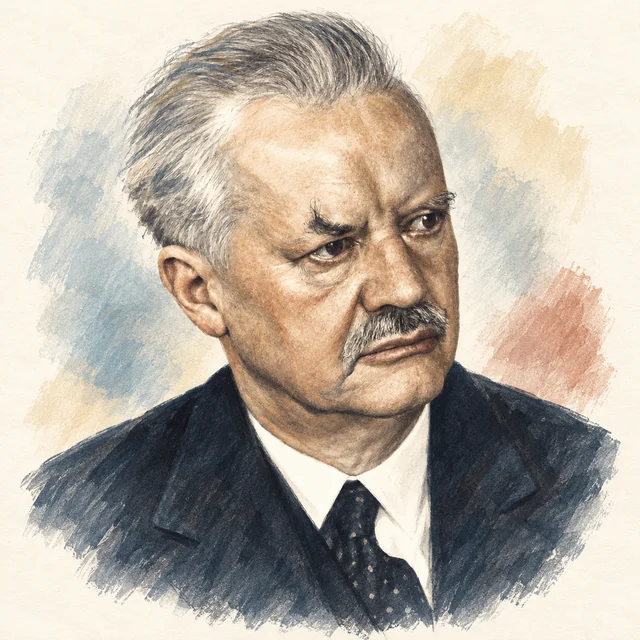
Spemann initially worked in publishing and bookselling before beginning medical studies at Heidelberg in 1891. After further study in Munich, he moved to Würzburg, earning his degree in 1895 and qualifying as a lecturer in 1898. Appointments at Rostock and the Kaiser Wilhelm Institute for Biology preceded his Freiburg professorship in 1919. His experimental embryology asked how an embryo’s cells acquire different developmental roles. Hilde Mangold, his doctoral student, carried out decisive newt experiments in 1921–1922, published jointly with Spemann in 1924. A small region of transplanted tissue could influence neighbouring host cells to form additional embryonic structures. Different pigmentation helped distinguish the cells’ origins. Spemann received the full 1935 Medicine Prize for the organiser effect. Explaining the discovery also requires crediting Mangold’s experimental skill and contribution. Identifying the molecular signals involved took researchers much longer; the original work established a developmental phenomenon rather than a complete molecular mechanism.
The contribution
Spemann received the full Medicine Prize for discovering the organiser effect in embryonic development. The work with Hilde Mangold showed that particular tissue can influence the developmental fate of neighbouring cells.
The idea in plain language
As an embryo develops, cells acquire different roles and form tissues in particular places. Were those roles fixed from the beginning, or could the surroundings change them? Spemann developed ways to test that question in amphibian embryos. His doctoral student Hilde Mangold carried out decisive experiments in 1921–1922; their joint report appeared in 1924. A small region at the dorsal lip of the blastopore, placed elsewhere in a newt embryo, could induce additional embryonic structures.
Read the full award story ↗