A life in context
The person behind the prize
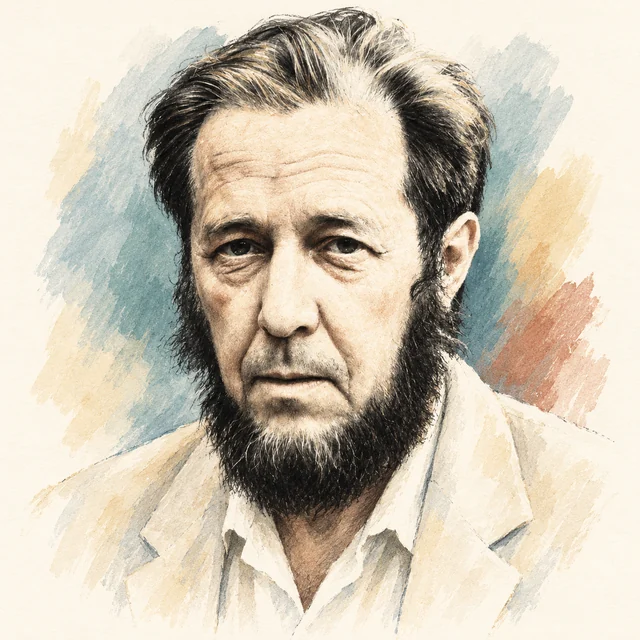
Solzhenitsyn grew up in Rostov and studied physics and mathematics, graduating in 1941 while also pursuing literary interests. Army service ended with his 1945 arrest after criticism of Stalin in correspondence. Imprisonment, work in a special research prison, a political labour camp and subsequent exile shaped his writing. From 1953 to 1956 he taught in Kazakhstan while writing privately. Later teaching in European Russia accompanied continued secret authorship. He offered One Day in the Life of Ivan Denisovich for publication in 1961; it appeared the following year. Further works reached readers despite restrictions: English editions of The First Circle and Cancer Ward were available in 1968. The 1970 prize recognised ethical force within Russian literary traditions. He did not attend the 1970 ceremony and received the insignia in 1974, after leaving the Soviet Union. His later return to Russia in 1994 belongs to subsequent biography. The award-year residence record remains the USSR.
The contribution
Solzhenitsyn pursued Russian literary traditions with ethical force, focusing on dignity under coercion. He received the entire Literature Prize.
The idea in plain language
One Day in the Life of Ivan Denisovich brought the daily experience of a Soviet camp prisoner to readers in 1962. Its attention to ordinary acts and survival gave the wider history an individual scale. Experiences of imprisonment and exile also shaped other works, including The First Circle and Cancer Ward.
Read the full award story ↗

