A life in context
The person behind the prize
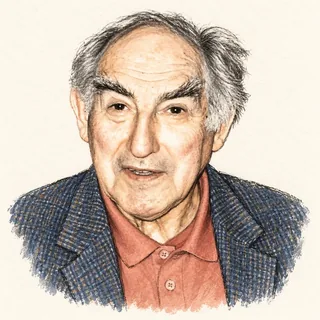
Abrikosov studied at Moscow State University and completed his research doctorate in 1951 under Lev Landau at the Institute for Physical Problems. Working with experimentalists led him to the behaviour of superconducting films and alloys in magnetic fields. He later helped establish the Landau Institute for Theoretical Physics and moved to Argonne National Laboratory in 1991. His career combined mathematical theory with close attention to observations of real materials.
The contribution
Building on the Ginzburg–Landau description, Abrikosov showed that a superconductor can admit magnetic flux through an array of vortices while retaining superconductivity between their cores. His 1957 paper explained the mixed state of type-II materials. These materials are central to powerful superconducting magnets. The result did not mean that superconductivity survives arbitrarily large fields: above an upper critical field it is lost.
The idea in plain language
At low temperatures, many particles can participate in a collective quantum state whose behaviour differs radically from that of ordinary matter. A superconductor can carry electrical current without resistance under suitable conditions. A superfluid can flow without the usual viscous resistance. The two phenomena are related, but electrical charge and the internal organisation of the particles make important differences.
Read the full award story ↗