A life in context
The person behind the prize
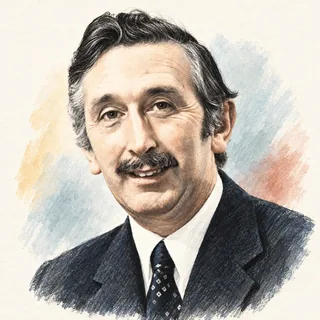
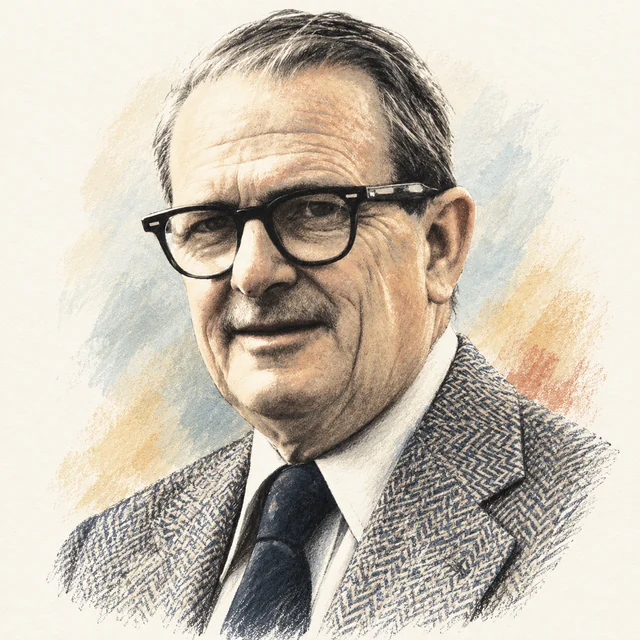
Cormack grew up in South Africa, where reading about astronomy strengthened his interest in physics and mathematics. He switched from electrical engineering to physics at Cape Town and pursued research at Cambridge without completing a doctorate there. Returning to Cape Town as a lecturer in 1950, he worked mainly on nuclear physics. In 1956 a problem involving radiation absorption drew him toward reconstructing the interior of an object from measurements through it. After a Harvard sabbatical he joined Tufts. Papers in 1963 and 1964 described reconstruction work that initially received little attention. His contribution developed independently of Hounsfield’s practical scanner programme.
The contribution
Cormack developed mathematical and experimental foundations for reconstructing cross-sectional attenuation from measurements along many paths. He received one half of the Medicine Prize. His work was an important contribution to computed tomography, within a longer history of mathematics and imaging.
The idea in plain language
An X-ray beam weakens as it passes through matter. Each measurement reflects the combined attenuation along its path, rather than the value at one isolated point. Cormack investigated how many such measurements could be used to recover an internal distribution, publishing work in 1963 and 1964. The key problem is mathematical: infer a section from overlapping path measurements.
Read the full award story ↗