A life in context
The person behind the prize
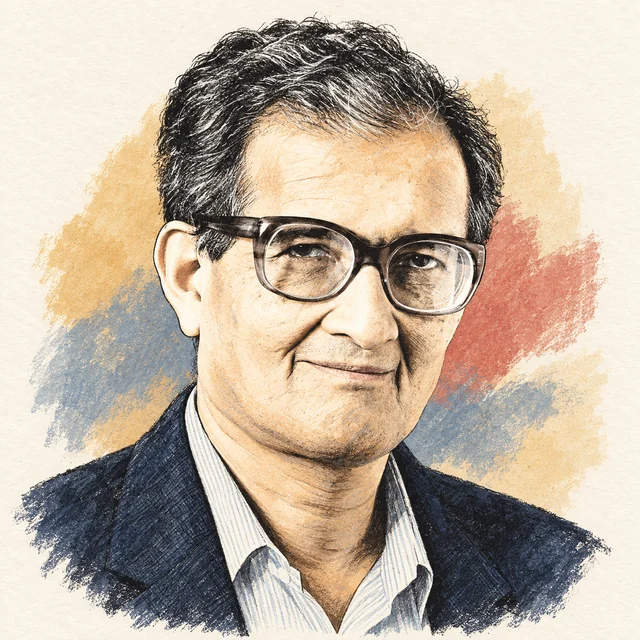
Sen grew up in Bengal and studied in Kolkata and Cambridge, receiving his doctorate in 1959. His career crossed universities in India, Britain and the United States. In 1998 he moved from Harvard to become Master of Trinity College, Cambridge. Experiences of deprivation and conflict helped shape his interest in how economic analysis can attend to the lives and freedoms of people who are worst off.
The contribution
Sen contributed to social-choice theory, the measurement of poverty and inequality, and the analysis of famine. He showed why collective evaluation depends on what information about individuals is admitted, and why an average income can hide deprivation. His entitlement analysis examined how people lose access to food even when supplies exist; his capability approach asked what people are actually able to do and be.
The idea in plain language
A society’s average income says little about who is deprived or what people can actually do. Sen examined the information needed to compare individual welfare and make collective decisions. His work on poverty measures took account of the depth and distribution of deprivation, rather than only counting those below a threshold. His capability approach emphasized real opportunities, including those affected by health and social circumstances.
Read the full award story ↗