A life in context
The person behind the prize
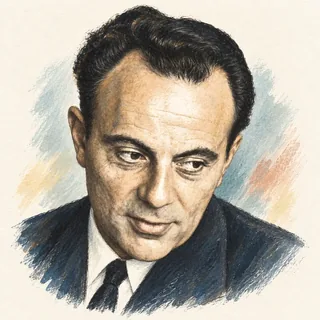
Lwoff joined the Institut Pasteur in 1921, studying with Édouard Chatton and working in Félix Mesnil’s laboratory. He completed his medical degree in 1927 and science doctorate in 1932. Research on protozoan development, nutrition and growth factors included work in Heidelberg and Cambridge. He became a department head at Pasteur in 1938 and professor of microbiology in Paris in 1959. Studies of individual lysogenic bacteria led to the problem of what could induce phage production. In 1950, with Louis Siminovitch and Niels Kjeldgaard, he demonstrated induction by ultraviolet irradiation. This helped distinguish persistent viral genetic information from active virus production. He also studied poliovirus from 1954. His 1965 award recognised genetic control of enzyme and virus synthesis, with Pasteur as his affiliation.
The contribution
Lwoff clarified lysogeny and the induction of bacteriophage production. He received one third of the Medicine Prize.
The idea in plain language
A cell carries genetic information, yet its production of enzymes changes with conditions. Some bacteria also carry phage information without continuously releasing viruses. The problem was to understand how genetic activity could be regulated.
Read the full award story ↗