A life in context
The person behind the prize
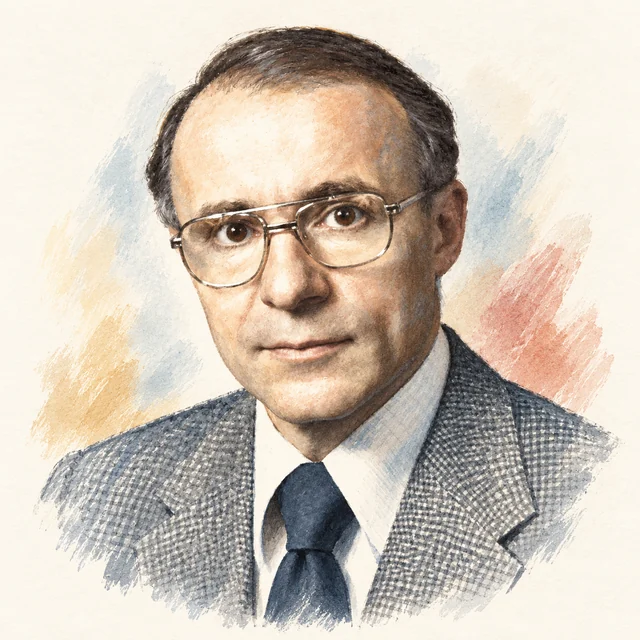
Born in Munich, Penzias escaped Nazi persecution as a child, travelling with his younger brother to England in 1939 before his family reached New York in 1940. At City College he changed from chemical engineering to physics. Army communications work helped him enter microwave research at Columbia, where he studied with Charles Townes. He joined Bell Laboratories in 1961 after completing doctoral work. Communication technology made an unusually sensitive horn antenna and receiver available for astronomy. With Robert Wilson he carefully calibrated the system and investigated persistent excess microwave radiation. Their work became the discovery of the cosmic microwave background. They later studied interstellar molecules and isotopes. Research-management and technology work described in his later autobiography followed the discovery and should not be confused with his 1978 affiliation.
The contribution
Penzias and Wilson identified a persistent, nearly direction-independent microwave background after testing instrumental and local explanations. Each received one quarter of the Physics Prize. Its interpretation as relic radiation drew on earlier cosmological predictions and other researchers’ work.
The idea in plain language
Producing liquid helium made extreme cold available for experiments. Kapitsa developed new apparatus and investigated helium’s unusual flow. The superfluid behaviour reported in the late 1930s showed that a liquid could exhibit collective quantum properties on a scale visible in the laboratory. This was a new state of behaviour, not simply ordinary fluid becoming thicker as it cooled.
Read the full award story ↗