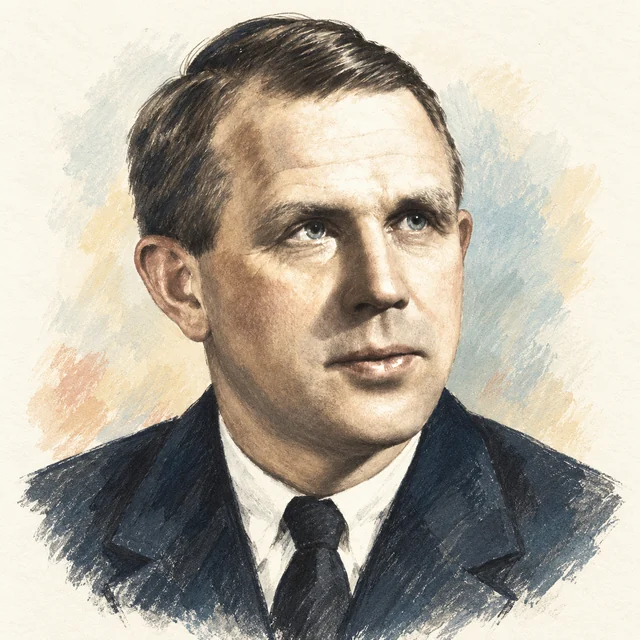
A life in context
The person behind the prize
Virtanen studied chemistry, biology and physics at the University of Helsinki, receiving his master’s degree in 1916 and doctorate in 1919. Further study in physical chemistry, bacteriology and enzymology helped him connect laboratory biochemistry with agricultural problems. He joined the Valio dairy association’s laboratory in 1919, became its director in 1921 and directed the Biochemical Research Institute in Helsinki from 1931. His University of Helsinki professorship began in 1939. A central practical problem was how to keep nutritious green fodder available through a northern winter. His AIV method, named from his initials and first applied in 1932, used controlled acidity to limit biological processes that depleted the stored material. The aim was to conserve useful nutrients rather than create new ones. His broader research examined fermentation, plant nutrition and nitrogen fixation. He received the full 1945 Chemistry Prize, especially for fodder preservation; his Finnish Academy leadership from 1948 belonged to his later career.
The contribution
Virtanen connected biochemical research with agricultural and nutritional needs, especially through the AIV method for preserving green fodder. He received the whole Chemistry Prize.
The idea in plain language
A summer crop does not automatically remain equally nutritious during a long winter. Respiration, fermentation and other processes can consume or degrade parts of the harvested material. Virtanen investigated those changes as a biochemical problem with practical consequences for dairy farming.
Read the full award story ↗

