A life in context
The person behind the prize
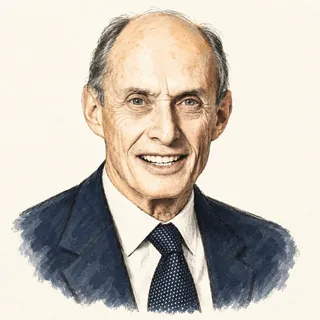
Carlsson grew up in Lund, Sweden, and studied medicine and pharmacology at Lund University. He became professor of pharmacology at Gothenburg in 1959. His research combined methods for measuring chemicals in brain tissue with experiments on their biological effects. That combination challenged the idea that dopamine was merely an intermediate on the way to making another signalling substance.
The contribution
In the late 1950s, Carlsson established dopamine’s importance as a neurotransmitter and its role in movement. Experiments showed that L-DOPA, which can be converted into dopamine, restored movement in animals whose transmitter stores had been depleted. This work helped lead to the understanding of dopamine loss in Parkinson’s disease and the development of L-DOPA treatment. The treatment can relieve symptoms; it is not a cure for the underlying loss of neurons.
The idea in plain language
Neurons communicate through electrical activity and chemical signals at synapses. Carlsson established that dopamine is itself an important transmitter, with a major role in movement. Greengard explored what happens after a transmitter reaches a receptor: intracellular reactions can change proteins by adding or removing phosphate groups, altering the way a neuron responds.
Read the full award story ↗