c.curionodeThe Nobel Archive

2000 · Physiology or Medicine

How nerve signals leave lasting effects

Dopamine, protein modification and changing synapses connected chemical messages with movement, learning and memory.

dopaminephosphorylationsynapseslearning and memory
2000Physiology or Medicine

Visual guide

The prize, pictured

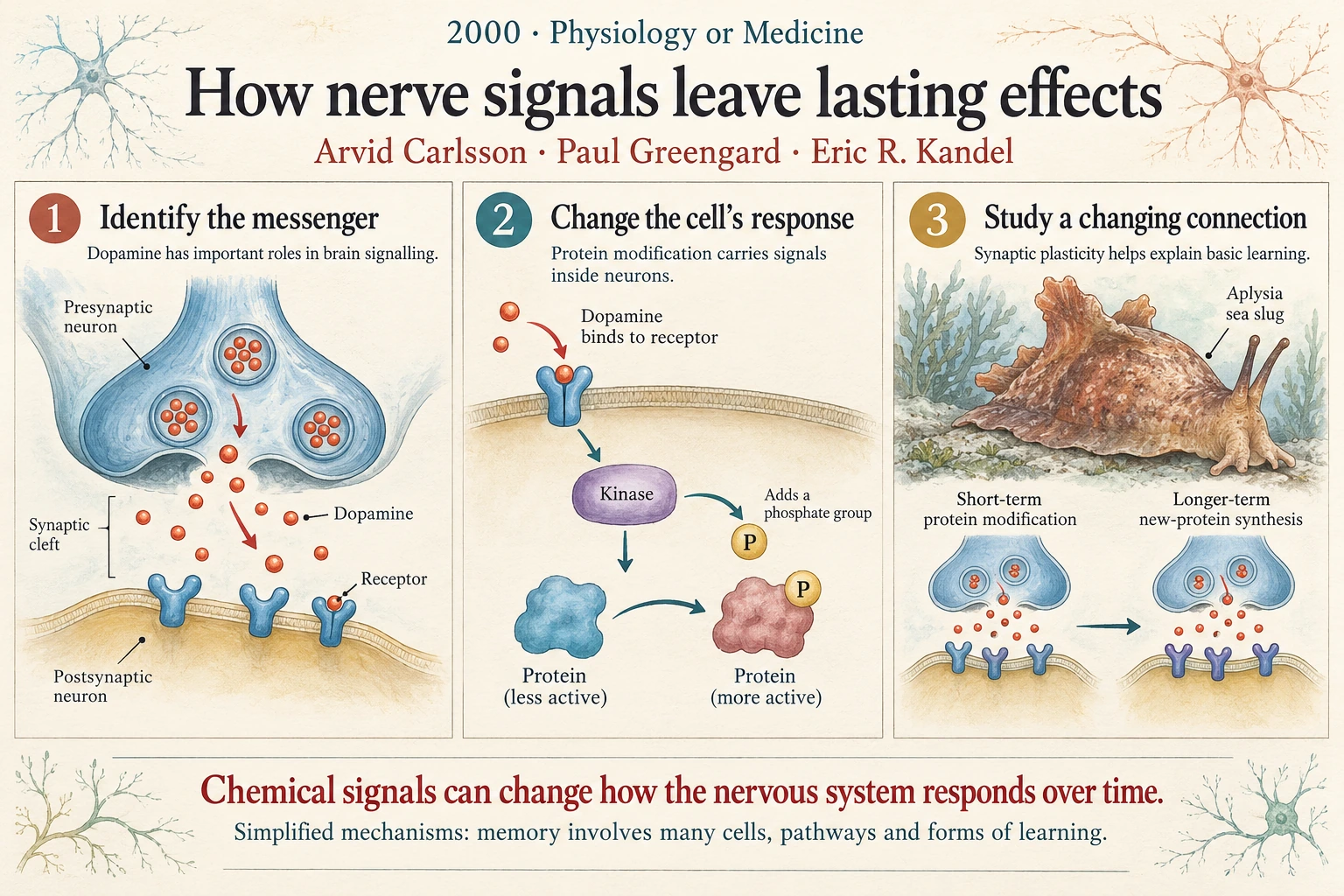
Infographic explaining How nerve signals leave lasting effects
Original AI-generated infographic. A conceptual overview; the explanations and sources below provide context.
Read the poster text

Chemical signals can change how the nervous system responds over time.

  1. Identify the messenger

    Dopamine has important roles in brain signalling.

  2. Change the cell’s response

    Protein modification carries signals inside neurons.

  3. Study a changing connection

    Synaptic plasticity helps explain basic learning.

Simplified mechanisms: memory involves many cells, pathways and forms of learning.

01 · The discovery

The idea, in everyday language

Neurons communicate through electrical activity and chemical signals at synapses. Carlsson established that dopamine is itself an important transmitter, with a major role in movement. Greengard explored what happens after a transmitter reaches a receptor: intracellular reactions can change proteins by adding or removing phosphate groups, altering the way a neuron responds.

Kandel studied learning in Aplysia, a sea slug with an experimentally accessible nervous system. Changes in a protective reflex could be linked to changes in synaptic strength. Short-lived effects could use existing proteins, while persistent effects required new protein synthesis and could change synaptic structure. Together, these discoveries connected signalling molecules, cellular mechanisms and behaviour.

Why it matters

The discoveries helped explain chemical communication and plasticity in the nervous system. Carlsson’s work contributed to the development of L-DOPA treatment for Parkinson’s symptoms. Greengard’s signalling research revealed mechanisms relevant to drug action. Kandel’s experiments showed how basic forms of learning could be studied at the level of cells and molecules, supporting a broader science of memory.

02 · The people

Who brought the idea to life?

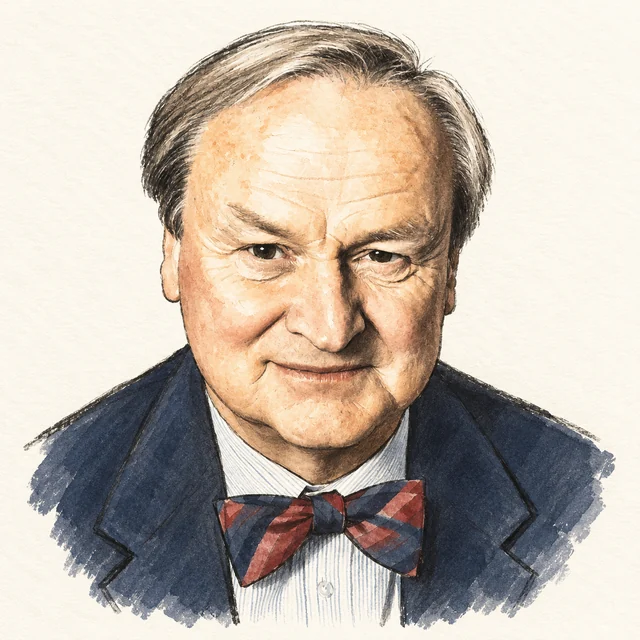
Illustrated portrait of Arvid Carlsson

Arvid Carlsson

Prize share · 1/3

In the late 1950s, Carlsson established dopamine’s importance as a neurotransmitter and its role in movement. Experiments showed that L-DOPA, which can be converted into dopamine, restored movement in animals whose transmitter stores had been depleted. This work helped lead to the understanding of dopamine loss in Parkinson’s disease and the development of L-DOPA treatment. The treatment can relieve symptoms; it is not a cure for the underlying loss of neurons.

Read the biography ↗
Illustrated portrait of Paul Greengard

Paul Greengard

Prize share · 1/3

Greengard showed that dopamine and other transmitters can act through intracellular signalling cascades involving protein phosphorylation. Enzymes add or remove phosphate groups, changing the activity of proteins that regulate neuronal functions, including ion channels. These slower modulatory processes can alter how a cell responds to later signals. The discoveries connected a transmitter binding at the membrane with changes in the cell’s internal machinery.

Read the biography ↗
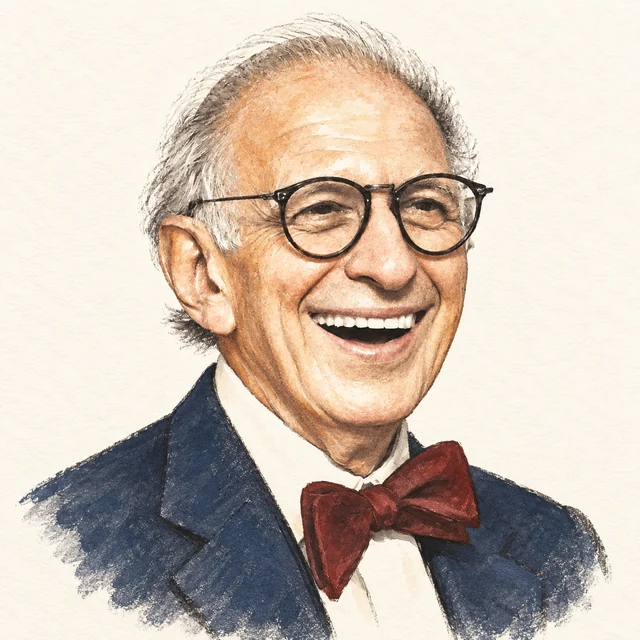
Illustrated portrait of Eric R. Kandel

Eric R. Kandel

Prize share · 1/3

Kandel and collaborators linked learning in Aplysia to changes in the strength of connections between neurons. Short-term changes could involve modification of existing proteins, while longer-lasting changes required new protein synthesis and could involve structural alterations at synapses. This connected behaviour with cellular and molecular mechanisms. Aplysia supplied a tractable model of basic learning processes, not a complete explanation of every kind of human memory.

Read the biography ↗

03 · Years in the making

The path here

  1. 1950s

    Carlsson’s experiments established dopamine’s transmitter role and importance for movement.

  2. 1960s

    Greengard investigated intracellular signalling; Kandel developed cellular studies of learning.

  3. 2000

    The prize recognised discoveries concerning signal transduction in the nervous system.

04 · Read further

From the original sources

Original explanations by Curionode, based on the official records below. Biographical details and affiliations refer to the award year.

  1. Official announcement nobelprize.org

More in Physiology or Medicine

Browse this subject ↗