c.curionodeThe Nobel Archive

1999 · Physiology or Medicine

The address written into a protein

Blobel showed how signals in proteins direct them to the right cellular compartment and help them cross membranes.

signal peptideprotein targetingendoplasmic reticulummembrane transport
1999Physiology or Medicine

Visual guide

The prize, pictured

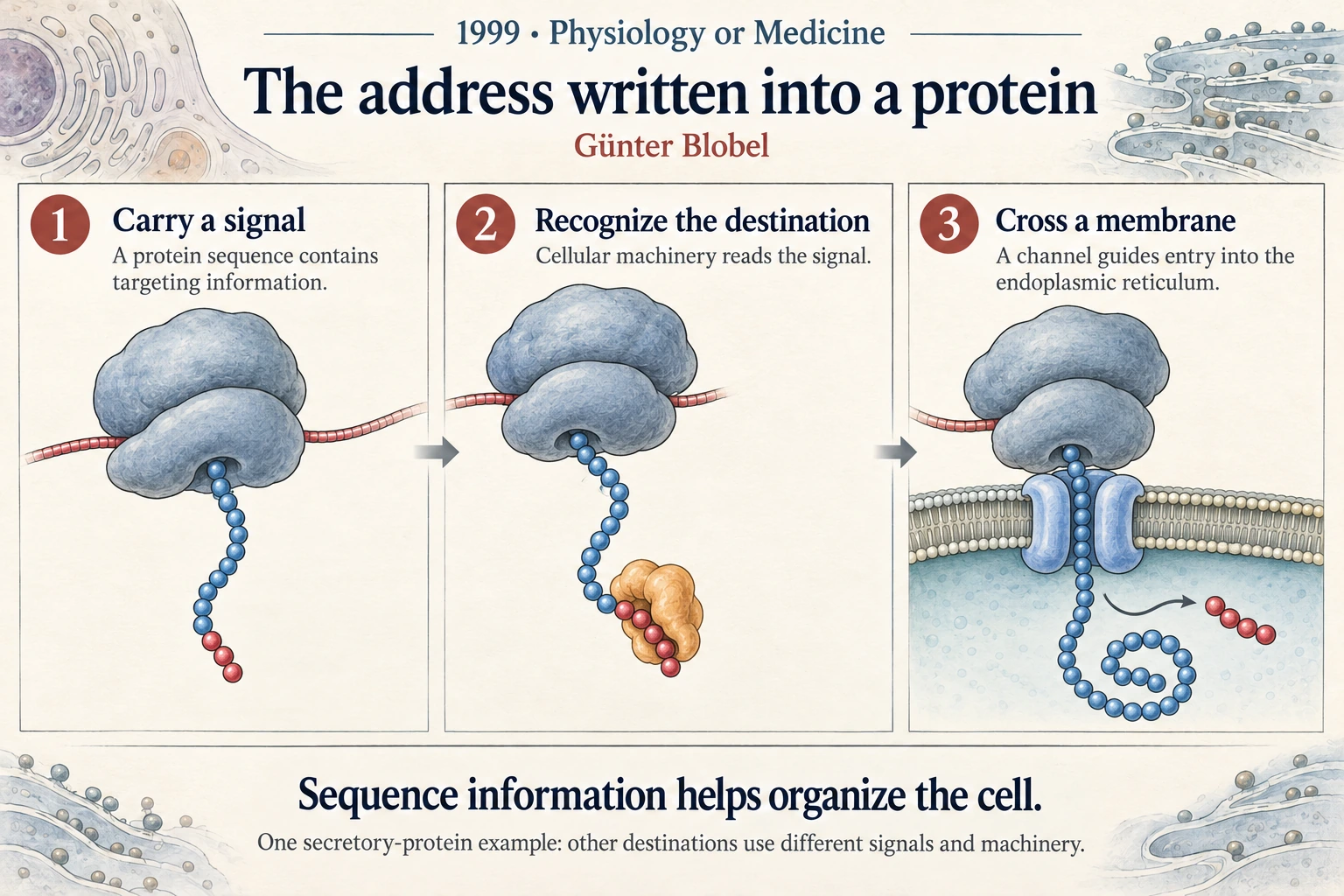
Infographic explaining The address written into a protein
Original AI-generated infographic. A conceptual overview; the explanations and sources below provide context.
Read the poster text

Sequence information helps organize the cell.

  1. Carry a signal

    A protein sequence contains targeting information.

  2. Recognize the destination

    Cellular machinery reads the signal.

  3. Cross a membrane

    A channel guides entry into the endoplasmic reticulum.

One secretory-protein example: other destinations use different signals and machinery.

01 · The discovery

The idea, in everyday language

Cells make many proteins, but a protein is useful only if it reaches an appropriate location. Membranes separate compartments and form barriers to large molecules. The puzzle was how a newly synthesized protein could be directed toward a particular compartment and transported through its membrane rather than remain wherever it was made.

Blobel’s signal hypothesis placed part of the answer in the protein itself: particular amino-acid sequences act as targeting information. His experiments with colleagues clarified how a growing secretory protein is directed to the endoplasmic reticulum and passes through a membrane channel. Further work identified signals and mechanisms for other destinations, connecting protein sequence to cellular organization.

Why it matters

The discovery explained a basic organizing principle shared across many kinds of cells. It helped researchers understand how faulty targeting or transport can contribute to disease and how cells can be used to produce protein medicines. Explaining transport is a foundation for applications, not a guarantee that every trafficking defect can be treated.

02 · The people

Who brought the idea to life?

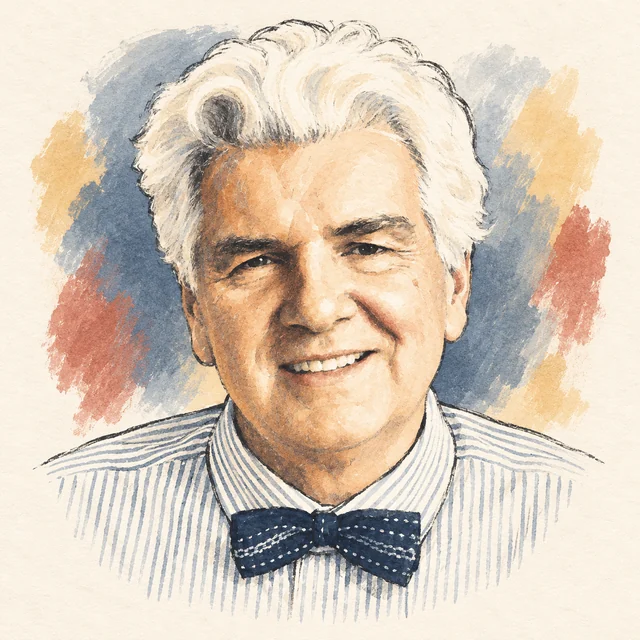
Illustrated portrait of Günter Blobel

Günter Blobel

Prize share · 1/1

Blobel proposed and experimentally developed the signal hypothesis: information in a protein’s amino-acid sequence can direct its transport across a membrane and its location within a cell. His work with colleagues established how newly forming secretory proteins enter the endoplasmic reticulum and helped generalize the idea of targeting signals to other compartments. The discovery connected a protein’s sequence with the cell machinery that sorts and transports it.

Read the biography ↗

03 · Years in the making

The path here

  1. 1971

    Blobel formulated an early version of the signal hypothesis.

  2. 1975

    Biochemical experiments described key steps in entry into the endoplasmic reticulum.

  3. 1980

    Blobel formulated general principles for protein sorting and targeting.

  4. 1999

    The prize recognized intrinsic signals governing protein transport and localization.

04 · Read further

From the original sources

Original explanations by Curionode, based on the official records below. Biographical details and affiliations refer to the award year.

  1. Official announcement nobelprize.org

More in Physiology or Medicine

Browse this subject ↗