A life in context
The person behind the prize
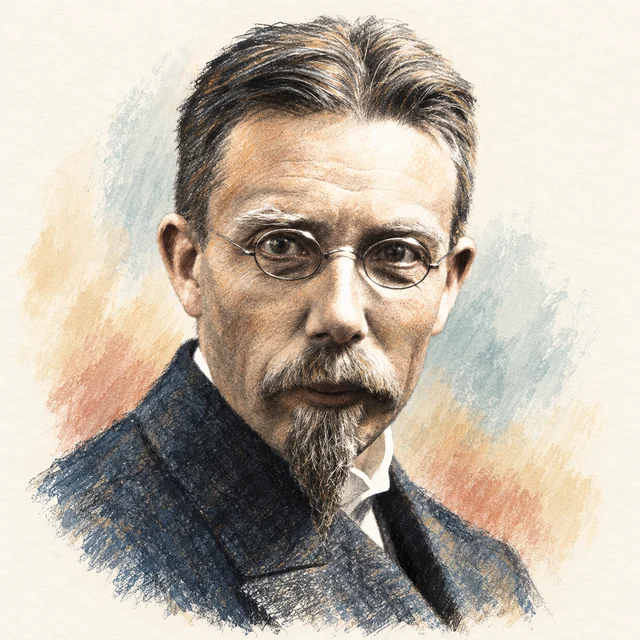
Krogh was born in Grenå, Denmark, and entered the University of Copenhagen in 1893. His interests moved from medicine towards zoology, and in 1897 he began working in Christian Bohr’s physiological laboratory. A doctorate in 1903 concerned gas exchange in frogs. Precise instruments became a hallmark of his research. With Marie Krogh, a physician and investigator in her own right, he re-examined gas exchange in the lungs and supported diffusion as its explanation. That work led towards another question: how does oxygen reach working tissues as their needs change? Krogh combined measurements, calculations and microscopic observations to study the capillary network. His historical recruitment model proposed that changes in the blood-filled network could increase the surface available for oxygen exchange. The full 1920 Medicine Prize recognised the capillary regulating mechanism, rather than the earlier lung work alone. Copenhagen University was his official award affiliation. His research also included blood flow, comparative physiology and the development of measuring apparatus. He held a university chair until retirement in 1945 and continued in a private laboratory. He died in Copenhagen in 1949. His model was an important stage in understanding tissue oxygen supply, not a complete description of all modern microcirculation.
The contribution
Krogh received the full Medicine Prize for the capillary motor regulating mechanism. His quantitative studies and observations connected the effective capillary exchange network with the changing oxygen requirements of tissues.
The idea in plain language
Working muscle needs more oxygen. Blood must carry it close enough to the cells for exchange across the walls of tiny vessels, the capillaries. A greater overall blood flow is part of the response, but the arrangement and effective use of the exchange network also matter.
Read the full award story ↗