A life in context
The person behind the prize
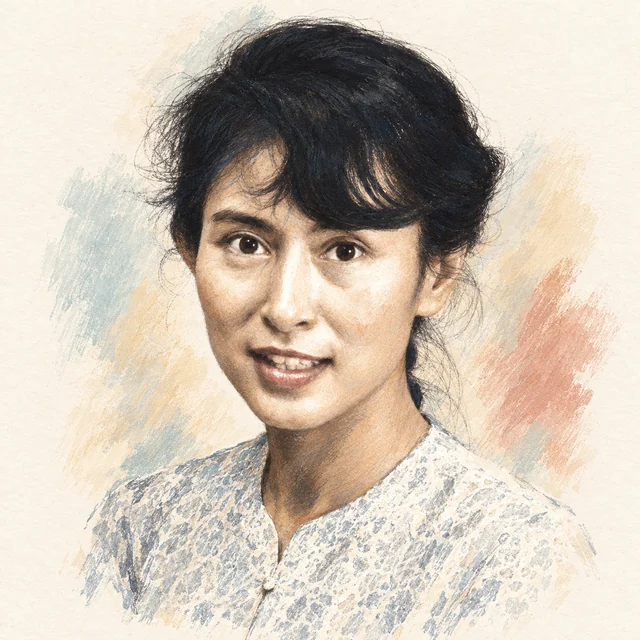
Aung San Suu Kyi was born in Rangoon, studied in India and at Oxford, and lived abroad before returning to Burma in 1988 to care for her mother. She entered the democracy movement and helped establish the National League for Democracy. Placed under house arrest in 1989, she was confined when the party won the 1990 election and when the prize was awarded. Later political office belongs to a different period: in 2019, as foreign minister, she represented Myanmar at the International Court of Justice in proceedings concerning alleged genocide of the Rohingya.
The contribution
The 1991 prize recognised nonviolent struggle for democracy and human rights under military repression. Her sons accepted the award while she remained confined. Later history requires separate scrutiny: UN investigators documented grave military abuses against the Rohingya and criticised denial of responsibility by both military and civilian authorities; her 2019 court presentation defended Myanmar’s position. The prize is not a lifetime endorsement of subsequent conduct. Following the February 2021 coup and renewed detention, the Nobel Committee called for her release.
The idea in plain language
Burma’s military authorities suppressed the democracy movement that expanded in 1988. Aung San Suu Kyi helped establish the National League for Democracy and called for nonviolent political change. The party won the 1990 parliamentary election, but the military did not transfer power. She remained under house arrest when the 1991 Peace Prize recognised her struggle for democracy and human rights.
Read the full award story ↗

