c.curionodeThe Nobel Archive

1991 · Peace

Defend democracy through nonviolent resistance

The 1991 prize honoured resistance to military repression; later history requires a separate account of human rights.

nonviolencedemocracyMyanmarhuman rightsRohingya
1991Peace

Visual guide

The prize, pictured

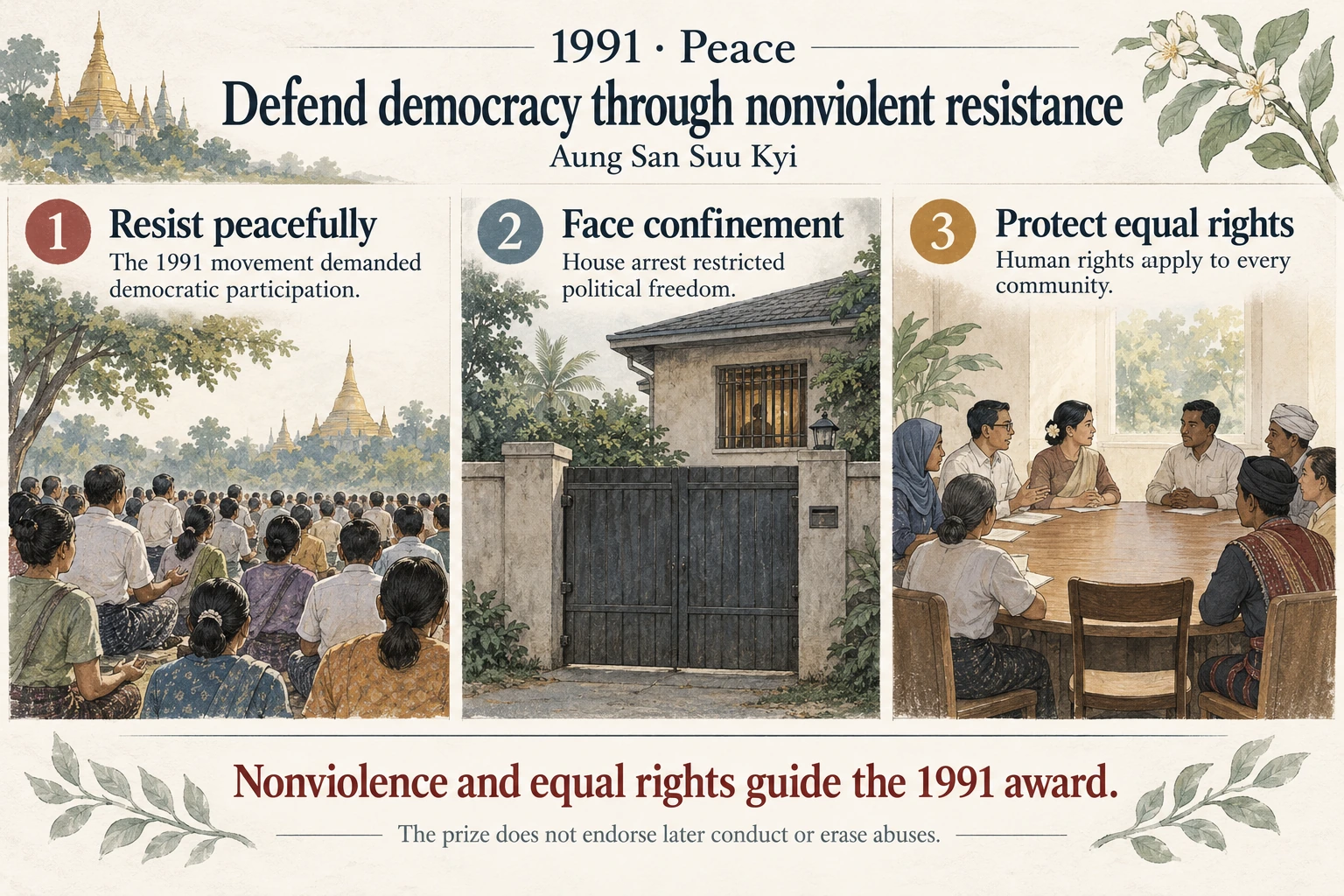
Infographic explaining Defend democracy through nonviolent resistance
Original AI-generated infographic. A conceptual overview; the explanations and sources below provide context.
Read the poster text

Nonviolence and equal rights guide the 1991 award.

  1. Resist peacefully

    The 1991 movement demanded democratic participation.

  2. Face confinement

    House arrest restricted political freedom.

  3. Protect equal rights

    Human rights apply to every community.

The prize does not endorse later conduct or erase abuses.

01 · The contribution

The idea, in everyday language

Burma’s military authorities suppressed the democracy movement that expanded in 1988. Aung San Suu Kyi helped establish the National League for Democracy and called for nonviolent political change. The party won the 1990 parliamentary election, but the military did not transfer power. She remained under house arrest when the 1991 Peace Prize recognised her struggle for democracy and human rights.

The recognition drew international attention to political prisoners and denied democratic participation. It did not mean that the 1990 vote had made her president or that military rule had ended. The prize’s human-rights principle also requires attention to people excluded from later political protection, including the Rohingya. The account of the 1991 movement must therefore be read alongside documented later abuses and responsibility.

Why it matters

The award amplified a nonviolent democracy campaign and resistance to political confinement. Its significance belongs to that historical struggle. UN investigators later documented grave crimes against the Rohingya and criticised denial of responsibility by military and civilian authorities. In 2019 Suu Kyi represented Myanmar in International Court of Justice proceedings concerning alleged genocide, defending the state’s position.


02 · The people

Who brought the idea to life?

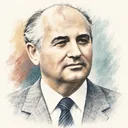
Illustrated portrait of Aung San Suu Kyi

Aung San Suu Kyi

Prize share · 1

The 1991 prize recognised nonviolent struggle for democracy and human rights under military repression. Her sons accepted the award while she remained confined. Later history requires separate scrutiny: UN investigators documented grave military abuses against the Rohingya and criticised denial of responsibility by both military and civilian authorities; her 2019 court presentation defended Myanmar’s position. The prize is not a lifetime endorsement of subsequent conduct. Following the February 2021 coup and renewed detention, the Nobel Committee called for her release.

Read the biography ↗

03 · Years in the making

The path here

  1. 1988

    Suu Kyi joins the democracy movement and helps establish the NLD.

  2. 1989

    Military authorities place her under house arrest.

  3. 1990

    The NLD wins the election, but the military does not hand over power.

  4. 1991

    Her sons accept the Peace Prize on her behalf.

  5. 2019

    She defends Myanmar’s position at an ICJ hearing concerning alleged genocide of the Rohingya.

  6. 2021

    After the coup and renewed detention, the Nobel Committee calls for her release.

04 · Read further

From the original sources

Original explanations by Curionode, based on the official records below. Biographical details and affiliations refer to the award year.

  1. Official announcement nobelprize.org
  2. UN fact-finding report (2018) ohchr.org
  3. UN findings on Myanmar (2019) bangkok.ohchr.org
  4. ICJ hearing record (2019) icj-cij.org
  5. Nobel Committee statements (2021–2022) nobelprize.org