A life in context
The person behind the prize
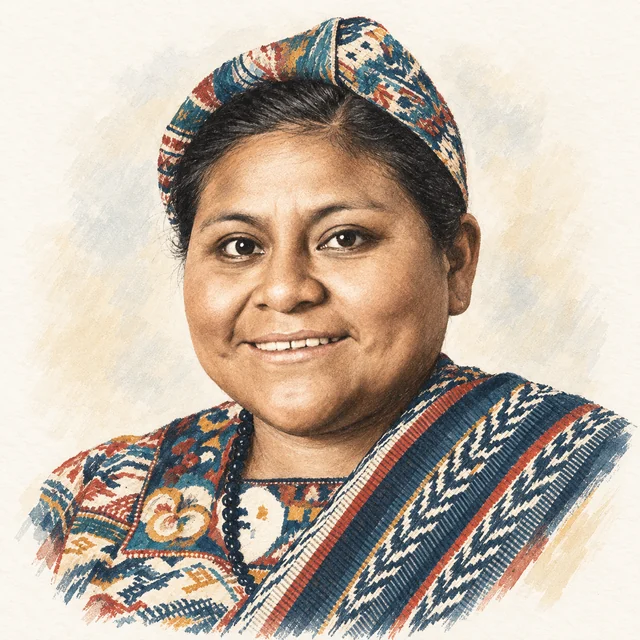
Menchú grew up in a K’iche’ Maya farming family in Guatemala. Social organising developed amid severe repression and civil war; members of her family were killed, and she fled to Mexico in 1981. From exile she worked to bring Indigenous communities’ rights and Guatemala’s violence to international attention. Her recorded testimony, edited by Elisabeth Burgos, became internationally influential, while some autobiographical details later became contested.
The contribution
Menchú advocated social justice and reconciliation grounded in respect for Indigenous peoples’ rights. The award recognised that work in 1992, while Guatemala’s conflict was still continuing. Later disputes about portions of her testimony do not erase documented state violence; the Nobel Committee stated that the decision did not rest primarily on the autobiography. Reconciliation requires rights, accountability and changes in power, not simply asking those who suffered to forget.
The idea in plain language
Guatemala’s civil war and repression devastated many Indigenous communities. Menchú’s organising grew out of that experience and the struggle over rights, land and social inequality. From exile, she helped make the circumstances of Maya communities visible internationally. The work recognised in 1992 joined advocacy for social justice with reconciliation across cultural and social divisions.
Read the full award story ↗

