01 · The contribution
The idea, in everyday language
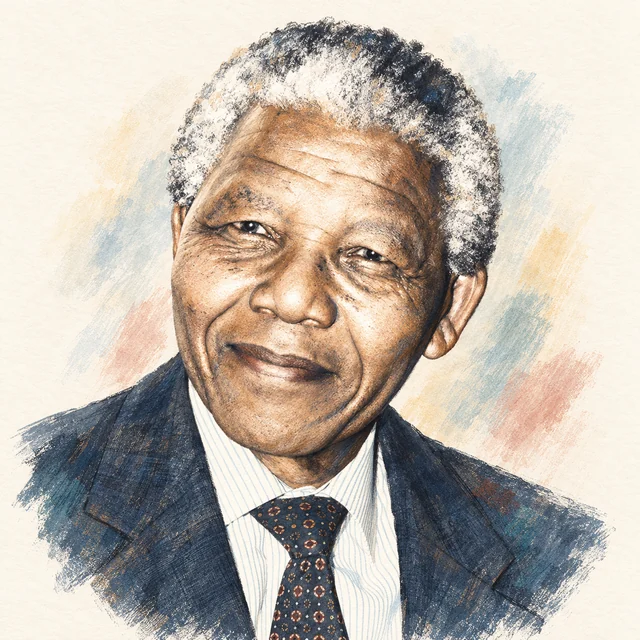
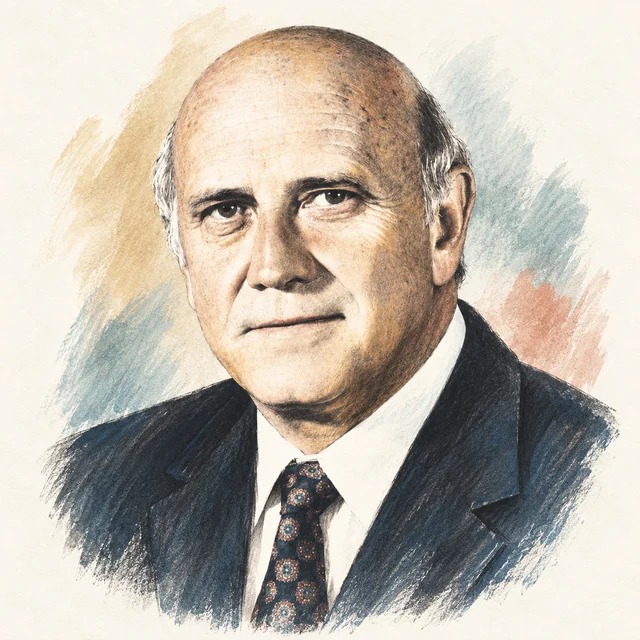
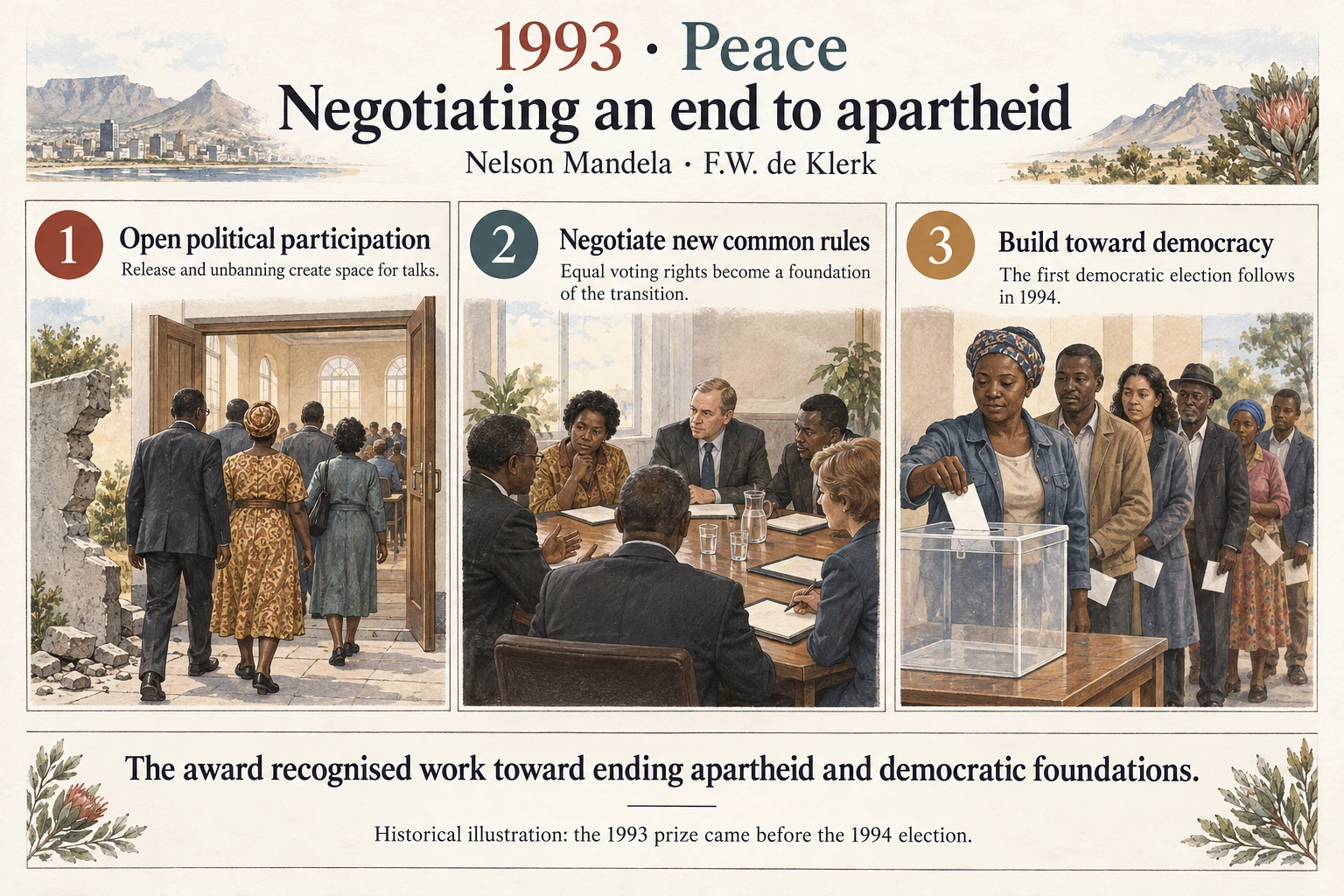
Apartheid was a system of enforced racial separation and white minority rule, not simply a disagreement between cultures. Mandela and de Klerk approached its end from profoundly different positions: Mandela led a liberation movement after decades of imprisonment; de Klerk led a government whose institutions had upheld the system. Negotiations sought a political order with equal voting rights.
The 1990 lifting of opposition bans and Mandela’s release made open negotiations possible. Agreements on a constitutional transition then brought South Africa toward its first democratic election in April 1994. The Nobel recognition in 1993 came while that transition was still being built. It honoured efforts toward a peaceful change, rather than declaring that violence or inequality had already ended.
Why it matters
The negotiated transition created foundations for democratic participation and a new constitutional order. It depended on activists, political movements, negotiators and communities far beyond the two laureates. The 1994 election and Mandela’s presidency are later outcomes, distinct from the situation when the award was announced.