c.curionodeThe Nobel Archive

1995 · Peace

Scientists across nuclear divides

Rotblat and Pugwash built sustained dialogue about nuclear dangers when political confrontation made communication difficult.

nuclear disarmamentscientific responsibilityCold War dialoguearms control
1995Peace

Visual guide

The prize, pictured

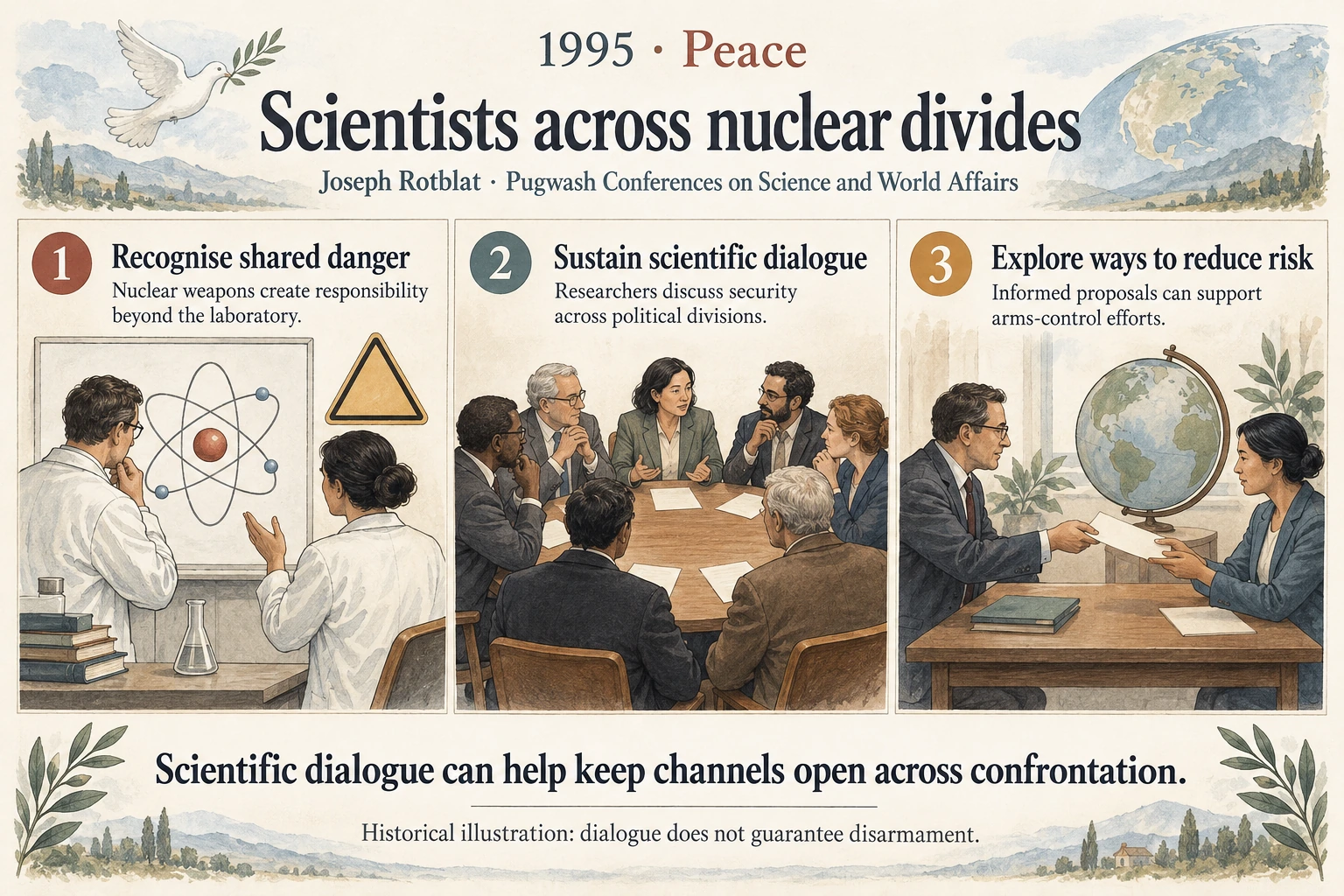
Infographic explaining Scientists across nuclear divides
Original AI-generated infographic. A conceptual overview; the explanations and sources below provide context.
Read the poster text

Scientific dialogue can help keep channels open across confrontation.

  1. Recognise shared danger

    Nuclear weapons create responsibility beyond the laboratory.

  2. Sustain scientific dialogue

    Researchers discuss security across political divisions.

  3. Explore ways to reduce risk

    Informed proposals can support arms-control efforts.

Historical illustration: dialogue does not guarantee disarmament.

01 · The contribution

The idea, in everyday language

The destructive power of nuclear weapons gave scientists a responsibility extending beyond laboratory discovery. The 1955 Russell–Einstein Manifesto called attention to the threat of nuclear war. The first Pugwash conference in 1957 brought researchers from different countries together to consider that danger. Scientific knowledge could provide common ground even when their governments were opponents.

Rotblat helped organise and sustain this movement, while Pugwash provided an international network of conferences and discussions. Participants explored arms control, disarmament and other security questions, sometimes using informal channels to understand concerns that official negotiations could not readily address. The 1995 Nobel Committee honoured their efforts to reduce nuclear weapons’ role in international politics and, in the longer term, eliminate them.

Why it matters

Pugwash helped create durable channels for technically informed discussion during and after the Cold War. The recognition highlighted both collective institutions and an individual’s sustained leadership. Arms-control outcomes also depend on governments, verification arrangements and many other participants; the award did not claim nuclear disarmament had already been achieved.
02 · The recipients

Who brought the idea to life?

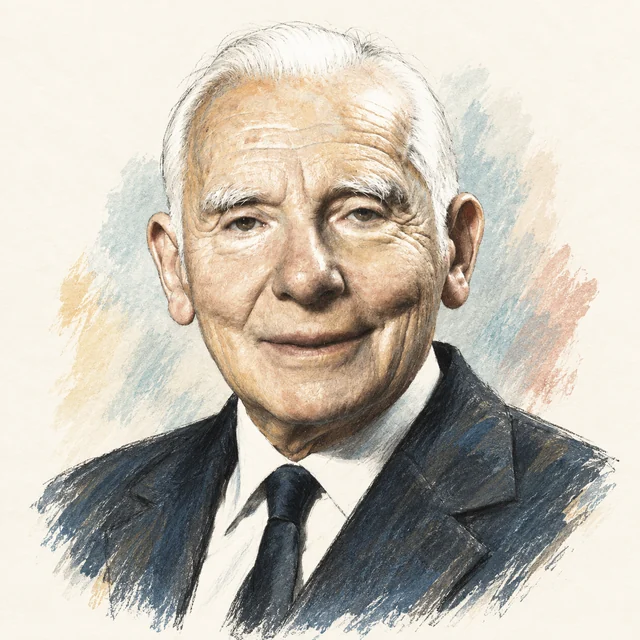
Illustrated portrait of Joseph Rotblat

Joseph Rotblat

Prize share · 1/2

Rotblat signed the 1955 Russell–Einstein Manifesto and helped organise the first Pugwash conference in 1957. As secretary-general and later president, he helped maintain a forum where scientists could discuss nuclear dangers across political divisions. He received half the Peace Prize, while the Pugwash organisation received the other half. The recognition honoured work toward reducing nuclear weapons’ role and ultimately eliminating them, not an accomplished abolition.

Read the biography ↗
Symbolic illustration representing Pugwash Conferences on Science and World Affairs

Pugwash Conferences on Science and World Affairs

Prize share · 1/2

Pugwash convened conferences and smaller discussions on nuclear dangers, arms control and disarmament. Informal contact could help participants understand one another’s concerns and explore proposals when official relations were tense. The Nobel Committee honoured this sustained collective effort alongside Rotblat’s leadership. Its influence depends on many people and political decisions; dialogue itself neither verifies a treaty nor guarantees that weapons are eliminated.

Read the biography ↗

03 · Years in the making

The path here

  1. 1955

    The Russell–Einstein Manifesto warns about nuclear war and calls for scientific discussion.

  2. 1957

    The first Pugwash conference takes place in Nova Scotia, Canada.

  3. 1988

    Rotblat becomes Pugwash president after decades of organising and leadership.

  4. 1995

    Rotblat and Pugwash each receive half the Peace Prize.

04 · Read further

From the original sources

Original explanations by Curionode, based on the official records below. Biographical details and affiliations refer to the award year.

  1. Official announcement nobelprize.org