c.curionodeThe Nobel Archive

1997 · Peace

Turning a campaign into a ban

An international network and its coordinator helped make a comprehensive anti-personnel mine treaty possible.

ICBLanti-personnel minesOttawa Treatyhumanitarian disarmament
1997Peace

Visual guide

The prize, pictured

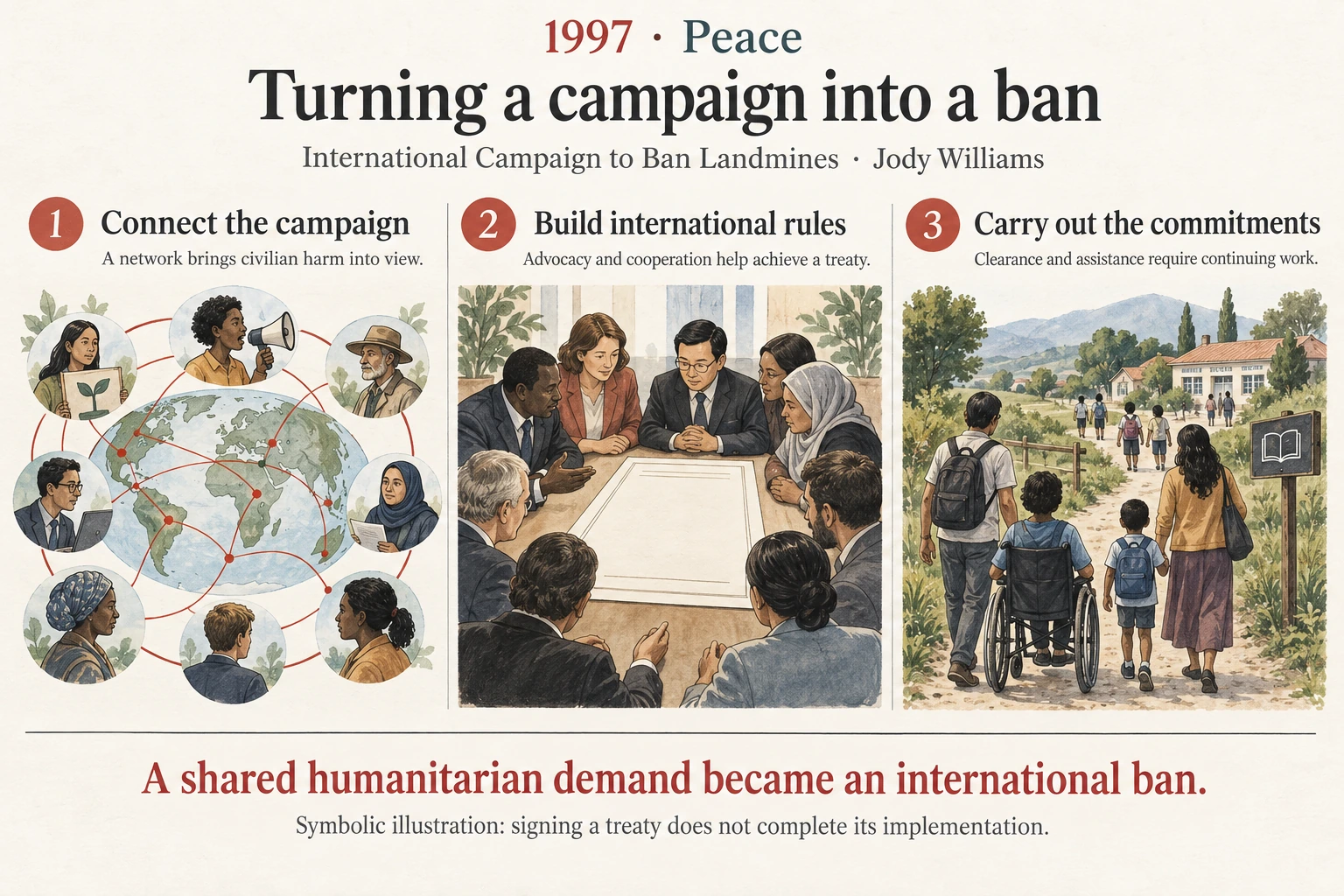
Infographic explaining Turning a campaign into a ban
Original AI-generated infographic. A conceptual overview; the explanations and sources below provide context.
Read the poster text

A shared humanitarian demand became an international ban.

  1. Connect the campaign

    A network brings civilian harm into view.

  2. Build international rules

    Advocacy and cooperation help achieve a treaty.

  3. Carry out the commitments

    Clearance and assistance require continuing work.

Symbolic illustration: signing a treaty does not complete its implementation.

01 · The contribution

The idea, in everyday language

Anti-personnel mines can continue harming civilians long after a conflict has ended, obstructing everyday life and recovery. The ICBL linked organisations across countries to make the humanitarian consequences visible and press for a comprehensive ban. Williams coordinated the network’s advocacy and cooperation with supportive governments. The Nobel Committee recognized both the collective campaign and her leadership.

The Ottawa process produced a treaty adopted in September 1997 and opened for signature that December, after the October prize announcement. It prohibited key activities involving anti-personnel mines and required destruction, clearance and cooperation. Entry into force followed in 1999. The campaign’s achievement was a major change in international rules; practical protection still required states and partners to carry out the commitments.

Why it matters

The prize highlighted humanitarian disarmament and cooperation between civil society and governments. It showed how a network could help convert a proposed ban into an achievable treaty. The organisation’s half share and Williams’s half share recognize complementary contributions, while clearance and assistance remain continuing tasks.
02 · The recipients

Who brought the idea to life?

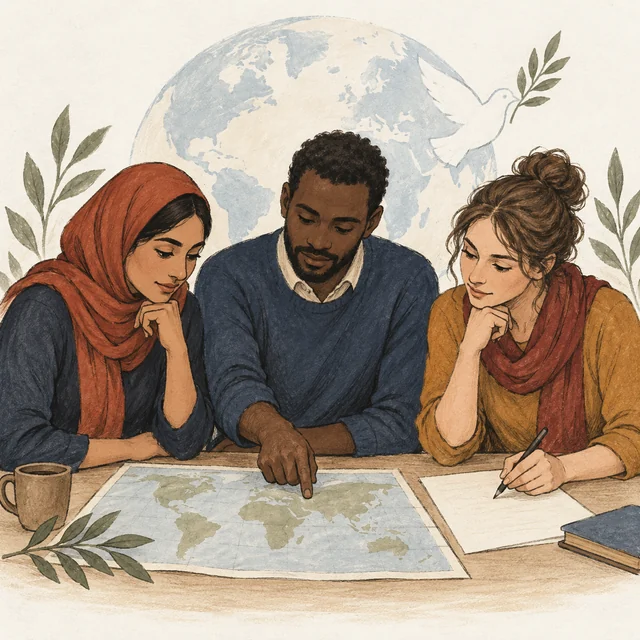
Symbolic illustration representing International Campaign to Ban Landmines

International Campaign to Ban Landmines

Prize share · 1/2

The ICBL organised public pressure and cooperation with governments to turn a proposed ban into a treaty process. It advocated prohibition, clearance and assistance to people affected by mines. The Nobel Committee recognized a network that translated popular commitment into international action, while acknowledging the role of supportive states. A campaign can help establish rules; implementation and clearance remain long-term responsibilities.

Read the biography ↗
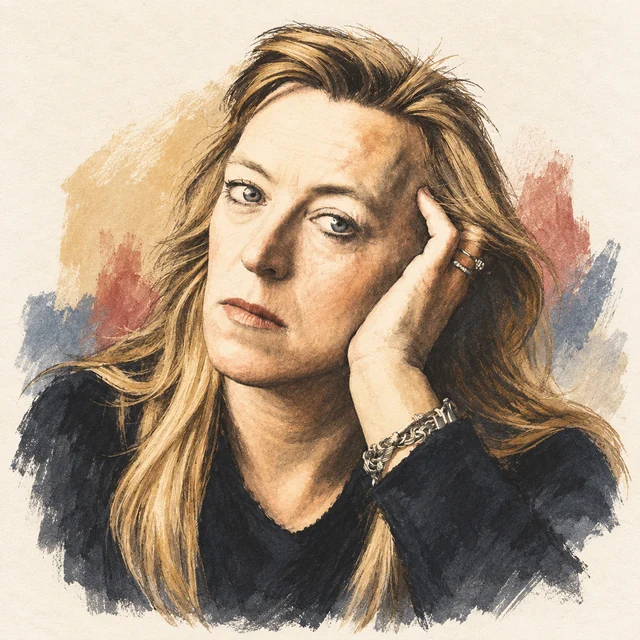
Illustrated portrait of Jody Williams

Jody Williams

Prize share · 1/2

As the ICBL’s coordinator, Williams helped build and mobilize a network of organisations pressing for a comprehensive anti-personnel mine ban. She communicated the humanitarian case and worked with campaign partners and supportive governments during the Ottawa process. She received half the Peace Prize personally; the other half went to the ICBL, preserving the distinction between her leadership and the collective organisation.

Read the biography ↗

03 · Years in the making

The path here

  1. 1992

    The ICBL was formally founded after earlier organising work.

  2. 1997

    The treaty was adopted, the Peace Prize announced, and the treaty opened for signature.

  3. 1999

    The Mine Ban Treaty entered into force.

04 · Read further

From the original sources

Original explanations by Curionode, based on the official records below. Biographical details and affiliations refer to the award year.

  1. Official announcement nobelprize.org
  2. UN treaty record treaties.un.org