01 · The contribution
The idea, in everyday language
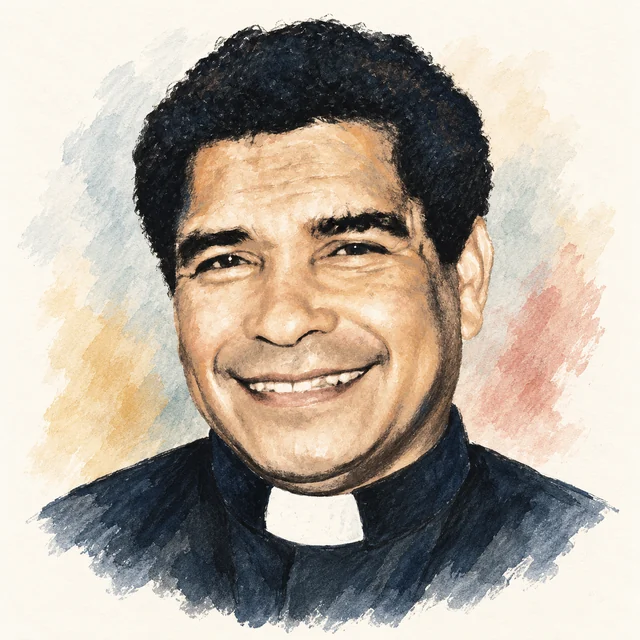
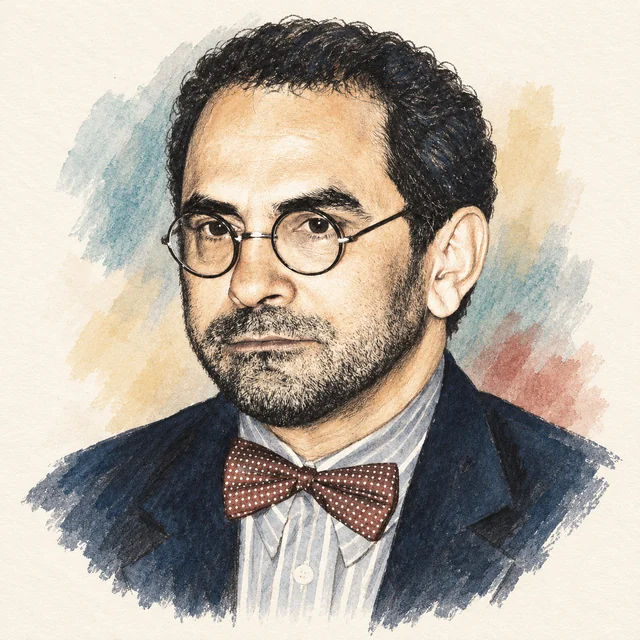
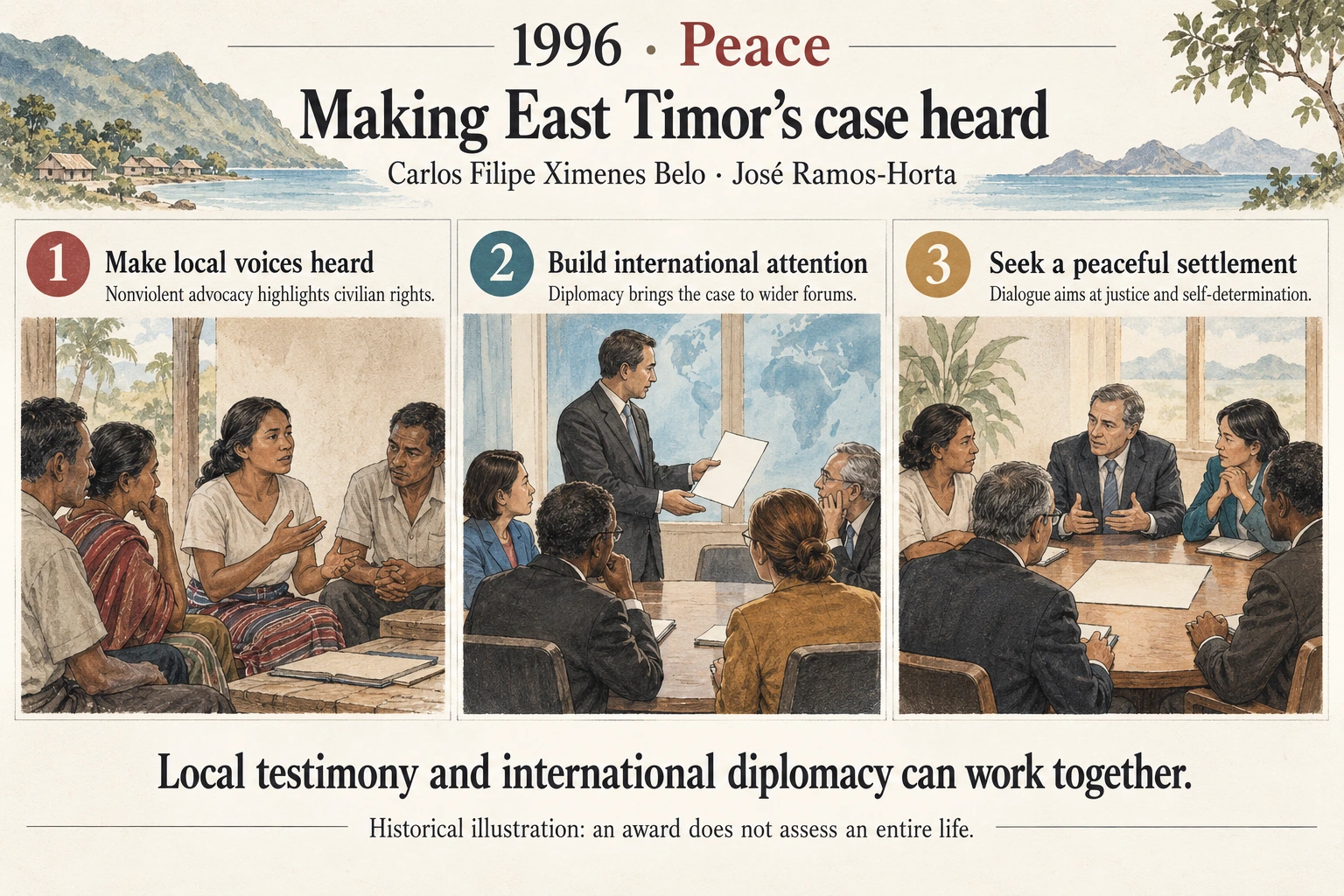
After Indonesia’s 1975 invasion, East Timorese people faced violence and repression. The Nobel Committee highlighted two different roles in the effort to protect civilians and pursue self-determination. Belo, a church leader inside the territory, spoke against abuses and for nonviolence and dialogue. Ramos-Horta brought the East Timorese case to international institutions and developed proposals for a negotiated settlement.
Their work linked local testimony with sustained international attention. Ramos-Horta’s 1992 plan proposed humanitarian cooperation and international involvement as steps toward a peaceful resolution. In 1996 the committee honoured those efforts and hoped to encourage diplomacy; it was not announcing that the conflict had ended. Later events, including the 1999 vote and the UN-supported transition, belong to a distinct subsequent history.
Why it matters
The award increased international attention to East Timorese rights and the search for a settlement based on self-determination. In 1999 voters chose a path toward independence, followed by serious violence and international intervention. A UN transitional administration supported the process that culminated in Timor-Leste’s independence on 20 May 2002.