A life in context
The person behind the prize
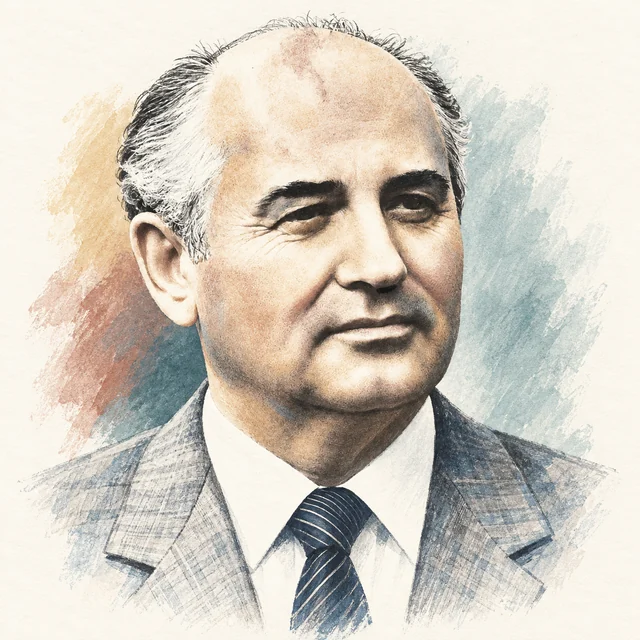
Gorbachev was born in a farming family in Privolnoye and studied law at Moscow University, graduating in 1955. His party career developed through Stavropol and agricultural policy before he became Communist Party general secretary in 1985. Glasnost and perestroika sought greater openness and restructuring within the Soviet system. He was Soviet president in 1990. After the failed August 1991 coup and the union’s disintegration, he resigned in December 1991.
The contribution
The 1990 prize recognised his leading role in the international peace process, including reduced East–West confrontation, arms-control negotiations and greater openness. The 1987 INF Treaty with Ronald Reagan eliminated specified classes of land-based missiles, not all nuclear weapons. Later events require scrutiny: Soviet forces killed civilians in Vilnius in January 1991. The award recognises a historical contribution and does not endorse every policy or imply that all transitions were peaceful.
The idea in plain language
The Cold War combined ideological conflict, military confrontation and the threat of nuclear destruction. As Soviet leader from 1985, Gorbachev pursued greater openness and restructuring while changing relations with other states. Negotiations with the United States produced the 1987 Intermediate-Range Nuclear Forces Treaty, signed with Ronald Reagan. It eliminated specified categories of land-based missiles and included verification.
Read the full award story ↗

