01 · The contribution
The idea, in everyday language
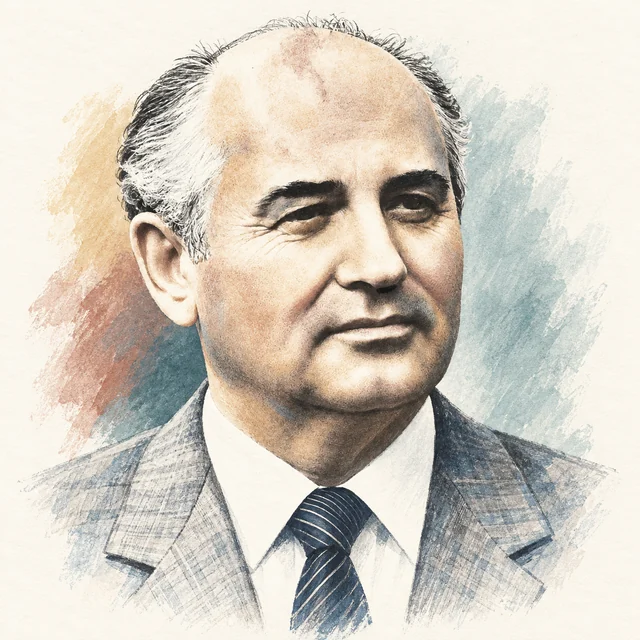
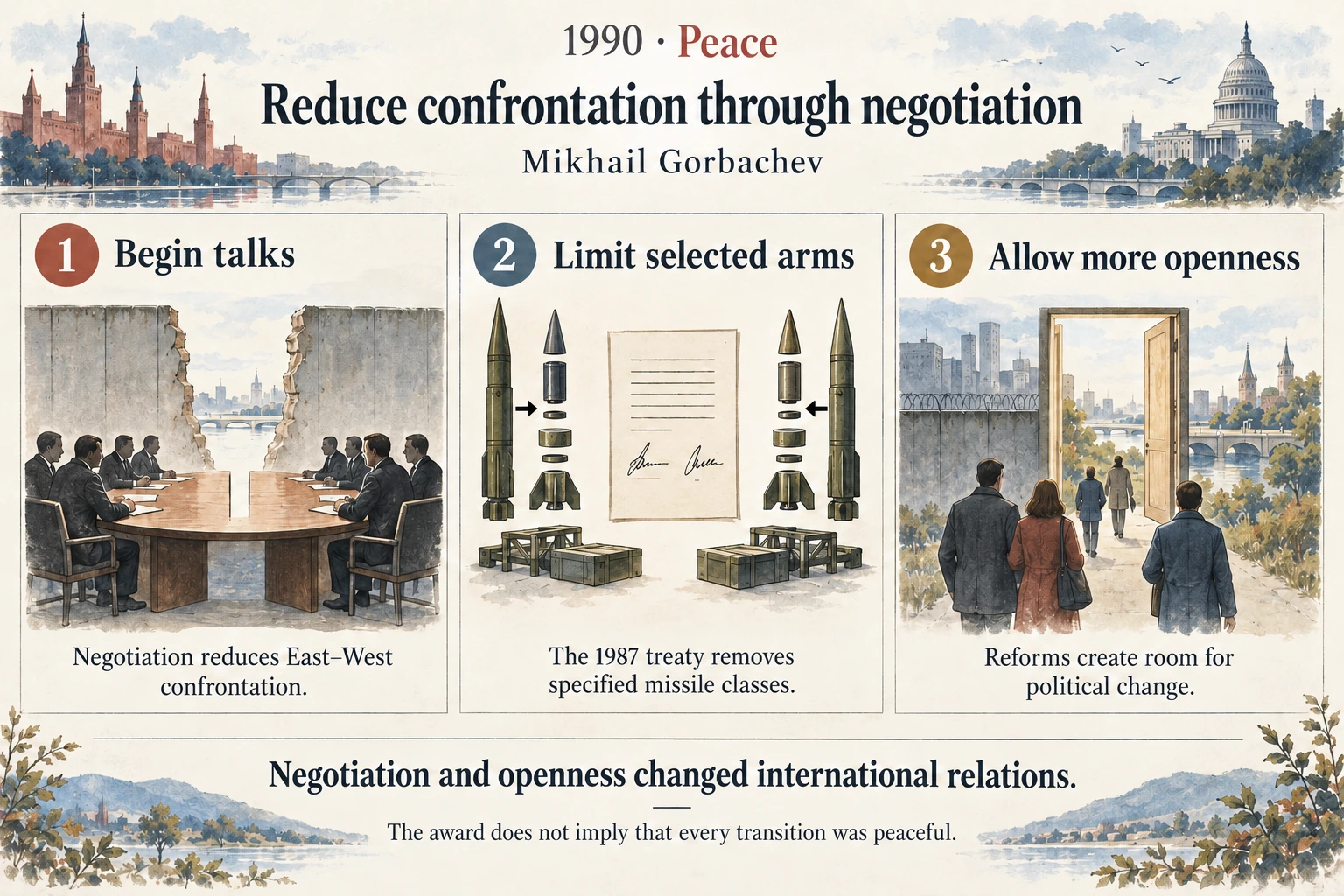
The Cold War combined ideological conflict, military confrontation and the threat of nuclear destruction. As Soviet leader from 1985, Gorbachev pursued greater openness and restructuring while changing relations with other states. Negotiations with the United States produced the 1987 Intermediate-Range Nuclear Forces Treaty, signed with Ronald Reagan. It eliminated specified categories of land-based missiles and included verification.
Greater openness and reduced confrontation helped create room for political change in Europe. The Nobel Committee recognised his leading role in this international peace process in 1990. These developments also depended on other leaders, negotiators and people seeking change. The award preceded the Soviet Union’s dissolution and cannot be treated as recognition of a completed, universally peaceful transition.
Why it matters
The prize marked a major reduction in the danger of East–West confrontation and a new climate for international cooperation. The 1987 treaty was a concrete arms-control achievement, rather than elimination of all nuclear weapons. Recognition of that contribution must be read alongside the difficulties and violence that accompanied the later breakup of Soviet power.