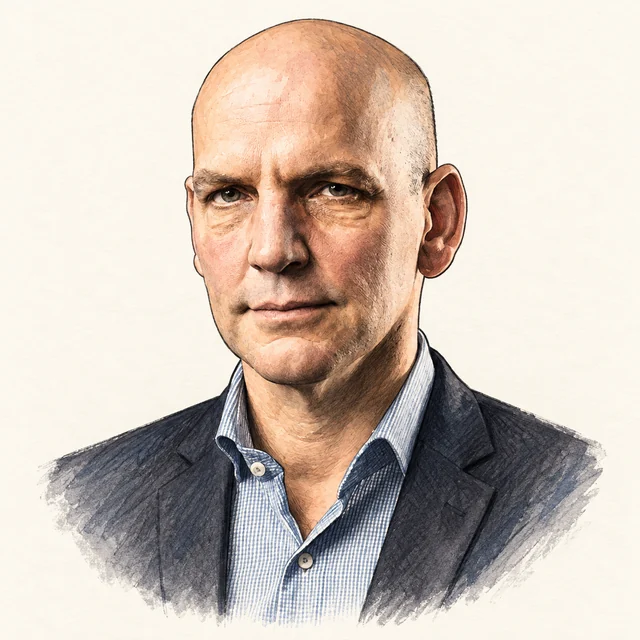
A life in context
The person behind the prize
List earned his doctorate at Goethe University Frankfurt in 1997. His research asked how a small molecule could do a job often associated with a much larger enzyme. At the award he directed research at the Max Planck Institute for Coal Research in Mülheim an der Ruhr. He helped make selective molecular construction possible with simple organic catalysts.
The contribution
In 2000, he and colleagues showed that the amino acid proline could catalyse an asymmetric aldol reaction. A small organic molecule could promote formation of a carbon–carbon bond while favouring one mirror-image arrangement of the product.
The idea in plain language
Some molecules come in two forms that are mirror images, like left and right hands. In a living body, their effects can differ because the molecules they meet also have three-dimensional shapes. Building mostly the desired form is therefore a central challenge in chemical synthesis.
Read the full award story ↗