A life in context
The person behind the prize
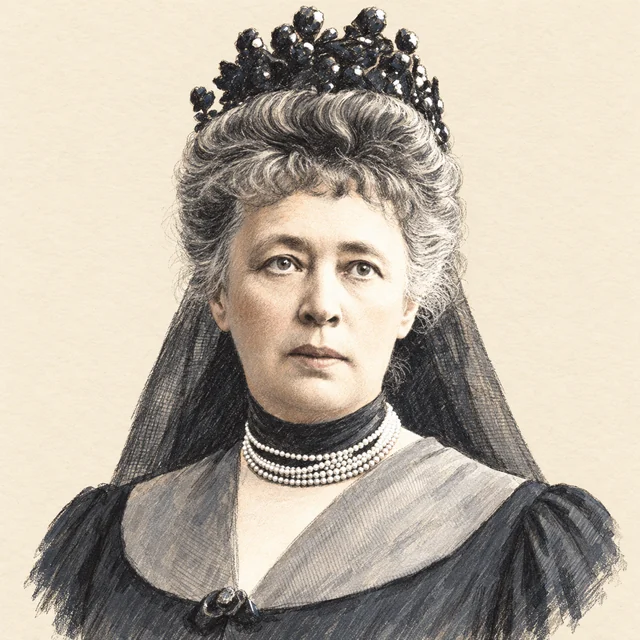
Bertha von Suttner was born Countess Kinsky in Prague and grew up in an aristocratic environment with strong military traditions. Languages, music and reading formed an education that later supported her work as a writer and public speaker. Financial pressures led her to work as a governess in the Suttner household in Vienna. In 1876 she briefly served as Alfred Nobel’s secretary in Paris, then returned to marry Arthur von Suttner against his family’s wishes. The couple spent years in the Caucasus, supporting themselves through teaching and writing before returning to Austria. Her commitment to peace developed over time rather than beginning as an unquestioned childhood belief. The 1889 novel Die Waffen nieder!, known in English as Lay Down Your Arms, made the human costs of war vivid through a fictional woman’s life. It was a novel, not a literal autobiography of its author. Suttner turned literary influence into sustained organisation: she helped establish the Austrian Peace Society in 1891 and worked within the international peace movement. With Alfred Hermann Fried she began a peace journal in 1892, editing it until 1899. Meetings, articles, correspondence and support for arbitration carried the work beyond one book. Her friendship and long correspondence with Nobel helped influence his thinking about peace; she was neither his wife nor the sole author of his will. She also connected peace work with women’s education and equality. In 1905 she became the first woman to receive the Peace Prize. Unable to attend the December events, she delivered her Nobel address in Norway on 18 April 1906. After her husband’s death in 1902 she continued campaigning, including speaking tours in the United States in 1904 and 1912. She died in Vienna on 21 June 1914, shortly before the First World War. Her career shows how fiction, public argument and patient institution-building can sustain a peace movement even when they cannot prevent the next war.
The contribution
Suttner received the full Peace Prize for her opposition to the horrors of war. Anti-war fiction, international organising, journalism and advocacy of arbitration made her a leading figure in the peace movement.
The idea in plain language
Lay Down Your Arms, published in 1889, follows a fictional woman whose life is repeatedly altered by war. Personal loss makes public policy emotionally concrete. The novel’s influence helped Suttner reach readers who might not otherwise follow peace congresses or legal debates.
Read the full award story ↗

