A life in context
The person behind the prize
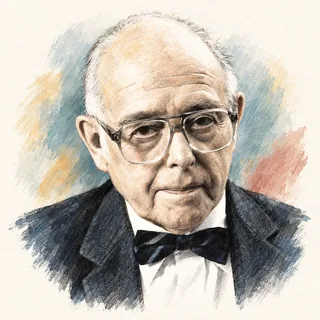
Brockhouse grew up in western Canada and developed practical interests in radio and electronics. Naval service during the war preceded university study in British Columbia and Toronto. At Chalk River from 1950, he built instruments that made neutron scattering a probe of atomic motion. He moved to McMaster in 1962, combining research with training students and continuing collaboration with the reactor laboratory.
The contribution
Brockhouse developed neutron spectroscopy, especially the triple-axis spectrometer, to measure how a neutron’s energy changes when it interacts with a material. Those changes reveal excitations such as collective atomic vibrations, rather than just the positions of atoms. His 1950s experiments and instrument design made inelastic scattering a practical tool. He received half the prize; Shull’s complementary half concerned diffraction and structure.
The idea in plain language
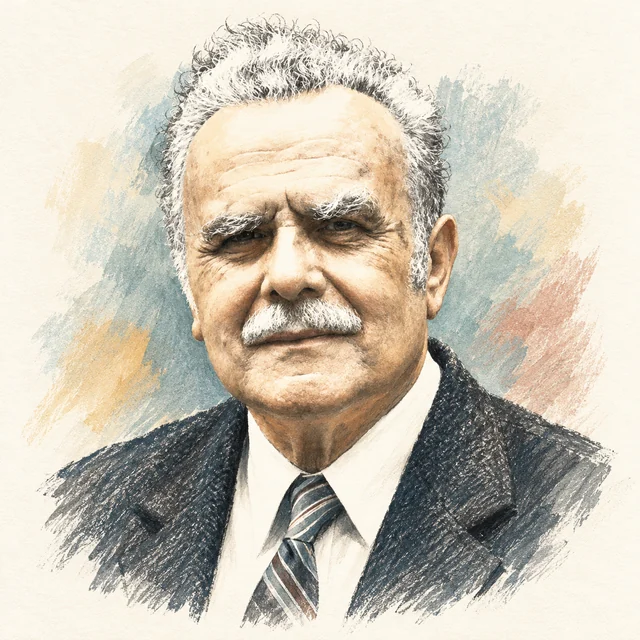
A material’s properties depend on how its atoms are arranged and how they move together. Neutrons can probe both questions. When a beam meets a sample, the directions in which neutrons scatter carry information about structure. Shull developed diffraction methods that made these patterns interpretable, including ways to locate hydrogen and investigate magnetic ordering.
Read the full award story ↗