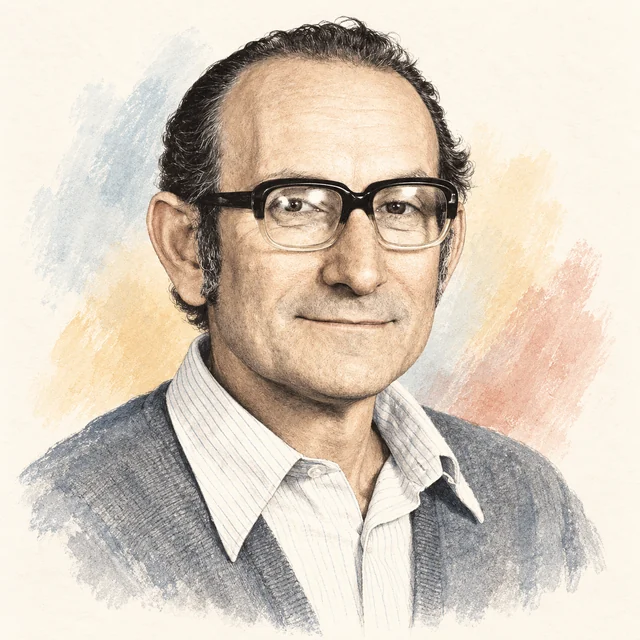
A life in context
The person behind the prize
Milstein studied chemistry at Buenos Aires, graduating in 1952, and married fellow scientist Celia Prilleltensky in 1953. He completed a chemistry doctorate with Andrés Stoppani in 1957 and a Cambridge doctorate with Malcolm Dixon in 1960, also working with Frederick Sanger. Returning to Argentina in 1961, he led a biochemistry department, but political persecution of scientific staff prompted his return to Cambridge in 1963. At the MRC Laboratory of Molecular Biology, antibody structure and diversity became central questions. His collaboration with Köhler produced hybridoma cultures in 1975. He became head of the Protein and Nucleic Acid Chemistry Division in 1983.
The contribution
Milstein brought antibody biochemistry and cell-culture research to the hybridoma method developed with Köhler. Their cultures made reproducible supplies of antibodies with selected specificity possible, opening research and diagnostic applications. Later therapeutic antibodies required further engineering and validation. He received one third of the Medicine Prize; Jerne was recognised for distinct theoretical contributions.
The idea in plain language
An immune system must recognise many possible targets and regulate its responses. Jerne proposed theories in which antigen selects existing antibody specificities, rather than instructing the shape of a new antibody. His later idiotypic-network theory explored recognition among antibodies themselves. These were influential conceptual models, with scope and limitations that subsequent research examined.
Read the full award story ↗