c.curionodeThe Nobel Archive

1984 · Physiology or Medicine

Understand antibody selection; grow selected producers

Jerne proposed immune theories; Köhler and Milstein developed hybridoma cultures for monoclonal antibodies.

antibodiesimmune theorieshybridomamonoclonal antibodies
1984Physiology or Medicine

Visual guide

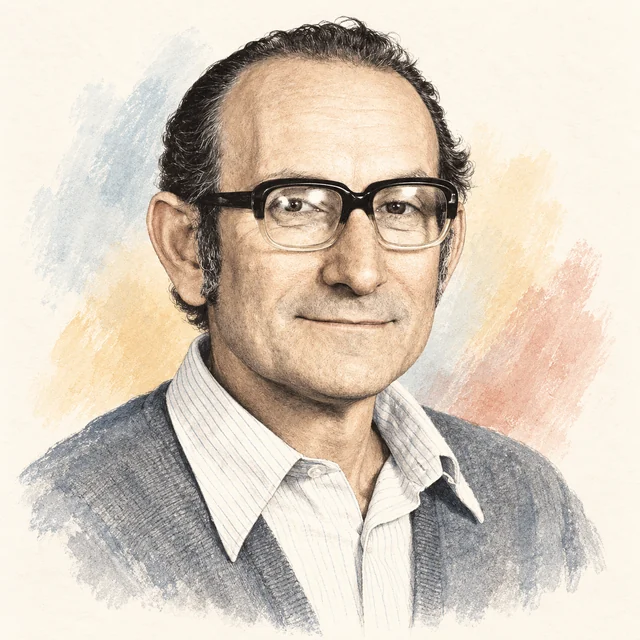
The prize, pictured

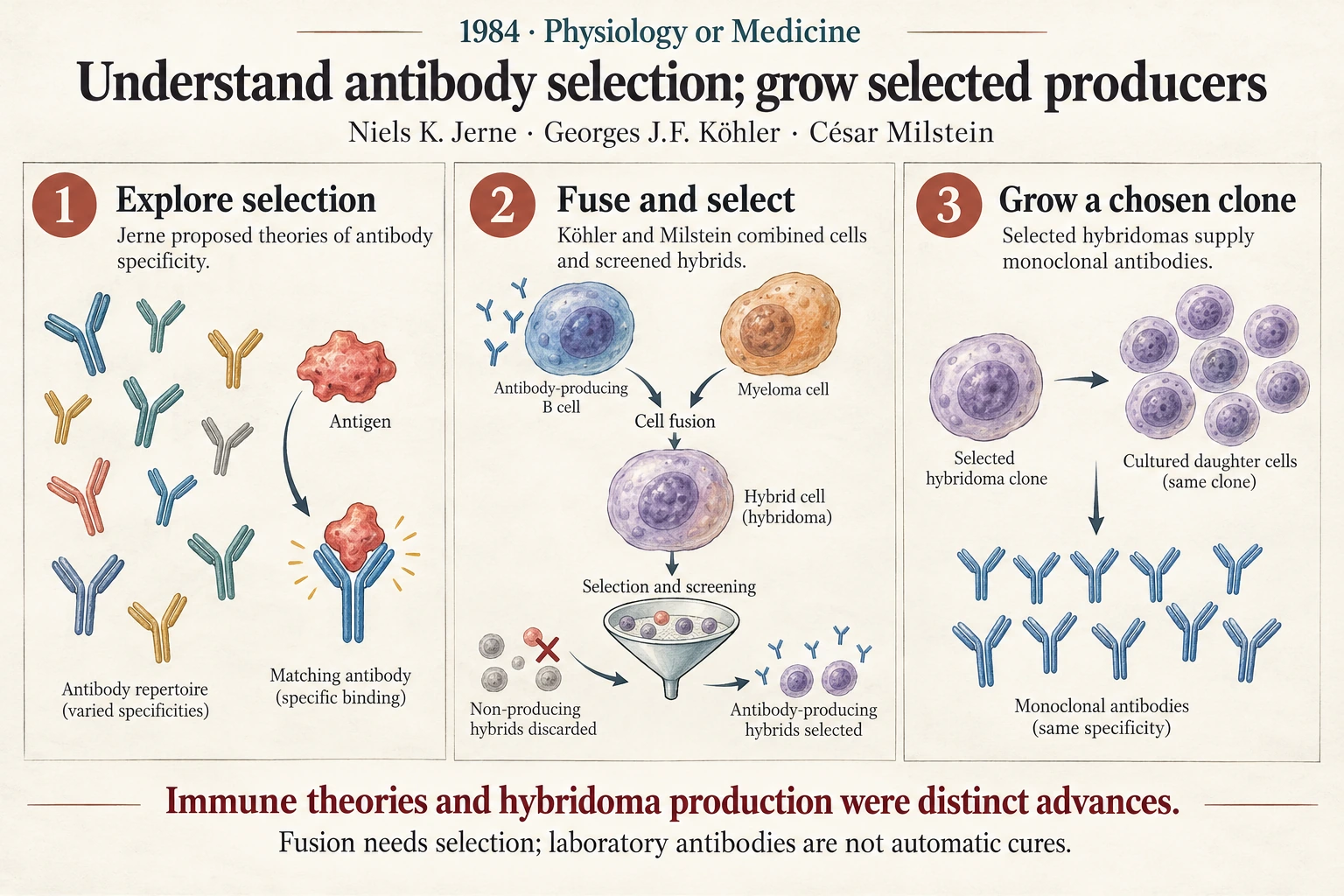
Infographic explaining Understand antibody selection; grow selected producers
Original AI-generated infographic. A conceptual overview; the explanations and sources below provide context.
Read the poster text

Immune theories and hybridoma production were distinct advances.

  1. Explore selection

    Jerne proposed theories of antibody specificity.

  2. Fuse and select

    Köhler and Milstein combined cells and screened hybrids.

  3. Grow a chosen clone

    Selected hybridomas supply monoclonal antibodies.

Fusion needs selection; laboratory antibodies are not automatic cures.

01 · The discovery

The idea, in everyday language

An immune system must recognise many possible targets and regulate its responses. Jerne proposed theories in which antigen selects existing antibody specificities, rather than instructing the shape of a new antibody. His later idiotypic-network theory explored recognition among antibodies themselves. These were influential conceptual models, with scope and limitations that subsequent research examined.

Köhler and Milstein addressed a practical problem: obtaining a sustained supply of antibody with selected specificity. In 1975 they fused antibody-producing spleen cells with myeloma cells capable of continuing to grow in culture. Selection, screening and cloning yielded hybridoma lines producing monoclonal antibodies. The theoretical work and laboratory technique were distinct contributions, recognised with equal thirds of the prize.

Why it matters

The theories reframed questions about diversity and regulation. Hybridomas supplied reproducible reagents for research and diagnostic tests and provided foundations for later antibody therapeutics. Later clinical products needed further engineering, safety assessment and validation.


02 · The people

Who brought the idea to life?

Illustrated portrait of Niels K. Jerne

Niels K. Jerne

Prize share · 1/3

Jerne supplied theories of immune specificity and regulation, including the idea that antigen selects existing antibody specificities and that antibodies can participate in networks of mutual recognition. These historical models stimulated experiments and debate; they do not constitute a complete modern account of immunity. He received one third of the Medicine Prize. The hybridoma method was developed by Köhler and Milstein, rather than by all three recipients together.

Read the biography ↗
Illustrated portrait of Georges J.F. Köhler

Georges J.F. Köhler

Prize share · 1/3

Köhler and Milstein fused antibody-producing spleen cells with myeloma cells, then isolated cultures producing antibodies with a chosen specificity. The hybrid cells combined an immune cell’s antibody production with sustained growth in culture. Selection, screening and cloning were essential parts of obtaining useful monoclonal antibodies. Köhler received one third of the Medicine Prize.

Read the biography ↗
Illustrated portrait of César Milstein

César Milstein

Prize share · 1/3

Milstein brought antibody biochemistry and cell-culture research to the hybridoma method developed with Köhler. Their cultures made reproducible supplies of antibodies with selected specificity possible, opening research and diagnostic applications. Later therapeutic antibodies required further engineering and validation. He received one third of the Medicine Prize; Jerne was recognised for distinct theoretical contributions.

Read the biography ↗

03 · Years in the making

The path here

  1. 1955

    Jerne publishes a selection theory of antibody formation.

  2. 1974

    Jerne develops his idiotypic-network theory.

  3. 1975

    Köhler and Milstein publish antibody-producing hybridoma cultures.

  4. 1984

    The three recipients each receive one third of the Medicine Prize.

04 · Read further

From the original sources

Original explanations by Curionode, based on the official records below. Biographical details and affiliations refer to the award year.

  1. Official announcement nobelprize.org
  2. Köhler and Milstein: original hybridoma abstract nature.com

More in Physiology or Medicine

Browse this subject ↗