A life in context
The person behind the prize
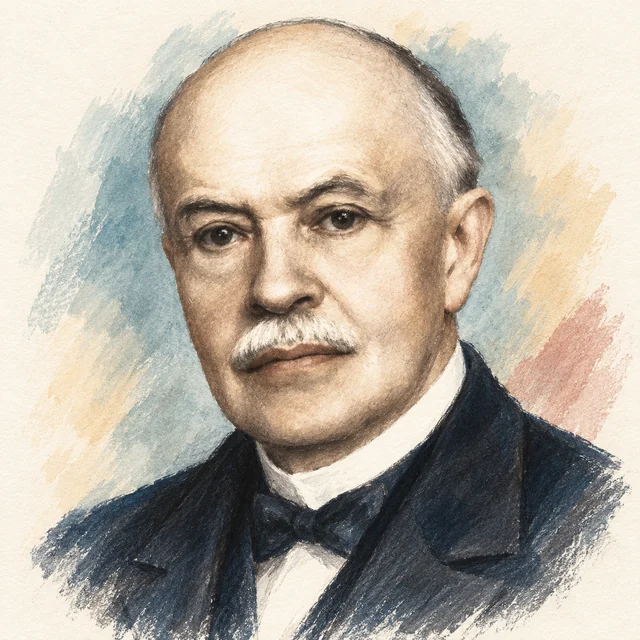
Nicolle studied medicine in Rouen and Paris, trained at the Pasteur Institute and completed his medical doctorate in 1893. He returned to Rouen, directing its bacteriological laboratory from 1896, and became director of the Pasteur Institute in Tunis in 1903. Hospital observations suggested that an infectious link was associated with patients’ clothing and body lice. In 1909, work with colleagues, including Charles Comte and Ernest Conseil, established the body louse’s role in transmitting epidemic typhus. This was a discovery about transmission, not a claim that every disease called typhus has the same vector. Modern understanding identifies a bacterial agent and contamination involving infected louse material; the older shorthand of transmission simply by a bite is incomplete. Nicolle also studied other infectious diseases and infections without obvious symptoms, while writing scientific and literary books. His full 1928 Medicine Prize recognized work on typhus, with Tunis as his award affiliation. He later held a chair at the Collège de France and died in Tunis in 1936.
The contribution
Nicolle received the full Medicine Prize for work on typhus. Identifying the body louse as a vector of epidemic typhus made the transmission chain open to explanation and prevention.
The idea in plain language
Hospital observations suggested that the spread of infection was connected with something removed when patients changed clothing and were washed. Nicolle investigated body lice rather than assuming that ordinary proximity alone explained every transmission. In 1909, research with Charles Comte and Ernest Conseil established the vector’s role.
Read the full award story ↗

