01 · The discovery
The idea, in everyday language
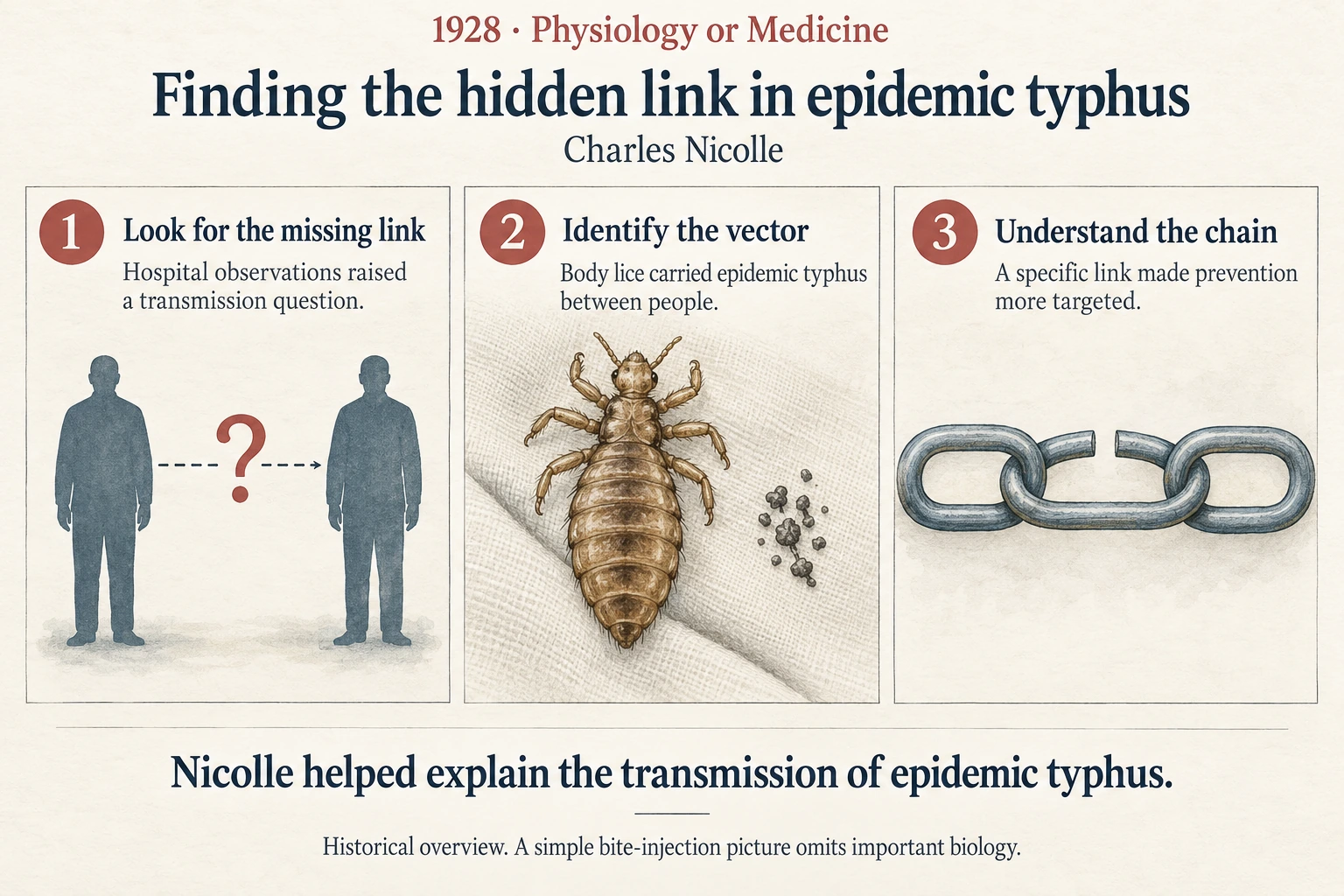
Hospital observations suggested that the spread of infection was connected with something removed when patients changed clothing and were washed. Nicolle investigated body lice rather than assuming that ordinary proximity alone explained every transmission. In 1909, research with Charles Comte and Ernest Conseil established the vector’s role.
The disease in this story is classical louse-borne epidemic typhus, associated with the bacterium Rickettsia prowazekii. Modern accounts describe infection involving contaminated louse feces or crushed lice reaching injured skin. A diagram of a louse merely injecting infection by a bite would leave out this important part of the mechanism. Other typhus fevers can have different vectors.
Why it matters
Recognizing the body louse’s role gave public-health work a more specific target and helped explain epidemics associated with war, displacement and overcrowding. The contribution concerned transmission and prevention; it did not mean that all typhus had been eradicated or that Nicolle alone created every later control measure.