c.curionodeThe Nobel Archive

1927 · Physiology or Medicine

A historical treatment, and its limits

Wagner-Jauregg investigated malaria-induced fever for general paresis caused by neurosyphilis. Reports of improvement in some patients changed the historical outlook for that disease, but the intervention carried serious risks and ethical concerns.

Medical historyGeneral paresisNeurosyphilisMalariotherapy
1927Physiology or Medicine

Visual guide

The prize, pictured

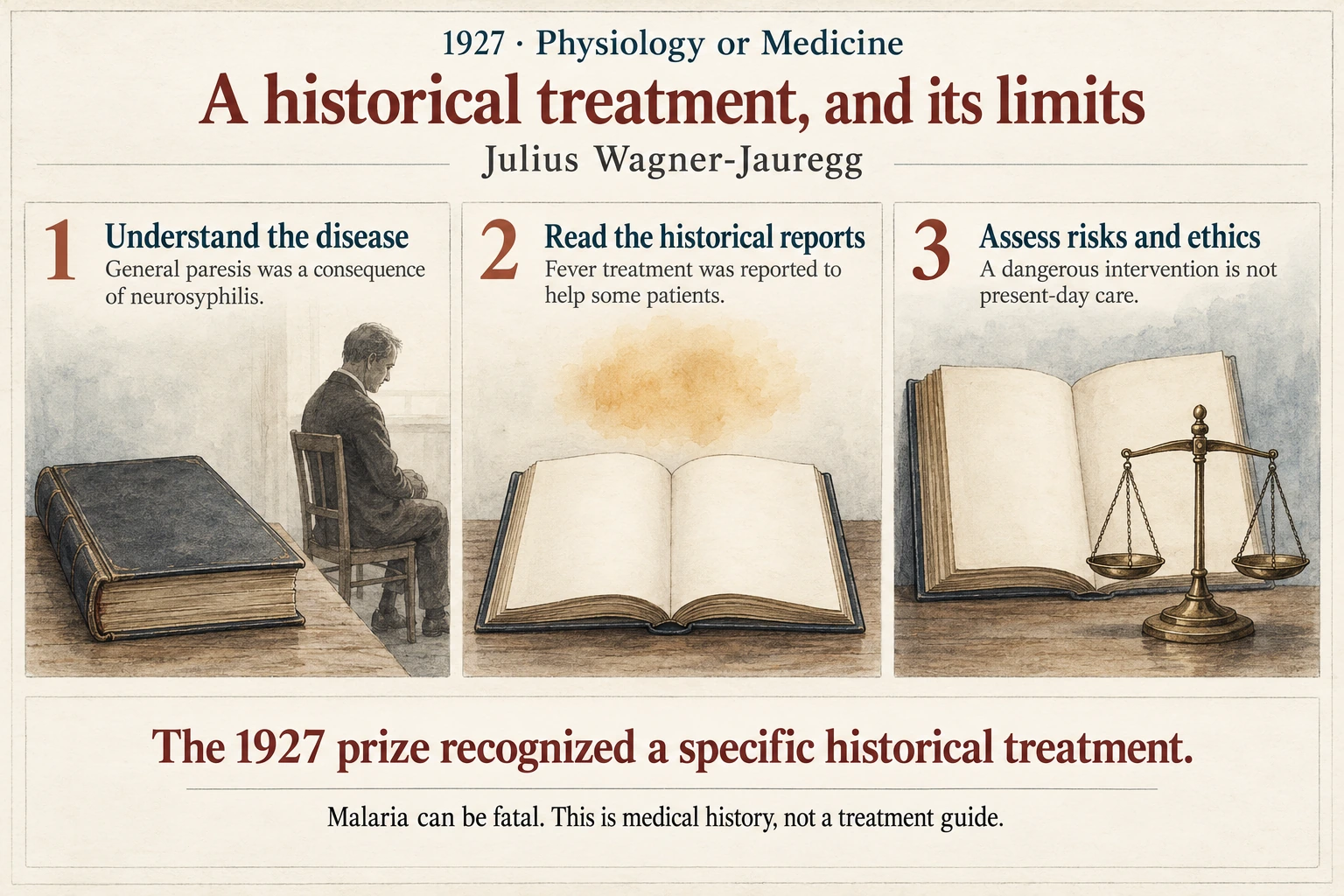
Infographic explaining A historical treatment, and its limits
Original AI-generated infographic. A conceptual overview; the explanations and sources below provide context.
Read the poster text

The 1927 prize recognized a specific historical treatment.

  1. Understand the disease

    General paresis was a consequence of neurosyphilis.

  2. Read the historical reports

    Fever treatment was reported to help some patients.

  3. Assess risks and ethics

    A dangerous intervention is not present-day care.

Malaria can be fatal. This is medical history, not a treatment guide.

01 · The discovery

The idea, in everyday language

General paresis was a devastating consequence of syphilis affecting the nervous system. It could alter cognition and behaviour and progress to severe disability. Wagner-Jauregg’s work concerned this specific infectious disease context, rather than every condition described as mental illness or dementia.

Observations of changes in symptoms during fever led to years of investigation and, in 1917, to malariotherapy. Historical reports described lasting improvement in some patients who previously had few effective options. The 1927 award recognized that therapeutic contribution. Those reports did not establish that the intervention was harmless, universally effective or ethically acceptable by present standards.

Why it matters

The work changed historical expectations for a condition then regarded as largely untreatable and influenced interest in physical approaches to psychiatric symptoms. Its significance must be assessed alongside hazards, patient rights and later developments. Modern neurosyphilis care uses antibiotics, including penicillin, rather than this historical intervention.
02 · The people

Who brought the idea to life?

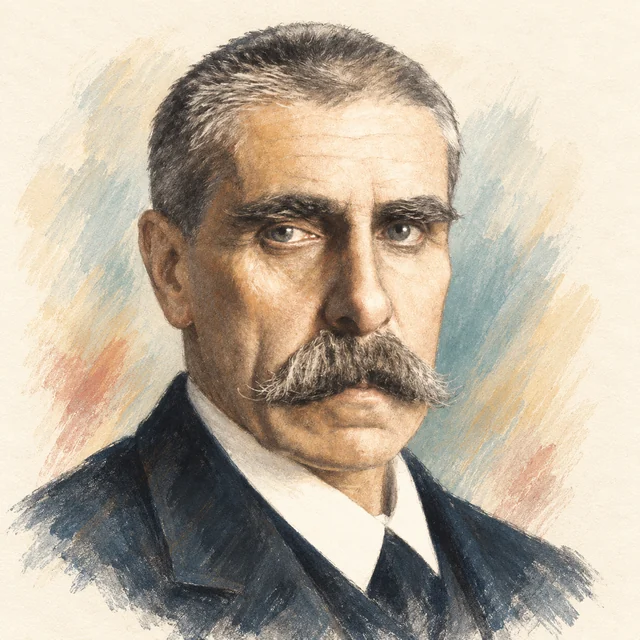
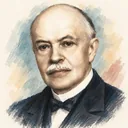
Illustrated portrait of Julius Wagner-Jauregg

Julius Wagner-Jauregg

Prize share · 1

Wagner-Jauregg received the full Medicine Prize for the historical therapeutic use of malaria-induced fever in general paresis. This was a specific neurosyphilis context, with serious risks and ethical questions, rather than a general cure for mental illness.

Read the biography ↗

03 · Years in the making

The path here

  1. 1880

    Wagner-Jauregg completes his medical doctorate in Vienna.

  2. 1887

    He investigates observations linking fever with changes in psychiatric symptoms.

  3. 1917

    His historical malariotherapy work begins.

  4. 1927

    He receives the full Medicine Prize for the general-paresis treatment work.

04 · Read further

From the original sources

Original explanations by Curionode, based on the official records below. Biographical details and affiliations refer to the award year.

  1. Official award summary nobelprize.org
  2. Award ceremony speech nobelprize.org
  3. CDC: neurosyphilis treatment context cdc.gov
  4. CDC: malaria overview cdc.gov
  5. University of Vienna: critical historical biography geschichte.univie.ac.at

More in Physiology or Medicine

Browse this subject ↗