01 · The discovery
The idea, in everyday language
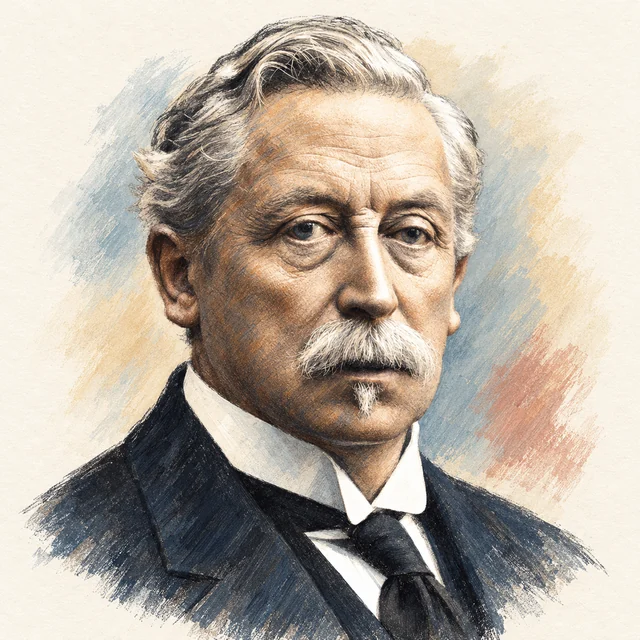
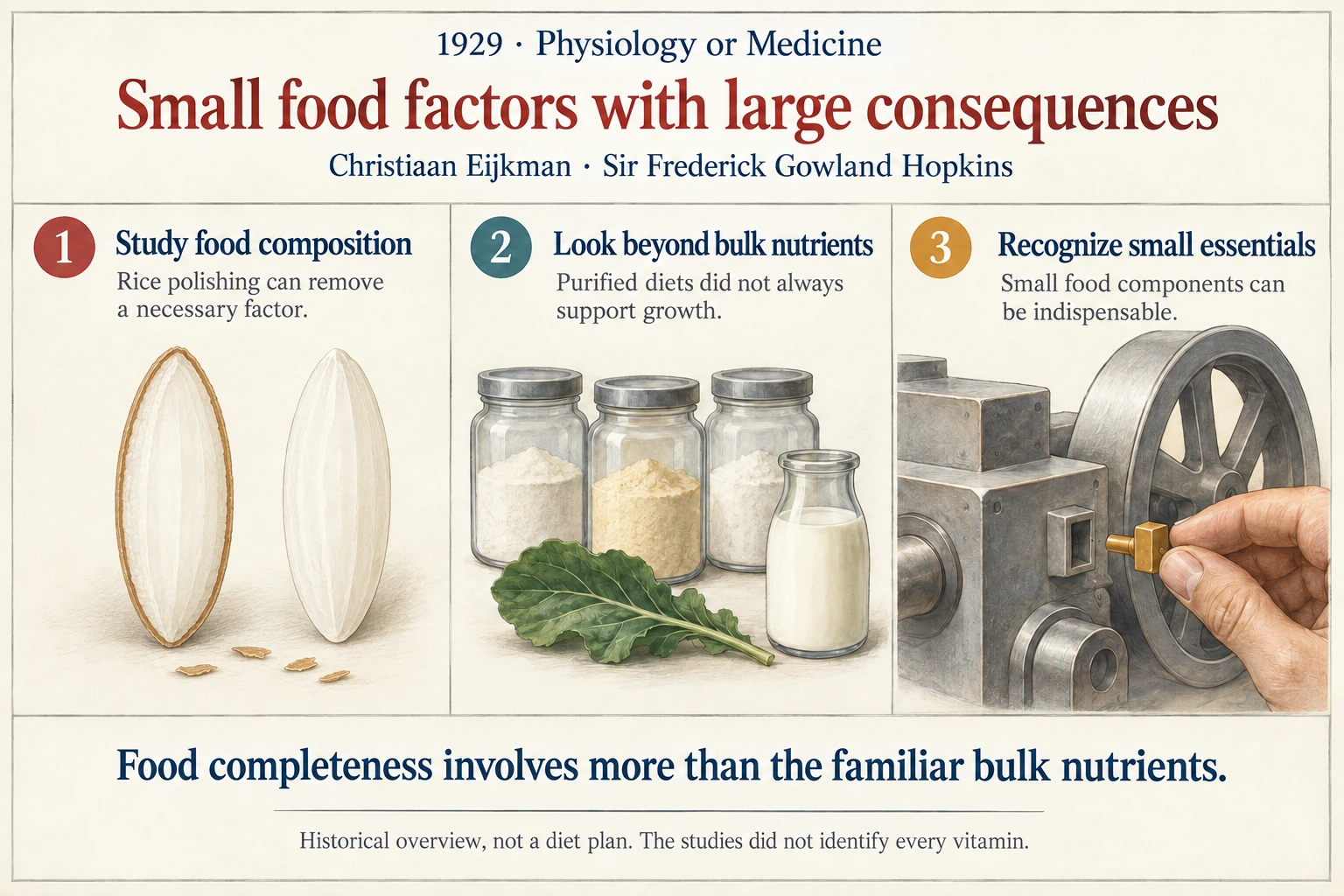
In Java, Eijkman’s observations connected a chicken disease with diets based on polished rice and found protection associated with rice bran. This challenged a purely infectious explanation. He first considered a toxin-and-antidote model; Gerrit Grijns later clarified the idea of a missing food factor. The relevant substance came to be identified as vitamin B1.
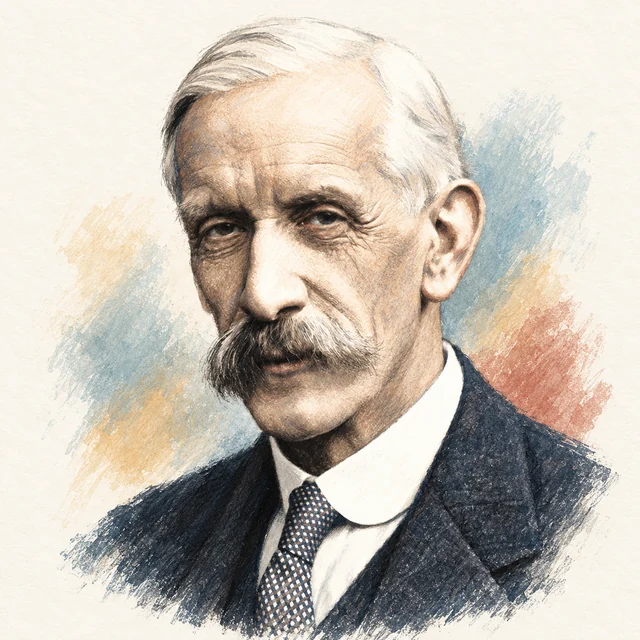
Hopkins took another route. Young animals could stop growing on carefully purified diets containing the familiar bulk nutrients and salts, yet resume growth when small additions of natural food material were made. His full results appeared in 1912. The studies indicated accessory food factors, rather than a simple shortage of calories alone. The prize recognized complementary investigations, not one jointly conducted experiment.
Why it matters
The findings helped establish the science of vitamins and deficiency diseases. They changed the questions researchers asked about food composition and physiological need. Identifying individual vitamins, their chemistry and their different functions involved many further investigators.