c.curionodeThe Nobel Archive

1931 · Physiology or Medicine

Tracing the catalyst behind cellular respiration

Warburg combined oxygen measurements, gas inhibition and light responses to identify the nature of a respiratory catalyst. The award concerned cellular respiration, rather than a cancer treatment.

Cellular respirationOxygenRespiratory enzymeBiochemistry
1931Physiology or Medicine

Visual guide

The prize, pictured

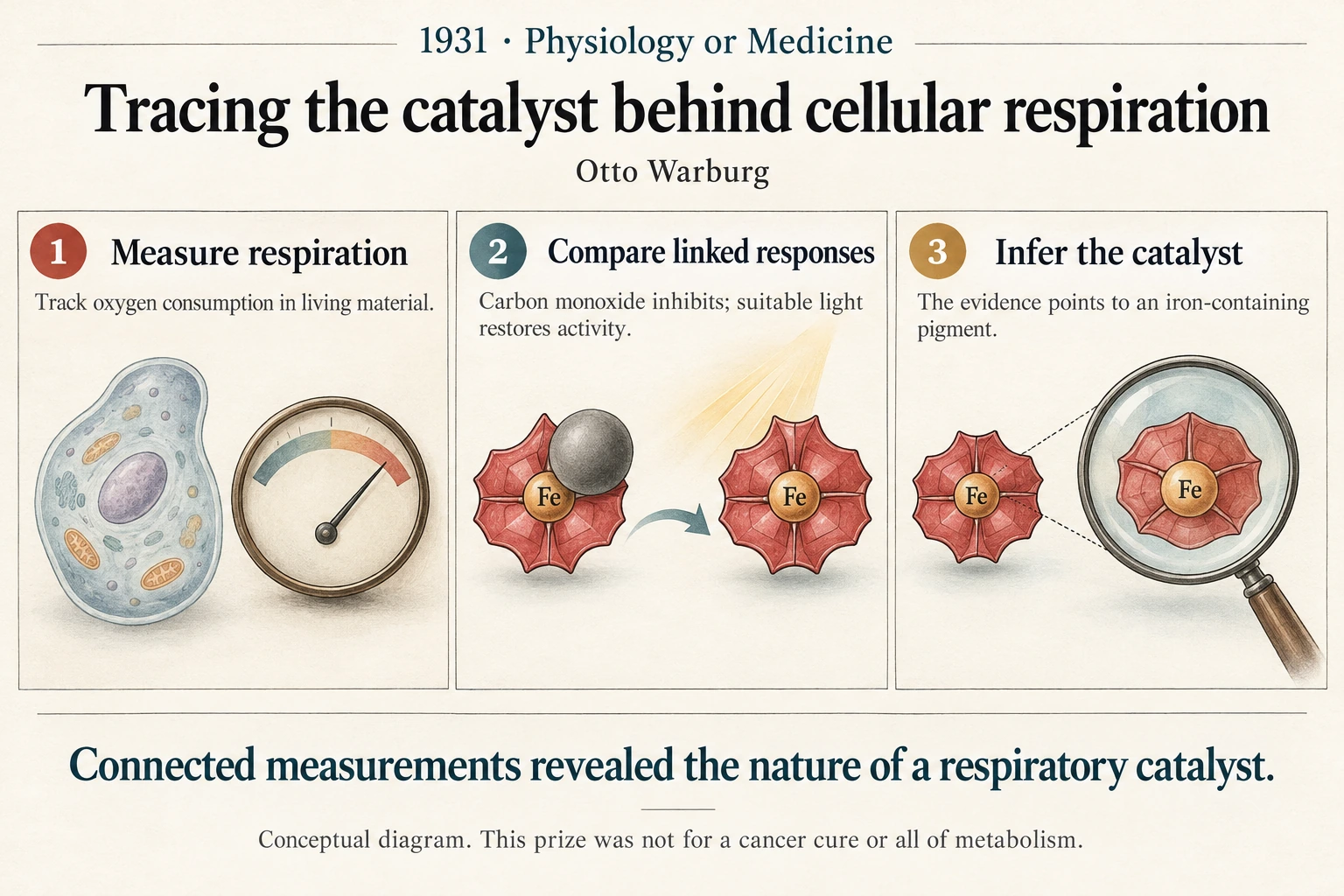
Infographic explaining Tracing the catalyst behind cellular respiration
Original AI-generated infographic. A conceptual overview; the explanations and sources below provide context.
Read the poster text

Connected measurements revealed the nature of a respiratory catalyst.

  1. Measure respiration

    Track oxygen consumption in living material.

  2. Compare linked responses

    Carbon monoxide inhibits; suitable light restores activity.

  3. Infer the catalyst

    The evidence points to an iron-containing pigment.

Conceptual diagram. This prize was not for a cancer cure or all of metabolism.

01 · The discovery

The idea, in everyday language

Cells carry out controlled chemical reactions that use oxygen in extracting usable energy from nutrients. Warburg studied respiration by measuring oxygen consumption in living material. Carbon monoxide could inhibit the process, and suitable light could reverse that inhibition. Comparing the wavelengths that restored respiration with the absorption behavior of pigments supplied evidence about the catalyst involved.

The results linked respiration to an iron-containing pigment related to familiar blood pigments. That relationship did not make the respiratory catalyst identical to hemoglobin. The work inferred chemical identity and mode of action through carefully connected observations; it was not the isolation of a complete modern enzyme complex. Modern accounts place the oxygen-reducing terminal enzyme within a much larger respiratory system.

Why it matters

The research strengthened the connection between cell physiology and physical chemistry. Measurements of oxygen uptake and interactions with pigments helped make intracellular chemistry experimentally accessible. The 1931 prize recognized this contribution to understanding respiration.
02 · The people

Who brought the idea to life?

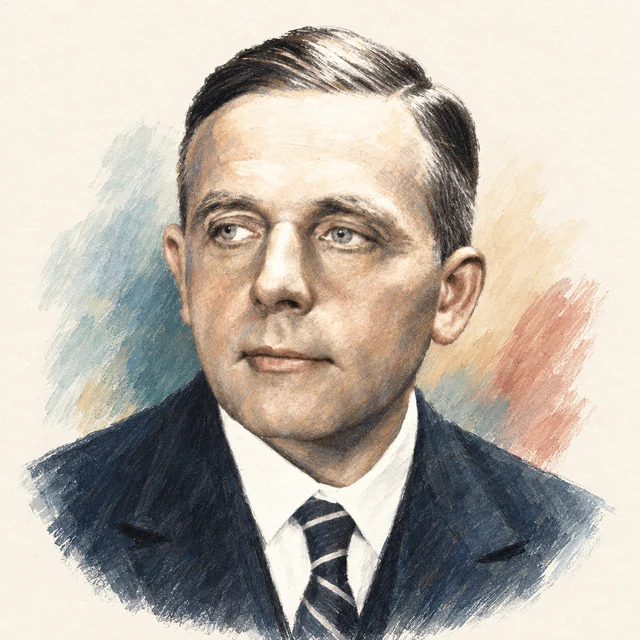
Illustrated portrait of Otto Warburg

Otto Warburg

Prize share · 1

Warburg received the full Medicine Prize for identifying the nature and mode of action of the respiratory enzyme. Experiments on oxygen consumption, carbon monoxide inhibition and light responses linked cellular respiration with an iron-containing pigment.

Read the biography ↗

03 · Years in the making

The path here

  1. 1906–1911

    Warburg completes training in chemistry and medicine.

  2. 1920s

    Oxygen measurements, carbon monoxide inhibition and light responses identify properties of the respiratory catalyst.

  3. 1931

    Warburg receives the full Medicine Prize for the respiratory enzyme’s nature and action.

04 · Read further

From the original sources

Original explanations by Curionode, based on the official records below. Biographical details and affiliations refer to the award year.

  1. Official award summary nobelprize.org
  2. Award ceremony speech nobelprize.org
  3. Modern research: the Warburg effect frederick.cancer.gov

More in Physiology or Medicine

Browse this subject ↗