01 · The discovery
The idea, in everyday language
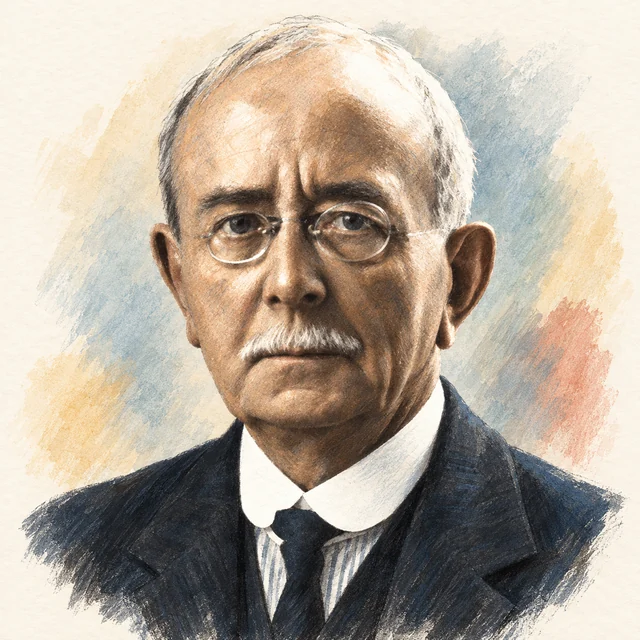
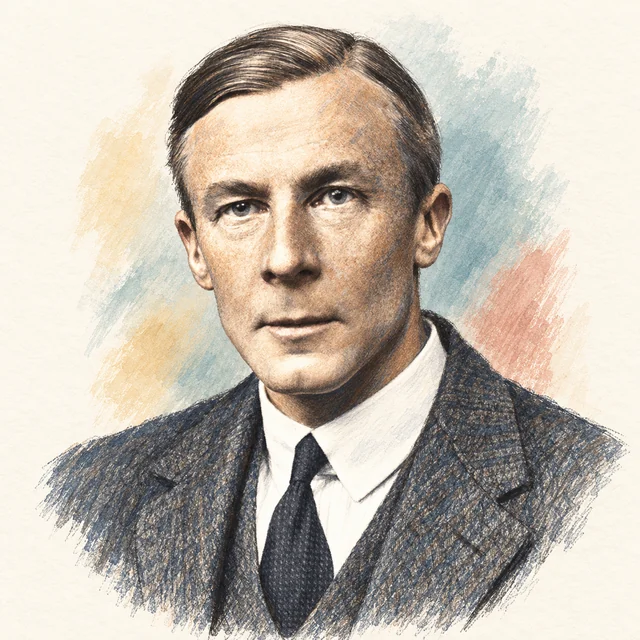
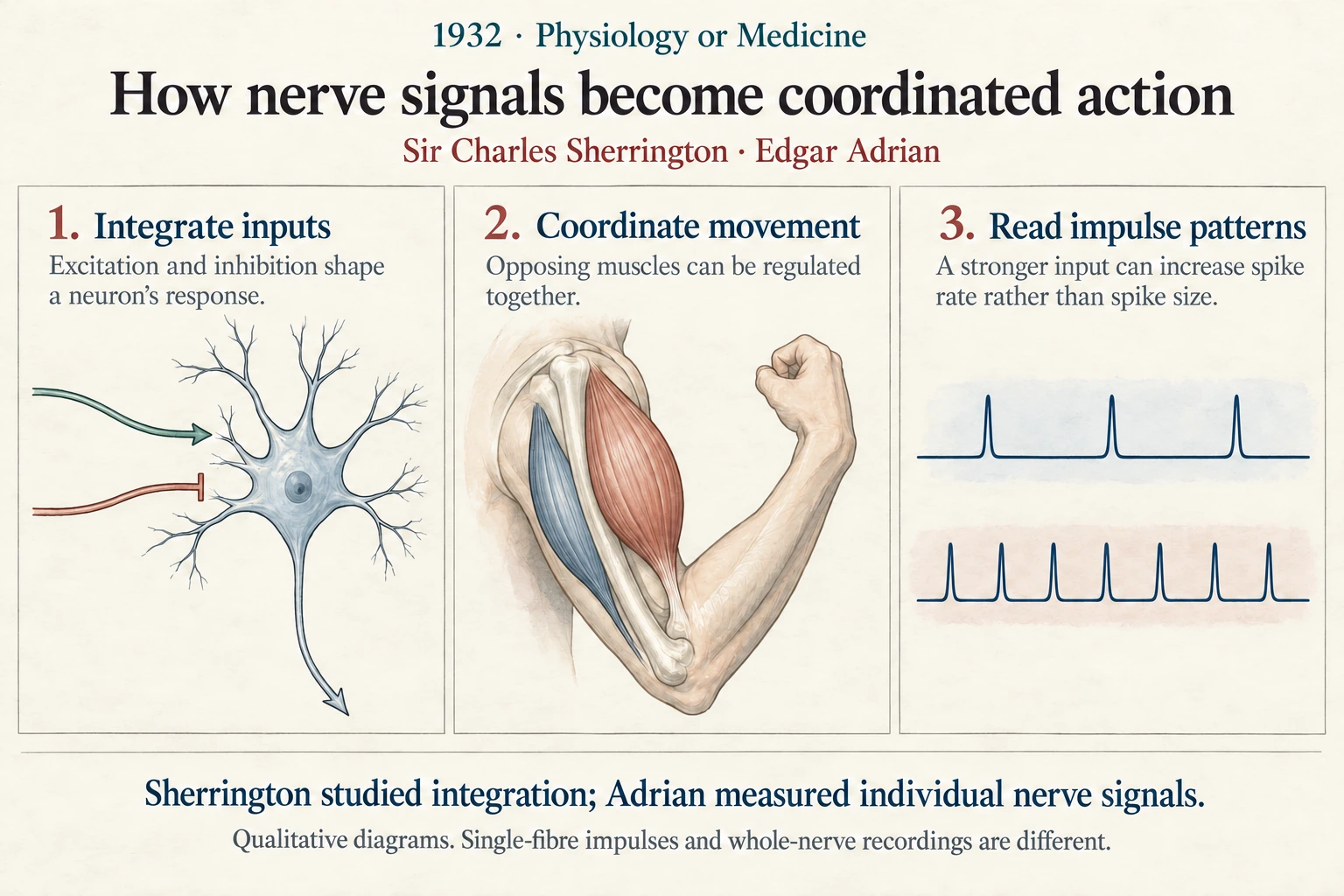
A nervous system has to do more than pass a message along a wire: it must combine inputs and produce an appropriate response. Sherrington investigated reflexes, muscle tone and the interaction of opposing muscles. When one muscle group contracts, reduced activation of its antagonist can help the movement proceed. His work on reciprocal inhibition and the summation of inputs showed that reflex pathways form an integrated system rather than a set of independent mechanical triggers.
Adrian approached the problem from the signals themselves. Building on work with Keith Lucas, he used sensitive electrical recording and amplification to distinguish activity from individual nerve fibres. In a given fibre under comparable conditions, impulses were broadly similar in amplitude. Stronger stimulation could increase their frequency and recruit additional fibres rather than simply making every impulse larger. Continued stimulation could also produce adaptation, changing the firing pattern over time. The two laureates shared the 1932 prize equally for complementary discoveries concerning neuronal function.
Why it matters
The work connected whole reflex responses with the measurable activity of nerve fibres. It provided a stronger experimental basis for neurophysiology and opened questions about how sensory information is represented and how motor responses are coordinated. Later cellular and molecular discoveries explained additional mechanisms; the 1932 studies were a foundation rather than a complete account of the brain.