A life in context
The person behind the prize
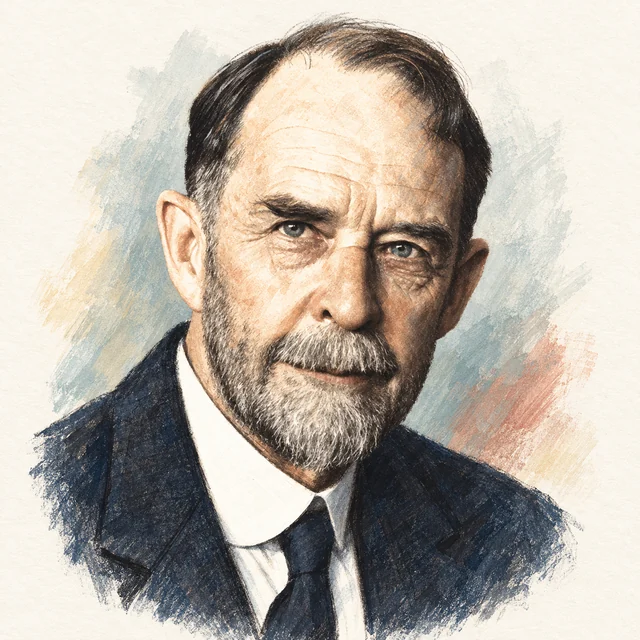
Morgan graduated from the State College of Kentucky in 1886 and earned his doctorate at Johns Hopkins in 1890. He taught at Bryn Mawr before joining Columbia in 1904. Originally an experimental embryologist, he turned to heredity and began breeding fruit flies in 1909. A white-eyed fly found in 1910 helped connect an inherited trait with the sex chromosomes. The Columbia Fly Room became a collaborative research programme: Alfred Sturtevant used recombination evidence to construct a genetic map in 1913, Calvin Bridges supplied important cytological evidence, and Hermann Muller contributed to the emerging chromosome theory. Their jointly authored The Mechanism of Mendelian Heredity appeared in 1915. Morgan moved to Caltech in 1928 to lead its biology division. He received the full 1933 Medicine Prize for discoveries concerning the role of chromosomes in heredity. A single laureate in the award record should not obscure the laboratory’s collective work. He did not attend the 1933 ceremony; an American representative accepted the award.
The contribution
Morgan received the full Medicine Prize for discoveries about chromosomes in heredity. His fruit-fly programme linked inherited traits, sex chromosomes, linkage and recombination, with essential contributions from Sturtevant, Bridges and Muller.
The idea in plain language
Mendelian inheritance described how traits passed between generations, but the physical organization of hereditary factors still needed experimental evidence. Morgan’s work with fruit flies at Columbia supplied a tractable system. A white-eyed mutant found in 1910 produced inheritance patterns tied to sex chromosomes, helping connect a visible trait with chromosome transmission. Drosophila has four chromosome pairs in its diploid cells; illustrations showing fewer chromosomes are simplified, rather than complete cell inventories.
Read the full award story ↗

