c.curionodeThe Nobel Archive

1933 · Physiology or Medicine

Putting genes on the chromosome map

Fruit-fly inheritance patterns helped Morgan’s laboratory connect genes with chromosomes. Linkage and recombination made it possible to infer the order of genes before DNA could be sequenced.

ChromosomesGenetic linkageRecombinationFruit flies
1933Physiology or Medicine

Visual guide

The prize, pictured

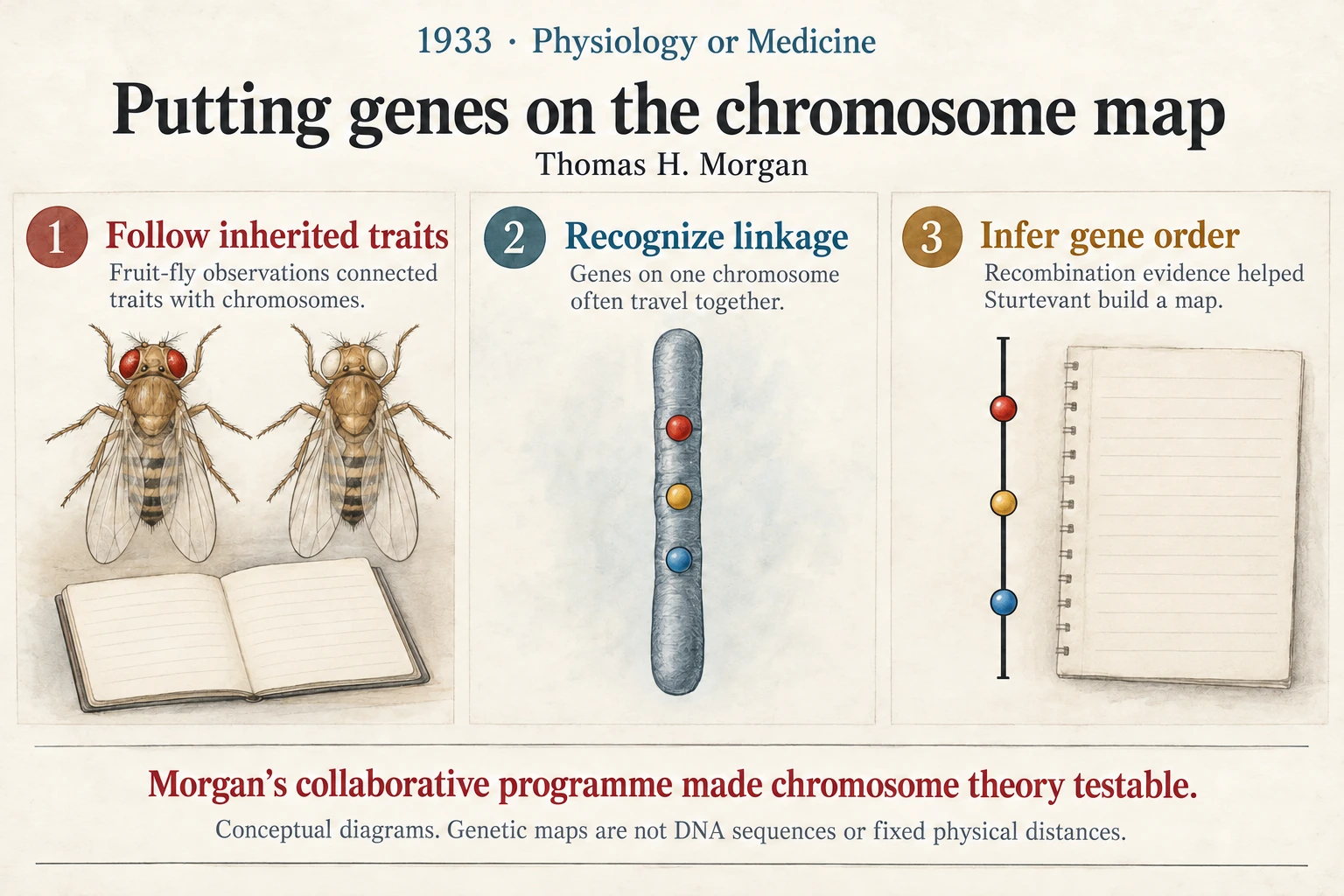
Infographic explaining Putting genes on the chromosome map
Original AI-generated infographic. A conceptual overview; the explanations and sources below provide context.
Read the poster text

Morgan’s collaborative programme made chromosome theory testable.

  1. Follow inherited traits

    Fruit-fly observations connected traits with chromosomes.

  2. Recognize linkage

    Genes on one chromosome often travel together.

  3. Infer gene order

    Recombination evidence helped Sturtevant build a map.

Conceptual diagrams. Genetic maps are not DNA sequences or fixed physical distances.

01 · The discovery

The idea, in everyday language

Mendelian inheritance described how traits passed between generations, but the physical organization of hereditary factors still needed experimental evidence. Morgan’s work with fruit flies at Columbia supplied a tractable system. A white-eyed mutant found in 1910 produced inheritance patterns tied to sex chromosomes, helping connect a visible trait with chromosome transmission. Drosophila has four chromosome pairs in its diploid cells; illustrations showing fewer chromosomes are simplified, rather than complete cell inventories.

Genes on the same chromosome often travel together, a relationship called linkage. Recombination can separate them, and comparing how often combinations change provides evidence about their relative order. In 1913 Sturtevant constructed a genetic map from this reasoning. Bridges connected genetic predictions with cytological evidence, and Muller contributed to the laboratory’s chromosome theory. Morgan received the full 1933 prize, but the Fly Room’s achievement depended on those collaborations. A genetic map organizes evidence from inheritance: it is not a photograph of visible genes or a readout of DNA letters.

Why it matters

The programme made chromosome theory testable and helped turn genetics into an experimental science with maps and predictions. Fruit flies became a major model organism. Later molecular genetics explained genes and DNA in much greater detail; those discoveries should not be retroactively assigned to the 1933 award.
02 · The people

Who brought the idea to life?

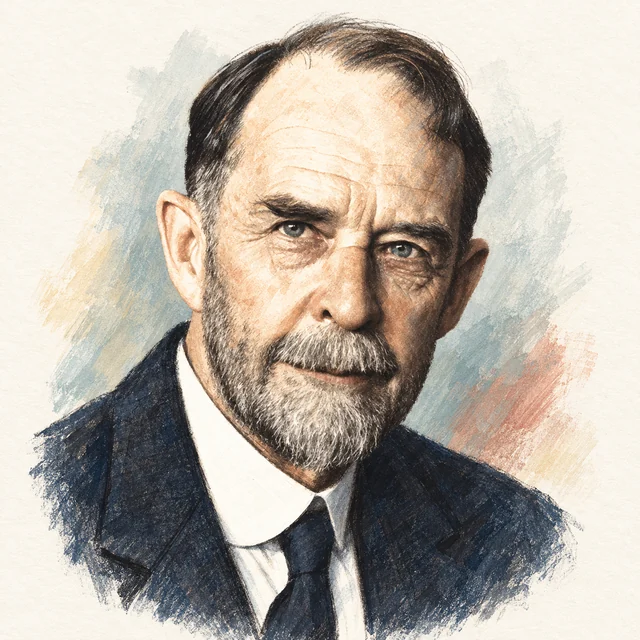
Illustrated portrait of Thomas H. Morgan

Thomas H. Morgan

Prize share · 1

Morgan received the full Medicine Prize for discoveries about chromosomes in heredity. His fruit-fly programme linked inherited traits, sex chromosomes, linkage and recombination, with essential contributions from Sturtevant, Bridges and Muller.

Read the biography ↗

03 · Years in the making

The path here

  1. 1910

    A white-eyed fruit fly helps link a trait to sex chromosomes.

  2. 1913

    Sturtevant constructs a genetic linkage map in Morgan’s laboratory.

  3. 1928

    Morgan moves from Columbia to Caltech.

  4. 1933

    Morgan receives the Medicine Prize for chromosome discoveries.

04 · Read further

From the original sources

Original explanations by Curionode, based on the official records below. Biographical details and affiliations refer to the award year.

  1. Official award summary nobelprize.org
  2. Award ceremony speech nobelprize.org
  3. Caltech: the first genetic linkage map caltech.edu
  4. NHGRI: genetic map distance genome.gov
  5. Original paper record: Morgan, 1910 eutils.ncbi.nlm.nih.gov

More in Physiology or Medicine

Browse this subject ↗