01 · The discovery
The idea, in everyday language
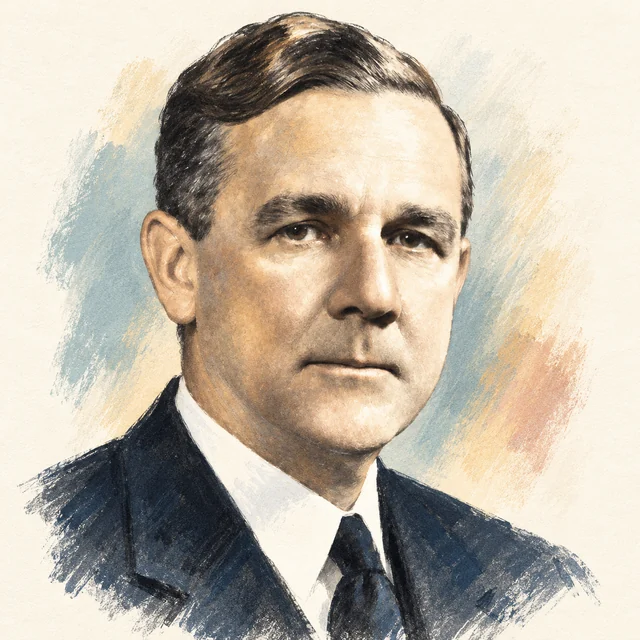
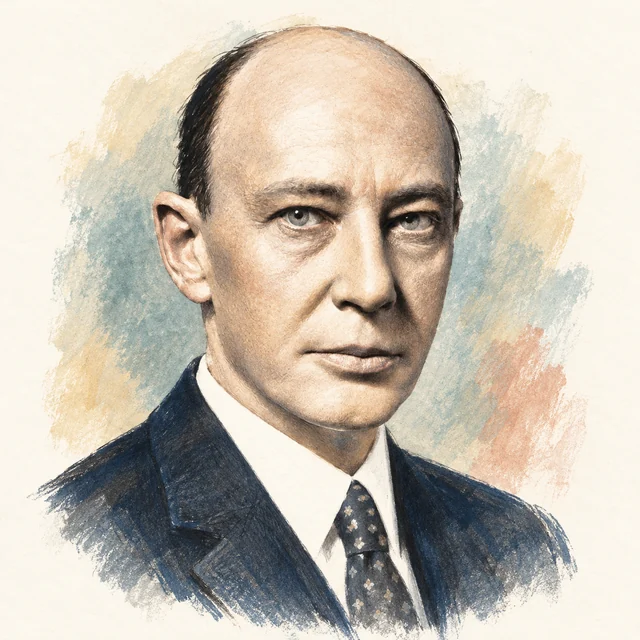
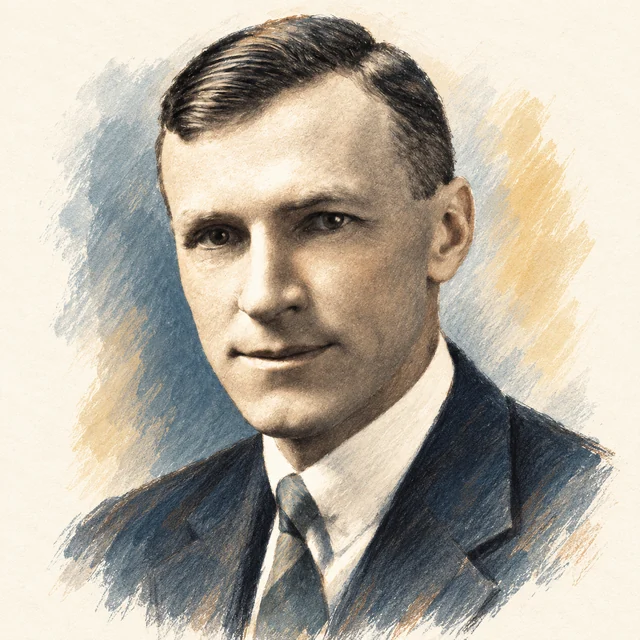
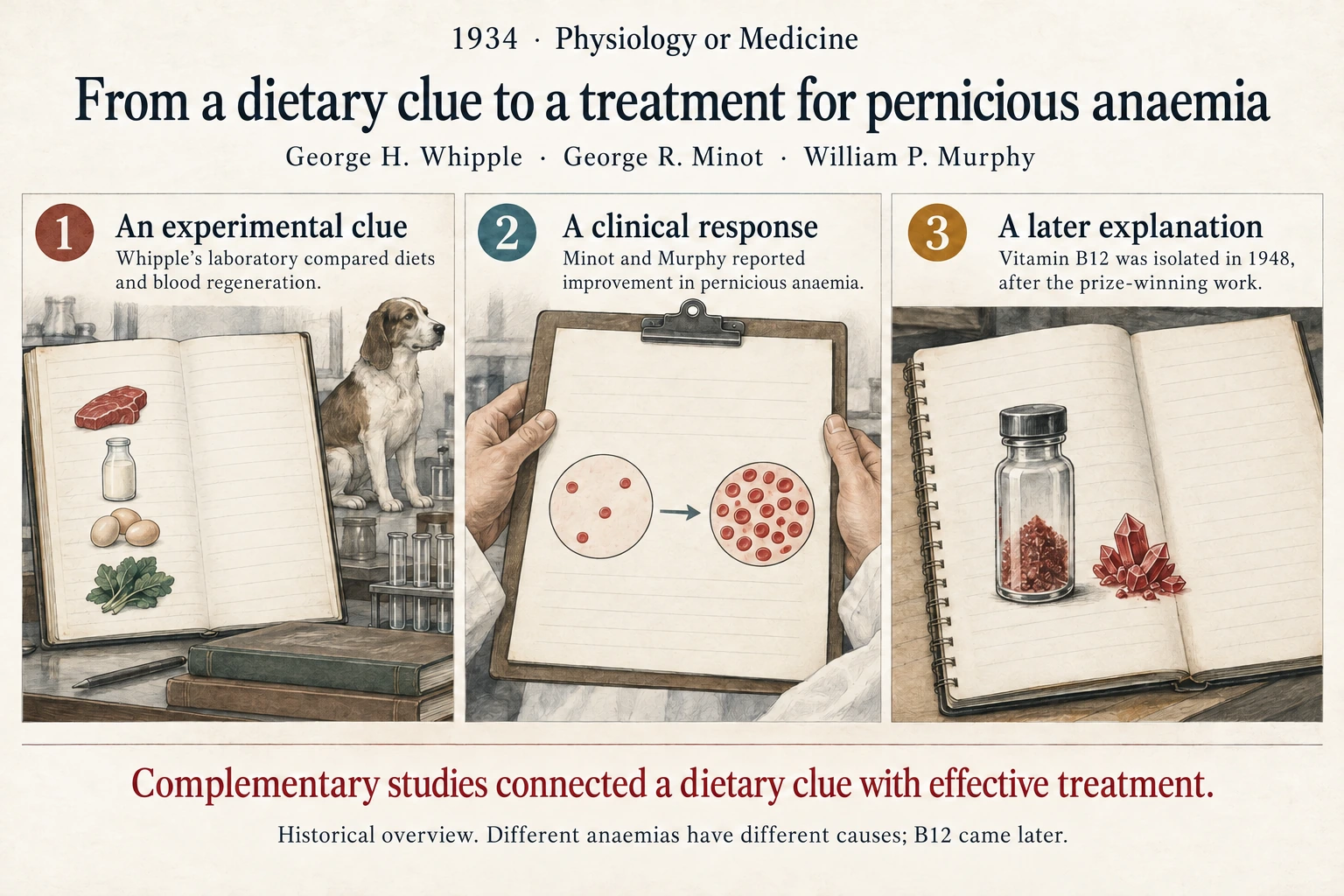
Whipple’s laboratory compared foods in dogs with anaemia caused by blood loss. Frieda Robscheit-Robbins helped conduct and sustain that experimental programme. Liver supported blood regeneration particularly well. This was a clue, rather than proof of a treatment for every anaemia: pernicious anaemia in humans had a different cause, and it was often fatal.
Minot and Murphy investigated a liver-rich diet in patients and reported substantial improvement in 1926. Following changes in blood cells helped distinguish a sustained response from the illness’s temporary fluctuations. The treatment was later developed into concentrated extracts. Its success encouraged investigation of a missing dietary factor rather than a supposed circulating poison. Vitamin B12 was isolated only in 1948. Modern knowledge links pernicious anaemia to impaired B12 absorption, involving the stomach protein intrinsic factor; the vitamin supports normal blood-cell formation in bone marrow.
Why it matters
Liver therapy transformed the outlook for people with pernicious anaemia and helped connect clinical observation with nutritional biochemistry. The three equal prize shares recognized complementary experimental and clinical work. Identifying B12 and explaining its absorption required later research by other scientists.