A life in context
The person behind the prize
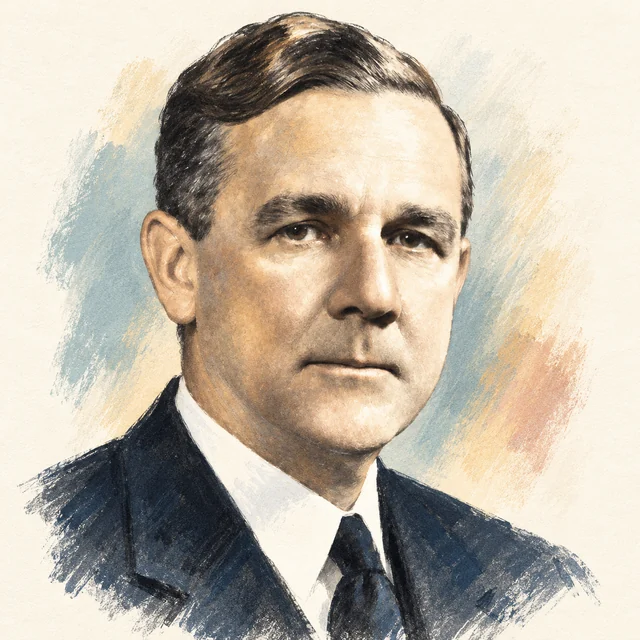
Whipple grew up in a New Hampshire medical family, graduated from Yale in 1900 and earned his medical degree at Johns Hopkins in 1905. Pathology research led him to questions about the liver, bile pigments and haemoglobin. He directed the Hooper Foundation in California from 1914 and became Rochester’s founding medical-school dean in 1921. His laboratory compared how different foods affected blood regeneration in dogs with blood-loss anaemia. Frieda Robscheit-Robbins was a central experimental collaborator. The findings helped inspire Minot and Murphy’s later clinical work on pernicious anaemia, a different disorder. Whipple shared the 1934 Medicine Prize in equal thirds with them. His institutional legacy also includes exclusionary hiring and admissions practices, acknowledged by Rochester in its 2020 anti-racism plan. Scientific recognition does not remove that history.
The contribution
Whipple received one third of the Medicine Prize. His laboratory’s controlled dietary comparisons in blood-loss anaemia supplied an experimental starting point for the clinical liver-therapy work of Minot and Murphy.
The idea in plain language
Whipple’s laboratory compared foods in dogs with anaemia caused by blood loss. Frieda Robscheit-Robbins helped conduct and sustain that experimental programme. Liver supported blood regeneration particularly well. This was a clue, rather than proof of a treatment for every anaemia: pernicious anaemia in humans had a different cause, and it was often fatal.
Read the full award story ↗