c.curionodeThe Nobel Archive

1930 · Physiology or Medicine

Recognizing the differences within human blood

Landsteiner’s serum–red-cell observations revealed normal blood-group differences. The discovery helped explain why some transfusions caused dangerous reactions.

Blood groupsABOAntigensImmunology
1930Physiology or Medicine

Visual guide

The prize, pictured

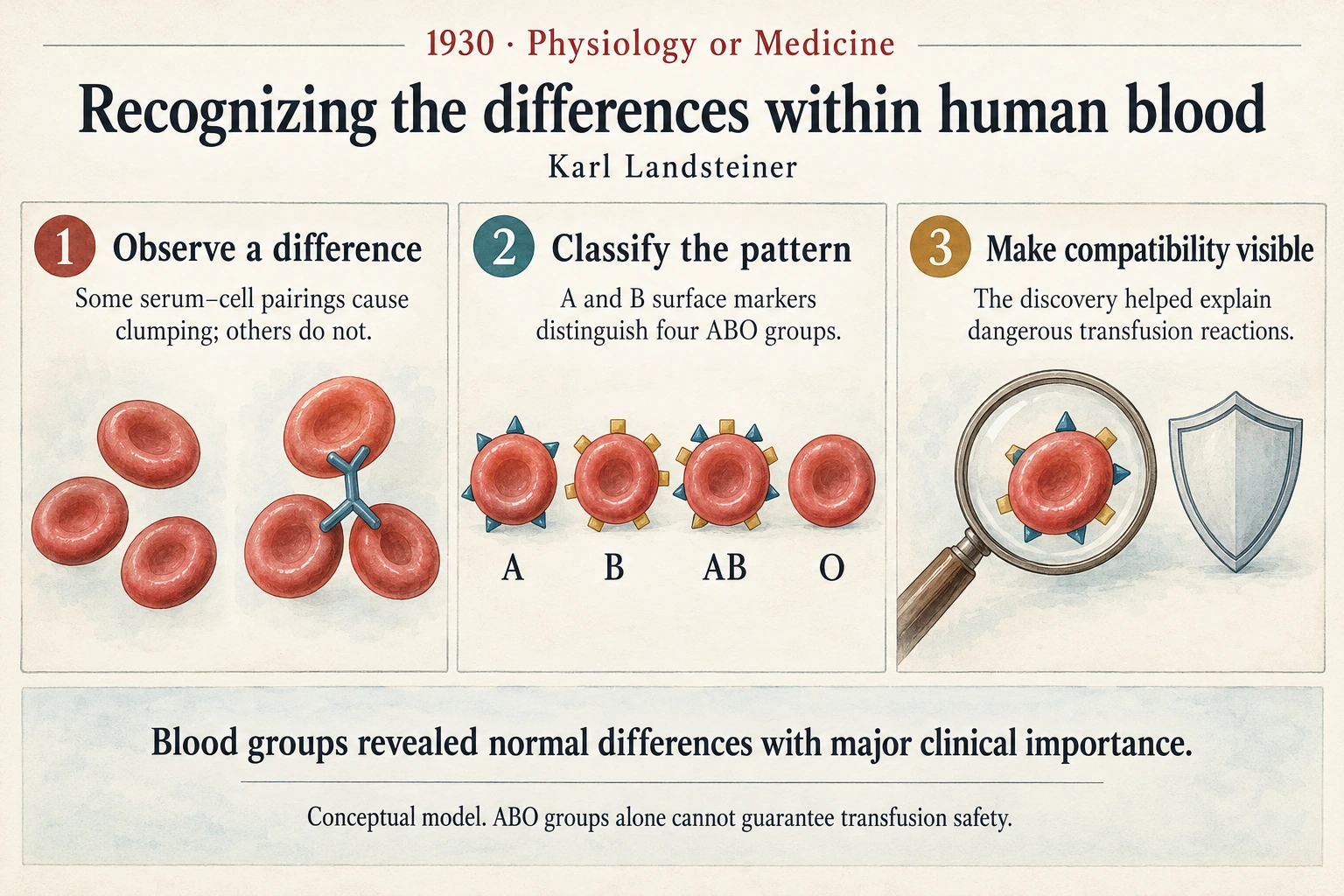
Infographic explaining Recognizing the differences within human blood
Original AI-generated infographic. A conceptual overview; the explanations and sources below provide context.
Read the poster text

Blood groups revealed normal differences with major clinical importance.

  1. Observe a difference

    Some serum–cell pairings cause clumping; others do not.

  2. Classify the pattern

    A and B surface markers distinguish four ABO groups.

  3. Make compatibility visible

    The discovery helped explain dangerous transfusion reactions.

Conceptual model. ABO groups alone cannot guarantee transfusion safety.

01 · The discovery

The idea, in everyday language

Healthy people’s blood can look alike while behaving differently in immune reactions. Landsteiner observed that some combinations of serum and red cells clumped, while others did not. In 1901 he distinguished three groups. Alfred von Decastello and Adriano Sturli identified the fourth group, AB, in 1902. This was a discovery of normal variation, not a division between healthy and diseased blood.

In the ABO system, red cells may carry A markers, B markers, both or neither. Antibodies that recognize incompatible markers can bind to red cells and contribute to clumping and destruction. The classification connected repeatable reaction patterns with differences on the cells. It became fundamental to understanding compatibility, while later research revealed further blood-group systems and additional complications.

Why it matters

The discovery gave transfusion medicine an essential biological foundation and helped establish immunological specificity as a subject of systematic study. Putting the finding to clinical use also required testing, practical methods and contributions by many other researchers and clinicians.
02 · The people

Who brought the idea to life?

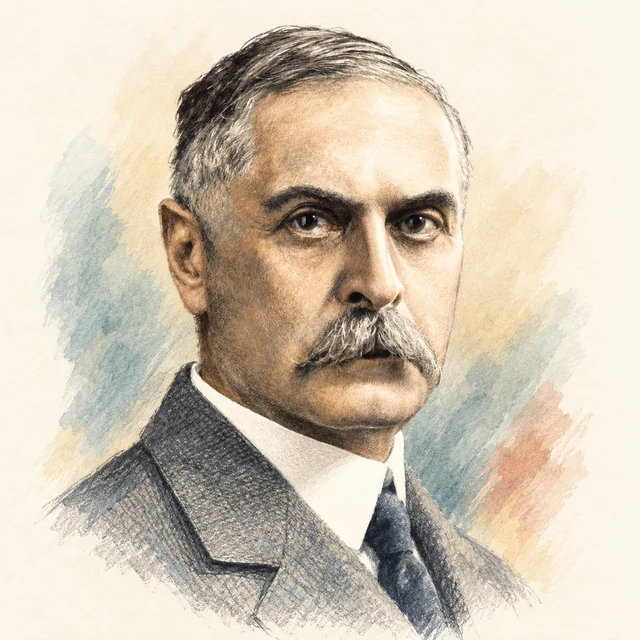
Illustrated portrait of Karl Landsteiner

Karl Landsteiner

Prize share · 1

Landsteiner received the full Medicine Prize for discovering human blood groups. Reproducible differences in serum–red-cell reactions revealed normal biological variation with major consequences for transfusion and immunology.

Read the biography ↗

03 · Years in the making

The path here

  1. 1900–1901

    Landsteiner observes clumping patterns and publishes three blood groups.

  2. 1902

    Von Decastello and Sturli identify the fourth group, AB.

  3. 1930

    Landsteiner receives the full Medicine Prize for discovering human blood groups.

04 · Read further

From the original sources

Original explanations by Curionode, based on the official records below. Biographical details and affiliations refer to the award year.

  1. Official award summary nobelprize.org
  2. Award ceremony speech nobelprize.org
  3. Rockefeller: Landsteiner and blood groups rockefeller.edu
  4. Red Cross: blood groups and cross-matching redcrossblood.org

More in Physiology or Medicine

Browse this subject ↗