A life in context
The person behind the prize
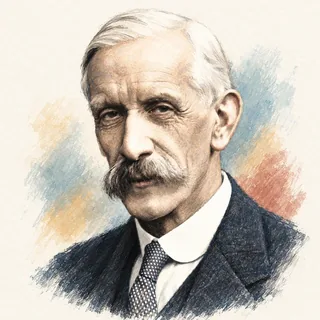
Eijkman trained in military medicine in Amsterdam and gained his medical doctorate in 1883. Service in the Dutch East Indies was interrupted by malaria, after which he worked in European laboratories, including Robert Koch’s. He returned to Java with a commission investigating beriberi and directed the medical laboratory in Batavia, now Jakarta, from 1888 to 1896. Observations of illness in chickens and differences between polished-rice and bran-containing diets challenged the search for a bacterial cause. Eijkman initially considered a toxin neutralized by a protective food substance; his successor Gerrit Grijns clarified the interpretation in terms of a missing nutritional factor. The protective factor was later identified with vitamin B1, without implying that Eijkman himself isolated its pure chemical form. He became professor of hygiene and forensic medicine at Utrecht in 1898 and also investigated bacteriology, water quality and public health. Utrecht was his affiliation for the half share of the 1929 Medicine Prize. He died there in 1930.
The contribution
Eijkman received half the Medicine Prize for discovery of the antineuritic vitamin. Work linking food composition with polyneuritis helped establish an experimental route toward understanding nutritional deficiency.
The idea in plain language
In Java, Eijkman’s observations connected a chicken disease with diets based on polished rice and found protection associated with rice bran. This challenged a purely infectious explanation. He first considered a toxin-and-antidote model; Gerrit Grijns later clarified the idea of a missing food factor. The relevant substance came to be identified as vitamin B1.
Read the full award story ↗