A life in context
The person behind the prize
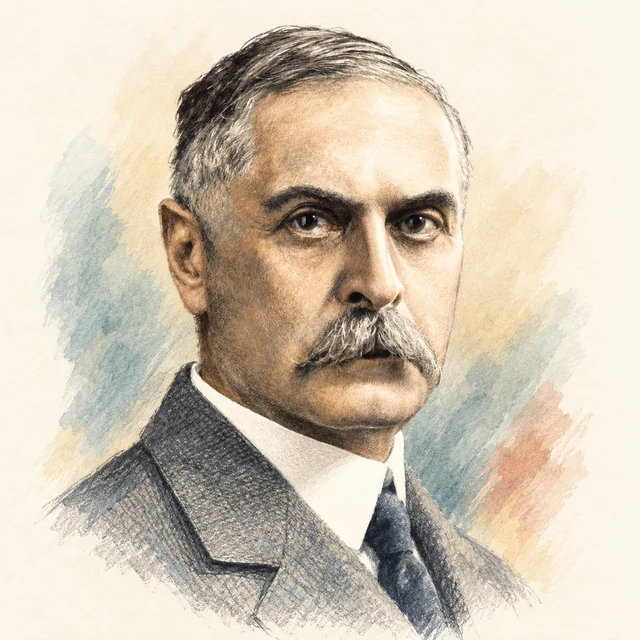
Landsteiner graduated in medicine from Vienna in 1891 and pursued further chemical training in Zurich, Würzburg and Munich. Back in Vienna he worked in hygiene and pathological anatomy, bringing chemistry into the study of immunity. In 1900 he observed that serum and red cells from different healthy people sometimes produced clumping. His 1901 publication distinguished three blood groups; Alfred von Decastello and Adriano Sturli identified the fourth, AB, in 1902. The resulting ABO classification explained important differences within normal human blood. Landsteiner moved to The Hague in 1919 and joined the Rockefeller Institute in New York in 1922. He received the full 1930 Medicine Prize for discovering human blood groups. His broader work included antibodies, haptens and later studies of further blood-group differences with colleagues such as Philip Levine and Alexander Wiener. Those later developments were distinct from the original discovery. He continued research after retirement and died in New York in 1943.
The contribution
Landsteiner received the full Medicine Prize for discovering human blood groups. Reproducible differences in serum–red-cell reactions revealed normal biological variation with major consequences for transfusion and immunology.
The idea in plain language
Healthy people’s blood can look alike while behaving differently in immune reactions. Landsteiner observed that some combinations of serum and red cells clumped, while others did not. In 1901 he distinguished three groups. Alfred von Decastello and Adriano Sturli identified the fourth group, AB, in 1902. This was a discovery of normal variation, not a division between healthy and diseased blood.
Read the full award story ↗

