A life in context
The person behind the prize
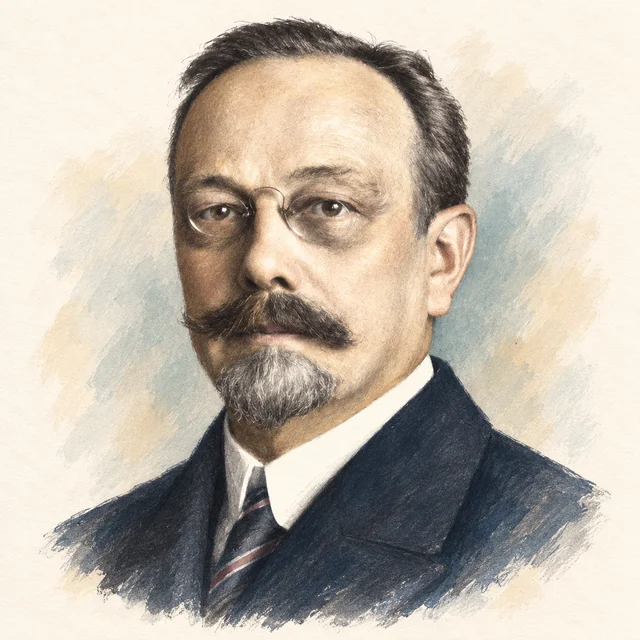
Fibiger was born in Silkeborg and trained in medicine in Copenhagen, qualifying in 1890 and completing his doctorate in 1895. He became professor of pathological anatomy at Copenhagen University in 1900. Earlier work on infectious disease helped shape his interest in experimental explanations of illness. In 1913 he reported that a parasitic roundworm was associated with stomach growths in rats and interpreted the findings as experimentally produced cancer. This claim attracted attention because researchers wanted reproducible ways to study how cancer begins. His full Medicine Prize belonged to 1926 but was announced and presented in 1927. Later assessments rejected the claimed demonstration of parasite-caused cancer, drawing attention to nutritional confounding and to the distinction between malignant cancer and tissue overgrowths such as hyperplasia and papillomas. The historical award remains, but its original interpretation is not accepted as established modern cancer causation. Fibiger died in January 1928. His story illustrates why a convincing experimental narrative still needs independent replication, diagnostic scrutiny and control of competing explanations.
The contribution
Fibiger received the full 1926 Medicine Prize, awarded in 1927, for a claimed parasite-related cancer discovery. The claim was later corrected; the award documents a historical judgement, not accepted modern proof of that causal account.
The idea in plain language
Researchers wanted an experimental way to study how cancer begins. Fibiger reported stomach growths in rats associated with a parasitic worm and argued in 1913 that he had produced cancer experimentally. The prize recognised this interpretation at the time, when it appeared to offer a reproducible research method.
Read the full award story ↗

