c.curionodeThe Nobel Archive

1926 · Physiology or Medicine

A cancer claim, and the correction that followed

Fibiger’s 1926 prize, awarded in 1927, honoured a claimed parasite-related cancer discovery. Later assessments rejected that interpretation and exposed the need to separate observation from causal diagnosis.

Experimental pathologyConfoundingLater correction
1926Physiology or Medicine

Visual guide

The prize, pictured

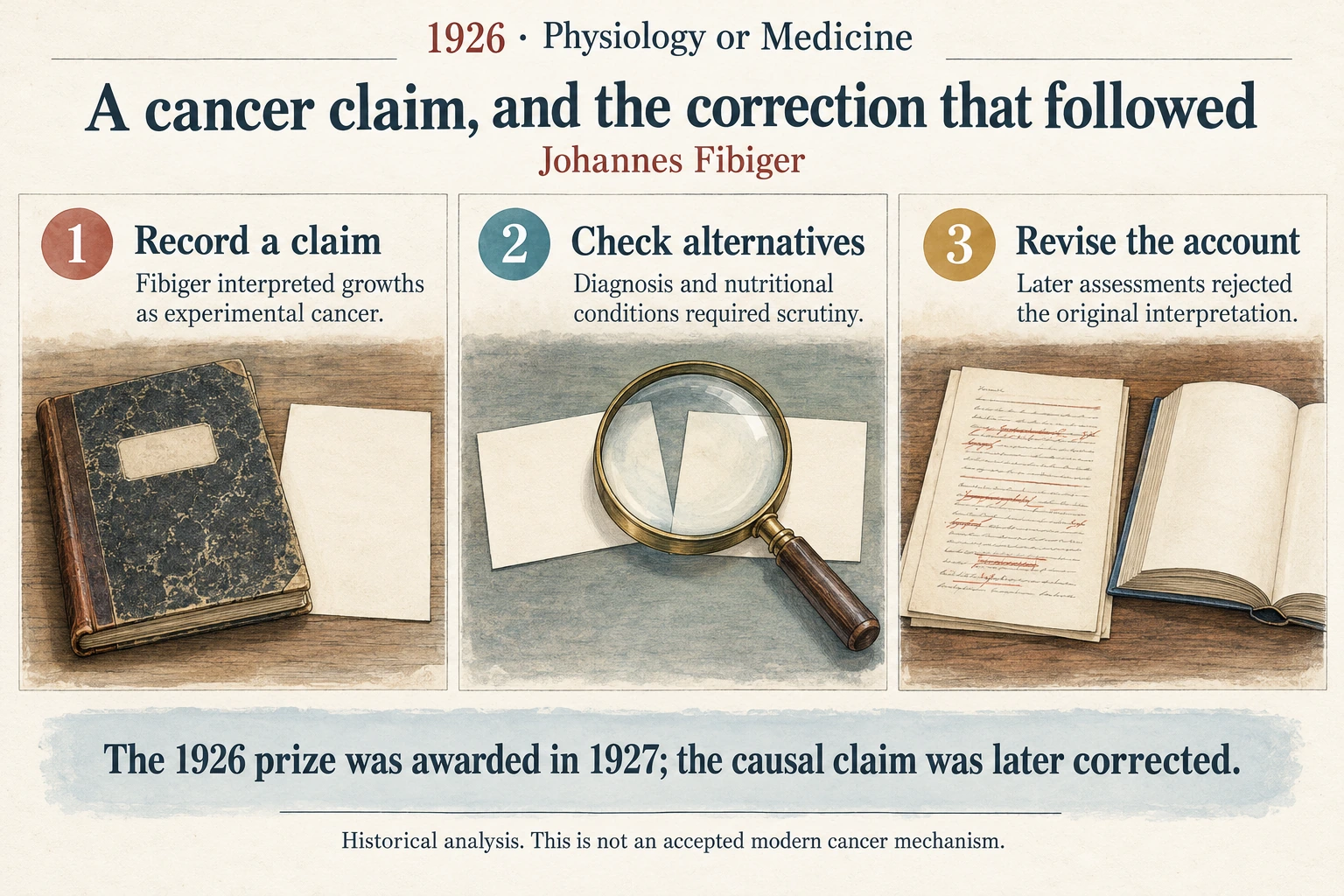
Infographic explaining A cancer claim, and the correction that followed
Original AI-generated infographic. A conceptual overview; the explanations and sources below provide context.
Read the poster text

The 1926 prize was awarded in 1927; the causal claim was later corrected.

  1. Record a claim

    Fibiger interpreted growths as experimental cancer.

  2. Check alternatives

    Diagnosis and nutritional conditions required scrutiny.

  3. Revise the account

    Later assessments rejected the original interpretation.

Historical analysis. This is not an accepted modern cancer mechanism.

01 · The discovery

The idea, in everyday language

Researchers wanted an experimental way to study how cancer begins. Fibiger reported stomach growths in rats associated with a parasitic worm and argued in 1913 that he had produced cancer experimentally. The prize recognised this interpretation at the time, when it appeared to offer a reproducible research method.

The interpretation did not withstand later scrutiny. Nutritional conditions complicated the experiments, and later assessments describe epithelial hyperplasia and papillomas: tissue overgrowths that must not simply be equated with malignant cancer. A finding can be real while the diagnosis or proposed cause is wrong. The historical prize records the original judgement; this page does not present the worm claim as established modern cancer biology.

Why it matters

The episode shows why experimental medicine needs independent replication, reliable diagnosis and attention to confounding conditions. The 2004 archival study revisits the difficulty of judging a discovery in its own time rather than treating an award as a permanent guarantee of correctness.

02 · The people

Who brought the idea to life?

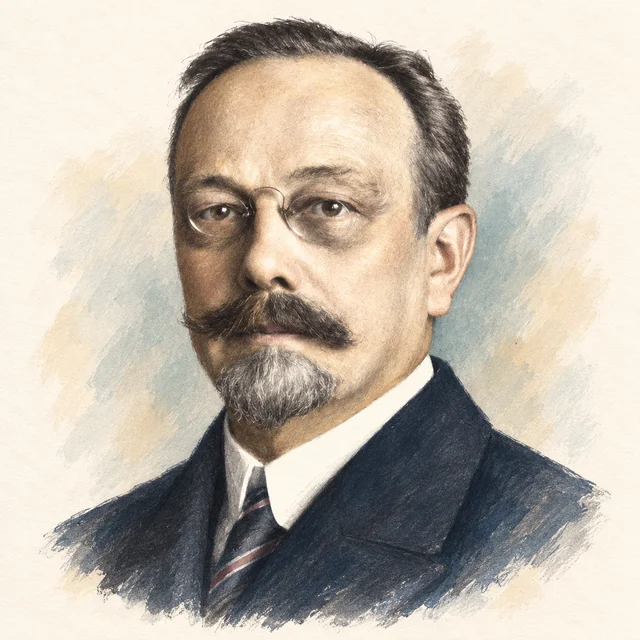
Illustrated portrait of Johannes Fibiger

Johannes Fibiger

Prize share · 1

Fibiger received the full 1926 Medicine Prize, awarded in 1927, for a claimed parasite-related cancer discovery. The claim was later corrected; the award documents a historical judgement, not accepted modern proof of that causal account.

Read the biography ↗

03 · Years in the making

The path here

  1. 1900

    Fibiger becomes professor of pathological anatomy at Copenhagen University.

  2. 1913

    He reports the parasite-associated growths and interprets them as experimental cancer.

  3. 1927

    The reserved 1926 Medicine Prize is announced and presented to Fibiger.

  4. 2004

    An archival study reassesses the award and the difficulty of contemporary scientific judgement.

04 · Read further

From the original sources

Original explanations by Curionode, based on the official records below. Biographical details and affiliations refer to the award year.

  1. Official award summary nobelprize.org
  2. Award ceremony speech nobelprize.org
  3. Archival study of the Fibiger award: public abstract researchgate.net

More in Physiology or Medicine

Browse this subject ↗