A life in context
The person behind the prize
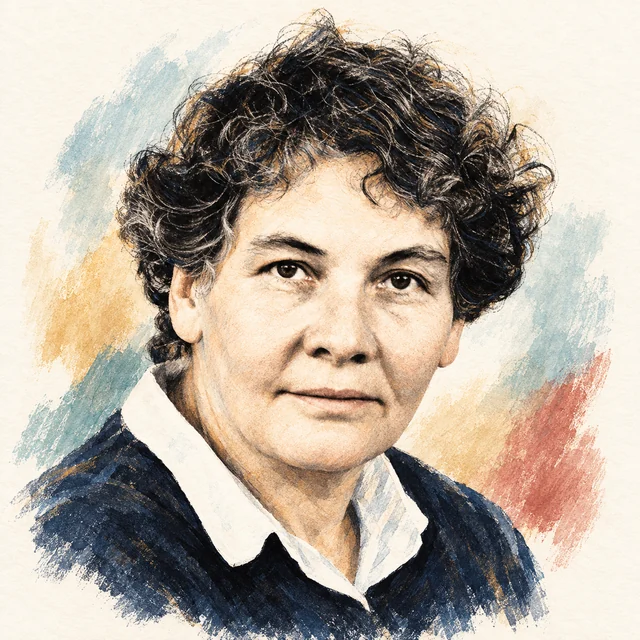
Nüsslein-Volhard grew up near Frankfurt in a family that encouraged making things, music and independent curiosity. Her early interest in animals led to study in Frankfurt and biochemistry in Tübingen. After research in Basel and Freiburg, she and Wieschaus established a shared laboratory at EMBL in Heidelberg. By the award she directed developmental research in Tübingen, extending genetic approaches to questions about how an embryo acquires its pattern.
The contribution
With Wieschaus, Nüsslein-Volhard systematically screened fruit-fly mutations for defects in embryonic segmentation. Their 1980 report distinguished genes affecting broad regions, alternating segments and polarity within segments. Comparing abnormal patterns made previously hidden steps in development experimentally accessible. The work identified important control genes, rather than a complete list of all genes required to construct an animal.
The idea in plain language
An embryo does not become a patterned animal merely by growing larger. Regions must be established, repeated units arranged and different structures assigned to particular positions. Nüsslein-Volhard and Wieschaus systematically searched for fruit-fly mutations that disrupted early segmentation. Their screen distinguished defects affecting broad regions, alternating segments and the organisation within individual segments, revealing different levels of genetic control.
Read the full award story ↗