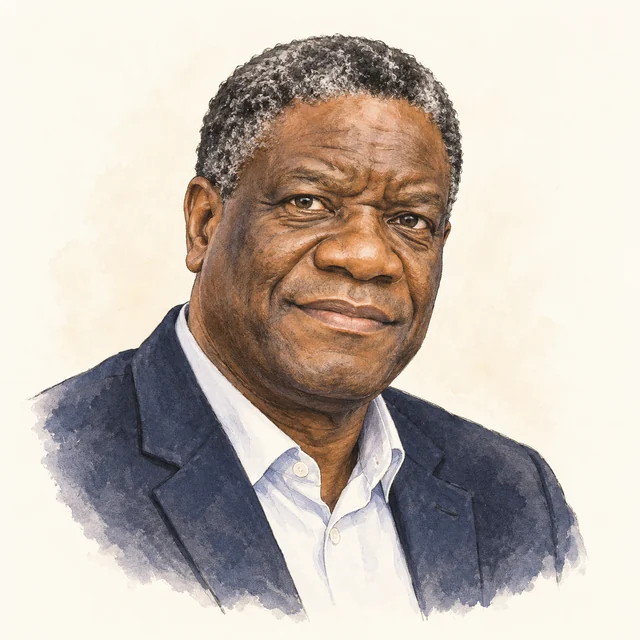
A life in context
The person behind the prize
Mukwege grew up in Bukavu, trained as a doctor and specialised in gynaecology after further study in France. He founded Panzi Hospital in 1999. As conflict brought survivors of sexual violence to the hospital, he and his colleagues combined medical treatment with wider support. He also spoke publicly against impunity, continuing his work despite threats and an assassination attempt in 2012.
The contribution
The prize recognised his care for survivors and his efforts to end sexual violence used as a weapon of war. His contribution connects the work of a clinical team with demands for protection, accountability and respect for survivors’ choices and dignity.
The idea in plain language
Violence in war can attack people’s bodies, safety and place in a community long after a battle ends. Denis Mukwege’s work at Panzi Hospital connects medical care with the needs of survivors rebuilding their lives. Founded in Bukavu in 1999, the hospital became a place where he and a wider team treated people harmed by sexual violence. His public advocacy also challenged impunity: caring for injuries does not remove the responsibility to prevent abuses and hold perpetrators accountable.
Read the full award story ↗