A life in context
The person behind the prize
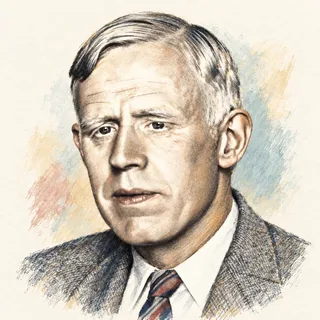
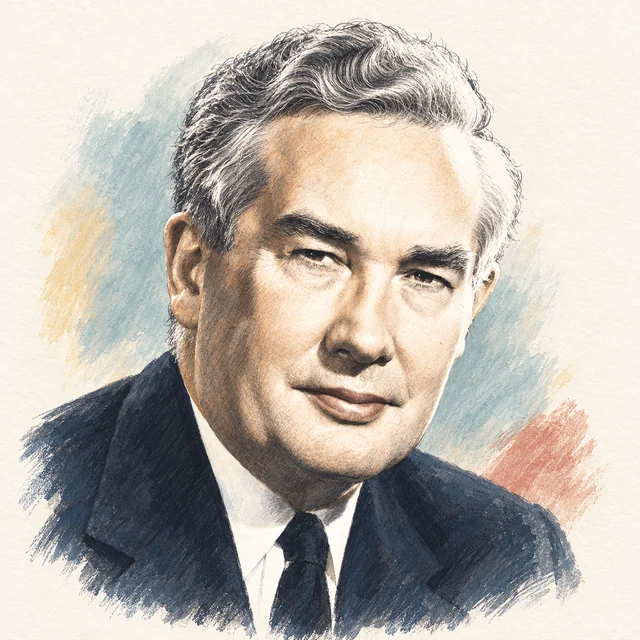
Barton entered Imperial College in 1938, graduating in 1940 and completing an organic-chemistry doctorate in 1942. Government and industrial research preceded his return to teaching at Imperial. A Harvard visit in 1949–1950 accompanied work on natural products. His 1950 paper on the steroid nucleus used structural evidence, especially Hassel’s work, to assign preferred molecular conformations and interpret chemical behaviour. He extended conformational analysis to complex natural products, helping connect three-dimensional arrangement with reaction mechanisms and synthetic planning. Posts at Birkbeck and Glasgow preceded his 1957 appointment as professor of organic chemistry at Imperial. This was his affiliation in 1969. The prize recognised his development and application of conformational analysis, with Hassel receiving the other half for complementary structural research.
The contribution
Barton applied conformational analysis to steroids and other complex organic molecules. He received half the Chemistry Prize.
The idea in plain language
Hassel investigated cyclohexane and related six-membered rings using physical measurements. Different spatial arrangements can occur while atom connectivity is retained; these arrangements are conformations.
Read the full award story ↗