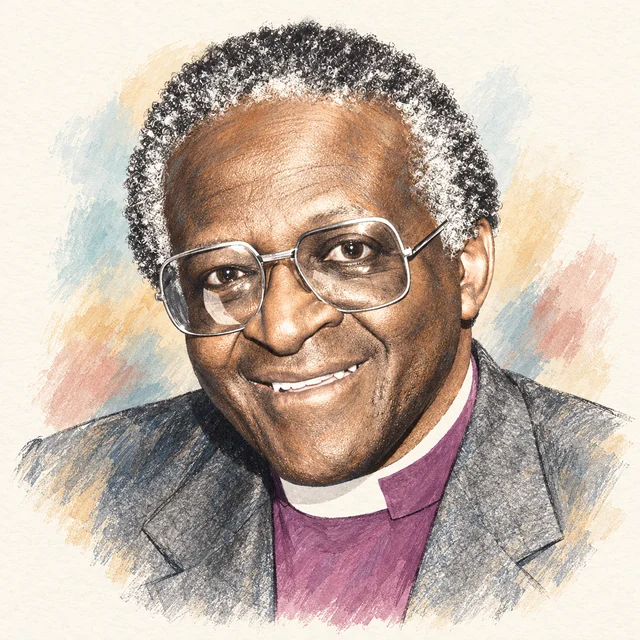
A life in context
The person behind the prize
Tutu trained as a teacher and earned a University of South Africa bachelor’s degree in 1954. Opposition to racially unequal education helped draw him toward the church. He was ordained deacon in 1960 and priest in 1961, then studied theology in England, completing a master’s degree in 1966. Teaching in southern Africa and work for the World Council of Churches followed. He became Dean of Johannesburg in 1975, Bishop of Lesotho in 1976 and general secretary of the South African Council of Churches in 1978. That was his role when the 1984 prize was announced. He became Bishop of Johannesburg in 1985 and Archbishop of Cape Town in 1986. Later he chaired the Truth and Reconciliation Commission.
The contribution
Tutu opposed apartheid through nonviolent advocacy, insisting on equal political and human rights and cooperation across racial divisions. His religious leadership gave public voice to people excluded by the system and sought a shared future rather than racial revenge. The full Peace Prize supported this struggle; apartheid had not ended in 1984, and its eventual dismantling involved many people and organisations.
The idea in plain language
Apartheid organised South African life through racial inequality, excluding the Black majority from equal political rights and enforcing discriminatory restrictions. Tutu used church leadership to oppose the system publicly and advocate equal human rights. As general secretary of the South African Council of Churches, he gave an influential voice to that struggle.
Read the full award story ↗

