01 · The contribution
The idea, in everyday language
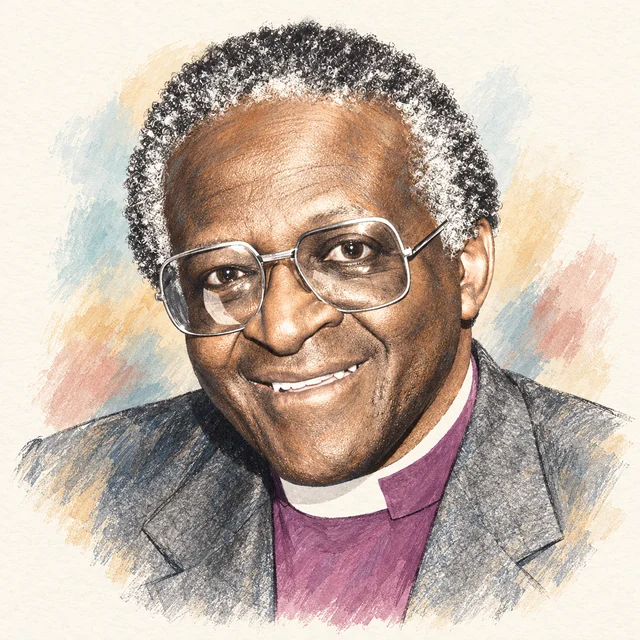
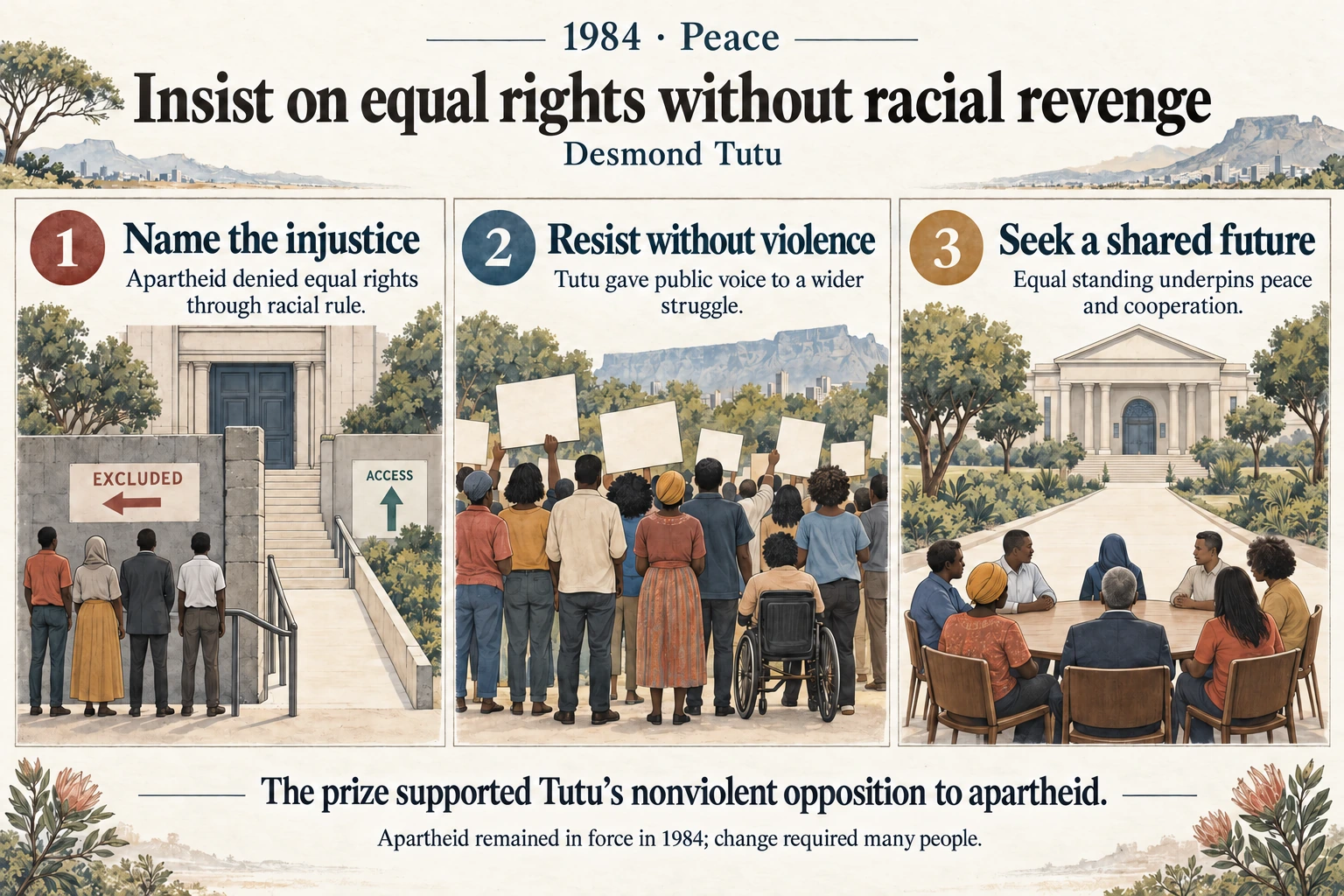
Apartheid organised South African life through racial inequality, excluding the Black majority from equal political rights and enforcing discriminatory restrictions. Tutu used church leadership to oppose the system publicly and advocate equal human rights. As general secretary of the South African Council of Churches, he gave an influential voice to that struggle.
His approach combined nonviolent resistance, international attention and cooperation across racial divisions. He opposed racial domination while appealing to a common humanity. The 1984 Nobel Peace Prize supported this work at a time when apartheid remained in force. It recognised leadership within a much wider movement, not the completed end of the system.
Why it matters
The award amplified opposition to apartheid and affirmed equal rights as a basis for peace. Tutu later became Archbishop of Cape Town and chaired the Truth and Reconciliation Commission. Those later roles belong to the subsequent history, distinct from his position when the prize was announced.